🥗 Alfalfa at a Glance
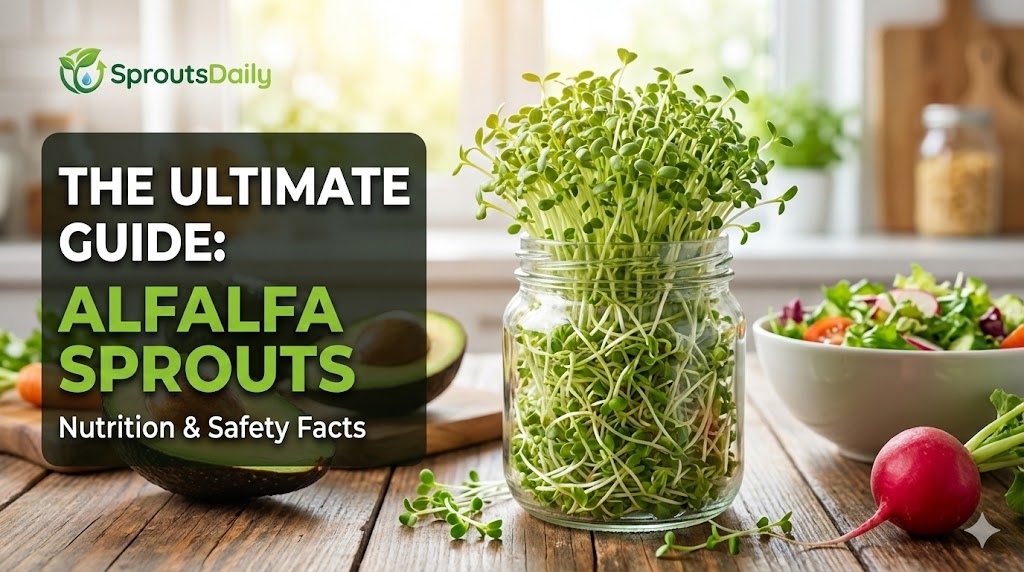
Alfalfa sprouts are known as a "low-calorie nutrient bomb." If you're looking for an ingredient that can significantly boost the nutritional value of your daily meals with almost no added calorie burden, alfalfa sprouts are the top choice. However, as with all sprouts, safe handling is a prerequisite for enjoying their benefits.
| Attribute | Content |
| Scientific Name | Medicago sativa |
| Historical Status | Ancient Persian for "Father of All Foods" |
| Core Nutrients | Vitamin K, Vitamin C, Folate, Copper, Manganese |
| Harvest Cycle | 4–6 days (home cultivation) |
| Flavor Profile | Exceptionally fresh with a subtle, nutty aftertaste |
| Safety Rating™ | 🟡 Medium-High Risk (Strict hygiene guidelines must be followed) |
1. What Are Alfalfa Sprouts? (Origin, Definition & Botany)
1.1 Origin of the "Father of All Foods"
The history of Alfalfa dates back to 490 BC in ancient Persia, where it was initially used as high-performance fodder for warhorses because it was found to give livestock remarkable strength. It wasn't until modern times that humans realized its nutritional concentration reaches a stunning peak within 4-6 days of seed germination, evolving it into a globally popular health food.
1.2 Sprouts vs. Microgreens
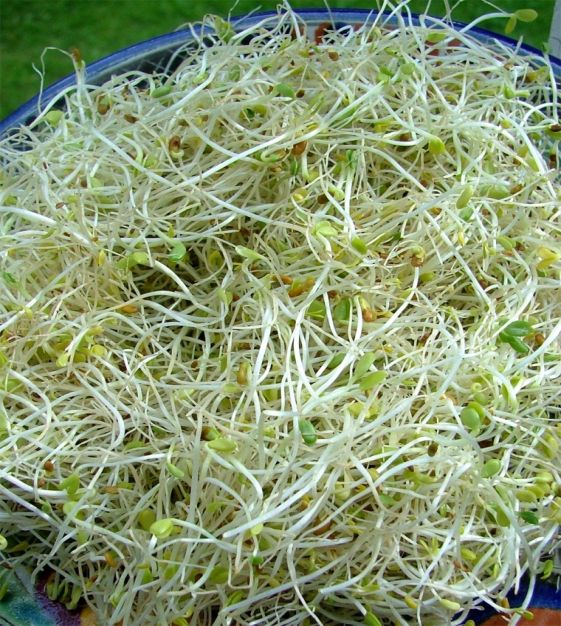
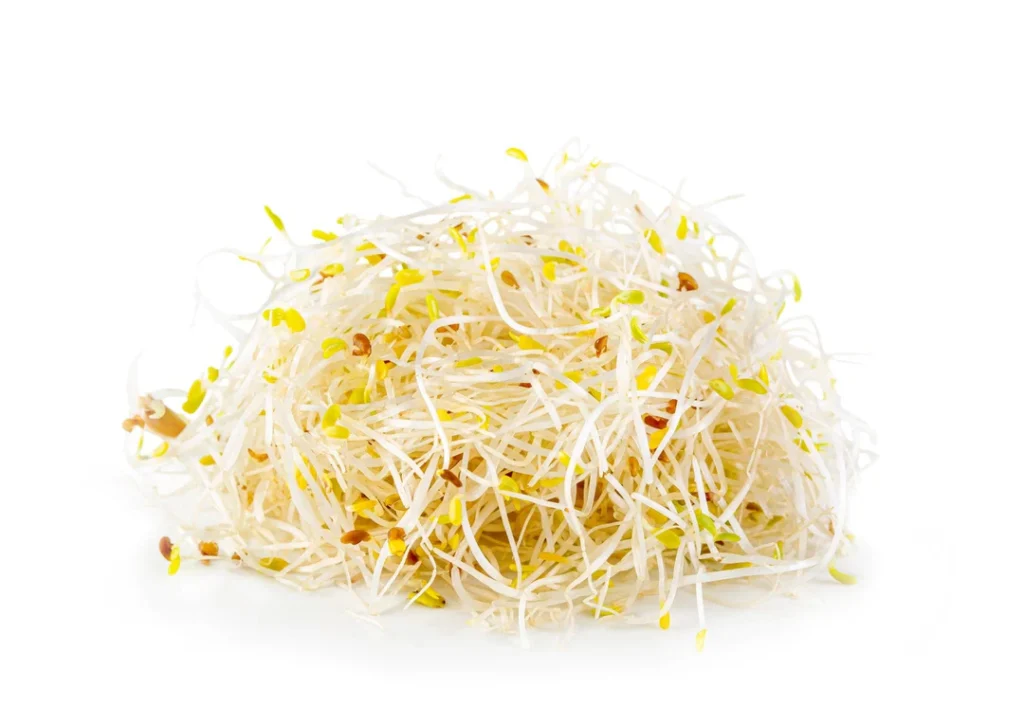
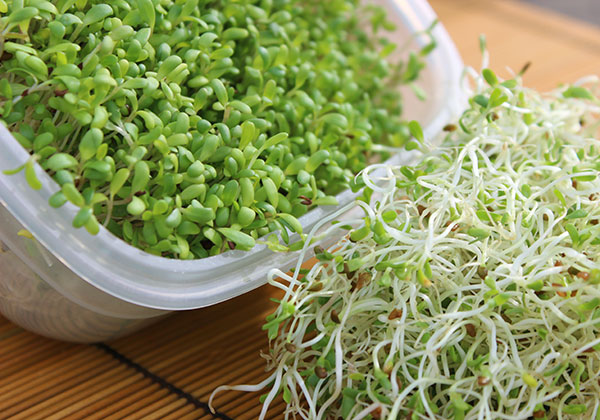
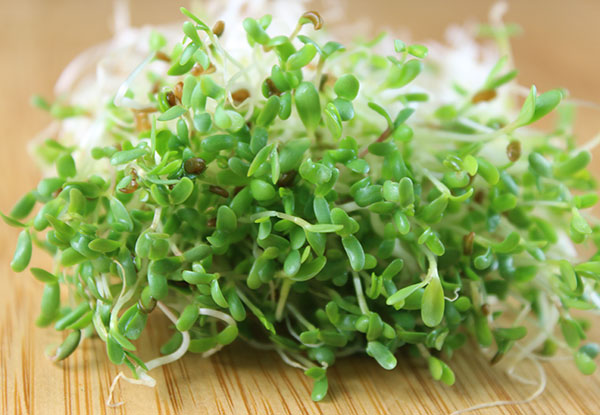
In encyclopedic content, distinguishing these two concepts is crucial: Alfalfa Sprouts: Germinated in water/a moist environment, without soil. You consume the entire plant (including the seed coat, tender stem, and young root).
Alfalfa Microgreens: Grown in soil or a medium for 7-14 days, consuming only the cut stem and leaf parts.
Verified Nutrition Facts
The table below uses the USDA FoodData Central entry Alfalfa seeds, sprouted, raw (FDC 168384). Every value is per 100 g so it matches the site comparison tool. “≈” marks a reference estimate used only when the USDA record does not report that field.
| Nutrient | Per 100 g |
|---|---|
| Calories | 23 kcal |
| Protein | 3.99 g |
| Fiber | 1.9 g |
| Vitamin C | 8.2 mg |
| Folate | 36 µg |
| Iron | 0.96 mg |
| Calcium | 32 mg |
| Potassium | 79 mg |
Per-100 g figures are a comparison standard, not a suggested serving. Natural variation can occur by cultivar and growing conditions.
3. Scientific Evidence & Health Benefits: Does It Really Work?
3.1 Cholesterol Management: The Magic of Saponins
Multiple animal studies and preliminary clinical research indicate that the saponins in alfalfa sprouts can bind to cholesterol, preventing its absorption in the intestines. This helps lower "bad" cholesterol (LDL) without affecting "good" cholesterol (HDL).
3.2 Relieving Menopausal Symptoms
Alfalfa sprouts are rich in phytoestrogens (coumestrol), structurally similar to human estrogen. For women experiencing menopause, moderate consumption may help alleviate discomforts like hot flashes.
3.3 Blood Sugar Control Potential
Preliminary studies have found that alfalfa sprout extract may assist in blood sugar control to some extent by improving insulin secretion and function, making it suitable as a dietary supplement for individuals with prediabetes.
3.4 Safeguarding Bone Health
With its exceptionally high Vitamin K content, alfalfa sprouts effectively promote calcium deposition in bones, reducing fracture risk in middle-aged and elderly individuals.
4. ⚠️ Core Warning: Consumption Risks & Safety
This is the most critical section of this article and key to demonstrating the authority of SproutsDaily.com.
4.1 Bacterial Contamination Risk
Sprouting requires a warm (20-25°C) and humid environment, which perfectly overlaps with the ideal growth conditions for Salmonella and E. coli. If the seeds themselves are contaminated, bacteria can multiply a thousandfold within days.
4.2 L-Canavanine & Lupus
Alfalfa sprouts contain an amino acid called L-Canavanine. Warning: Individuals diagnosed with systemic lupus erythematosus (SLE) or other autoimmune diseases should absolutely avoid alfalfa sprouts, as it may trigger inflammation or exacerbate the condition.
4.3 Contraindicated Groups List
Pregnant and breastfeeding women: Severe consequences of foodborne illness.
Children under five and the elderly: Weaker immune system defenses.
Individuals taking anticoagulants (e.g., Warfarin): Vitamin K intake should remain consistent; discuss major dietary changes with the clinician managing warfarin or a similar medicine.
5. Expert Level: Standardized Home Cultivation Process (SproutsDaily™ Method)
Home growing gives you more control over cleanliness, but it cannot make contaminated seed pathogen-free. Treat homegrown raw sprouts as a higher-risk food.
🛠 Preparation Checklist
Seeds: Must be labeled "Food Grade" or "For Sprouting" (Pathogen-tested).
Container: Glass sprouting jar + stainless steel mesh lid. Water source: Filtered water is recommended.
📅 Six-Day Sprouting Guide
Day 0: Soak. Place 1-2 tablespoons of seeds, add water, soak for 8-12 hours.
Day 1: Awaken. Drain thoroughly, tilt the jar upside down on a stand to ensure ventilation.
Days 2-4: Rinse Cycle. Rinse and drain thoroughly twice daily (morning and evening). This is key to preventing spoilage.
Day 5: Greening. Sprouts are now formed. Move the jar to a windowsill with indirect light (avoid direct sun) to activate chlorophyll and green the young leaves.
Day 6: Harvest. Clean in a large basin of water to remove floating seed coats. Spin dry and refrigerate.
6. How to Eat: Balancing Nutrition & Safety?
| Consumption Method | Safety Score | Nutrient Retention | Expert Comment |
|---|---|---|---|
| Raw (Sandwich/Salad) | 🔴 Highest Risk | ⭐⭐⭐⭐⭐ | Must ensure tested seeds and extremely clean growing environment. |
| Quick Sauté | 🟡 Moderate Safety | ⭐⭐⭐ | Kills most bacteria while retaining some crispness. |
| Added to Soup/Stew | 🟢 Safest | ⭐⭐ | Eliminates bacteria thoroughly, but Vitamin C and enzymes are lost. |
| Added to Smoothie | 🔴 Highest Risk | ⭐⭐⭐⭐⭐ | Great for hiding flavor, but safety equals consuming raw. |
Nutrition Comparison With Other Sprouts
These rows use the same raw sprouted-food records and 100 g basis as our Sprout Nutrition Comparison Tool.
| Raw sprout (100 g) | Calories | Protein (g) | Fiber (g) | Vitamin C (mg) | Folate (µg) |
|---|---|---|---|---|---|
| Alfalfa Sprouts | 23 | 3.99 | 1.9 | 8.2 | 36 |
| Mung Bean Sprouts | 30 | 3.04 | 1.8 | 13.2 | 61 |
| Soybean Sprouts | 122 | 13.09 | 1.1 | 15.3 | 172 |
| Lentil Sprouts | 106 | 8.96 | ≈ 3.2 | 16.5 | 100 |
| Radish Sprouts | 43 | 3.81 | ≈ 2.3 | 28.9 | 95 |
| Pea Sprouts | 124 | 8.8 | ≈ 3 | 10.4 | 144 |
| Sprouted Wheat | 198 | 7.49 | 1.1 | 2.6 | 38 |
8. Frequently Asked Questions (FAQ)
Q: Can alfalfa sprouts be eaten raw?
A: Alfalfa sprouts can be eaten raw, but the sprouting process is prone to bacterial growth, posing a foodborne illness risk; high-risk groups should avoid raw consumption or opt for cooked sprouts.
Q: Are alfalfa sprouts nutritious?
A: Alfalfa sprouts are low in calories and contain Vitamin K, folate, and some minerals, making them a nutrient-dense, low-calorie food. However, certain nutrients (like protein, glucosinolates) are not as high as in broccoli sprouts.
Q: How many days to harvest alfalfa sprouts?
A: Typically 4–6 days (varies with temperature and rinsing frequency).
Q: How to store alfalfa sprouts?
A: After harvest, rinse thoroughly, drain, seal, and refrigerate (≤ 4°C). Consume within 3–5 days.
Q: Can pregnant women eat alfalfa sprouts?
A: Pregnant women are not advised to eat raw alfalfa sprouts; if consumed, ensure they are thoroughly cooked and consult a doctor.
Q: How to tell if alfalfa sprouts have gone bad?
A: Discard immediately if there is an off odor, slimy texture, abnormal color, or mold.
Q: Where to buy safer alfalfa seeds?
A: Prioritize brands labeled "Food Grade/For Sprouting/Supplier provides traceable batch numbers and test reports," and check user and third-party testing reviews.
Q: Why rinse daily during sprouting?
A: Regular rinsing reduces bacterial buildup, maintains even moisture, and prevents localized waterlogging leading to spoilage.
Q: What dishes can be made with alfalfa sprouts?
A: Common uses: mixed in salads, sandwich garnish, added to wraps, or as a cooked side dish (quick sauté or added to hot soup).
Q: Where to check for alfalfa sprout recall information?
A: Follow local food safety agencies (e.g., FDA, local health departments) and major retailer notification pages. This site will also pin an announcement at the top of this page in case of a major recall.
9.References & Data Sources
All nutrition, safety, and health information on SproutsDaily is based on publicly available, authoritative sources. Data is reviewed periodically to ensure accuracy and transparency.
Nutrition Data
- USDA FoodData Central – Official U.S. Department of Agriculture nutrition database
https://fdc.nal.usda.gov/ - WhatYouEat – Nutrition facts based on USDA FoodData Central
https://whatyoueat.io/foods/168384-alfalfa-sprouts - NutriVals – Independent nutrition database and nutrient breakdowns
https://www.nutrivals.com/
Health & Nutrient Information
- Healthline – Evidence-based nutrition and health explanations reviewed by medical professionals
https://www.healthline.com/nutrition/alfalfa
Food Safety & Public Health
- Centers for Disease Control and Prevention (CDC) – Sprout-related food safety guidance
https://www.cdc.gov/foodsafety/foods/sprouts.html - U.S. Food and Drug Administration (FDA) – Sprout safety standards and recalls
https://www.fda.gov/food/foodborne-pathogens/sprouts
Sources are cited for informational purposes only. Access dates should be noted where applicable, as data and guidelines may change over time.
Comparison Tool Data Snapshot
This table is generated from the same data module as the Sprout Nutrition Comparison Tool, so this guide and the interactive comparison stay synchronized. Values are per 100 g fresh weight. “≈” means a species- and stage-matched reference estimate, not a direct measurement of every crop.
| Growth stage | Calories (kcal) | Protein (g) | Fiber (g) | Vitamin C (mg) | Folate (µg) | Iron (mg) | Calcium (mg) | Potassium (mg) |
|---|---|---|---|---|---|---|---|---|
| Whole Sprout | 23 kcal | 3.99 g | 1.9 g | 8.2 mg | 36 µg | 0.96 mg | 32 mg | 79 mg |
| Microgreen / Shoot | ≈ 38 kcal | ≈ 4 g | ≈ 1.3 g | ≈ 20 mg | ≈ 85 µg | ≈ 1.5 mg | ≈ 90 mg | ≈ 300 mg |