Introduction
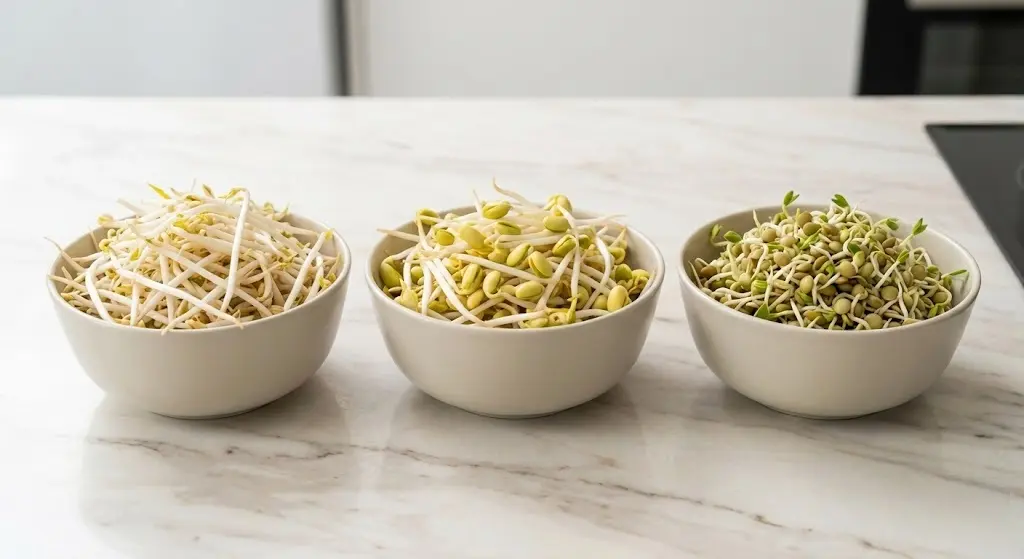
Bean Sprouts are often considered a light, healthy vegetable — but are they actually high in fiber?
The answer depends on the type of sprout.
Some sprouts are only moderate in fiber, while others are surprisingly rich and can compete with high-fiber vegetables.
In this guide, we’ll compare:
- Mung bean sprouts
- Soybean sprouts
- Lentil sprouts
- How cooking affects fiber
- Which sprout is truly the “fiber king”
Fiber Content of Different Sprouts (Per 100g)
Here is the corrected and evidence-based breakdown:
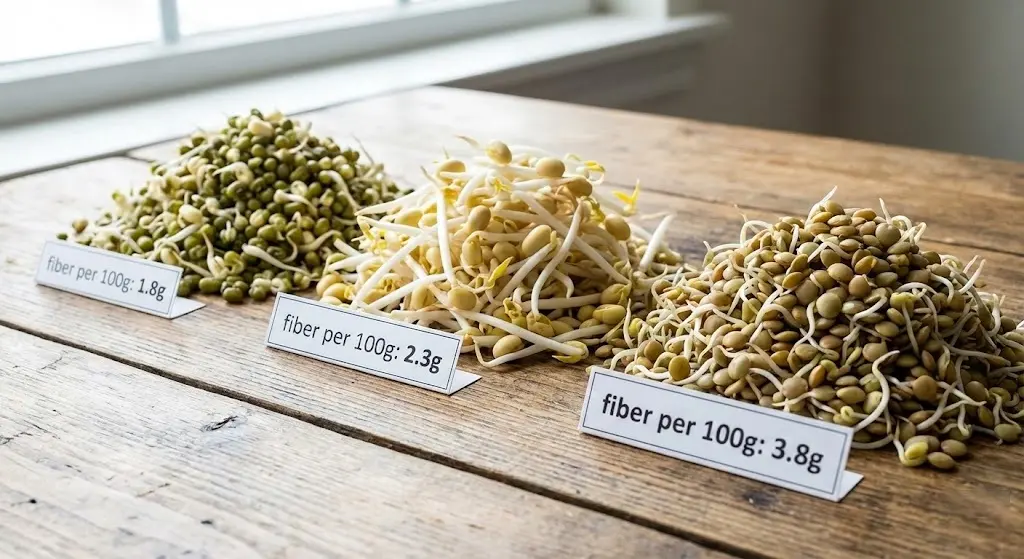
| Sprout Type | Fiber (per 100g) | Fiber Level |
|---|---|---|
| Mung bean sprouts | ~1.8g | Moderate |
| Soybean sprouts | 2.1–2.4g | Moderately high |
| Lentil sprouts | 3.5–4g | High |
Key Takeaways
- Mung bean sprouts are moderate in fiber.
- Soybean sprouts contain more fiber than mung bean sprouts, because they retain the full bean cotyledon (the thick bean body).
- Lentil sprouts are the true high-fiber option, with roughly double the fiber of mung sprouts.
If you're specifically eating sprouts for fiber, lentil sprouts are the clear winner.
Are Bean Sprouts Considered High in Fiber?
To qualify as “high fiber,” a food typically needs:
- 5g or more per serving
OR - At least 20% of daily recommended intake
Daily recommendations:
- Women: 25g
- Men: 30–38g
What does that mean in practice?
- 100g mung sprouts → ~7% daily intake
- 100g soybean sprouts → ~8–10%
- 100g lentil sprouts → ~14–16%
Conclusion:
- Mung sprouts → Not high fiber
- Soybean sprouts → Moderate
- Lentil sprouts → Approaching high fiber
Why Soybean Sprouts Contain More Fiber
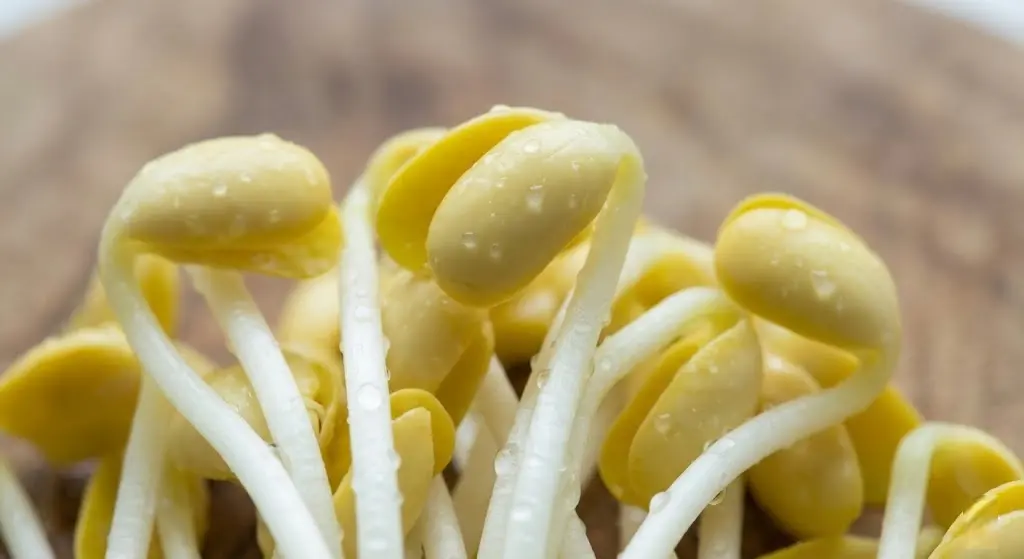
Unlike mung sprouts, soybean sprouts retain large bean bodies (cotyledons).
Those bean structures contain concentrated:
- Insoluble fiber
- Plant cell wall material
- Resistant carbohydrates
That’s why soybean sprouts consistently test at 2.1–2.4g per 100g, not 1.1g.
Many online articles underestimate this value.
Lentil Sprouts: The Real “Fiber King”
If fiber is your goal, lentil sprouts deserve the spotlight.
With 3.5–4g fiber per 100g, they:
- Nearly double mung sprout fiber
- Compete with high-fiber vegetables
- Provide more bulk per calorie
Because lentils are already fiber-dense before sprouting, the sprouted version remains nutritionally robust.
If your content discusses fiber without mentioning lentil sprouts, it’s incomplete.
Does Cooking Destroy Fiber in Sprouts?
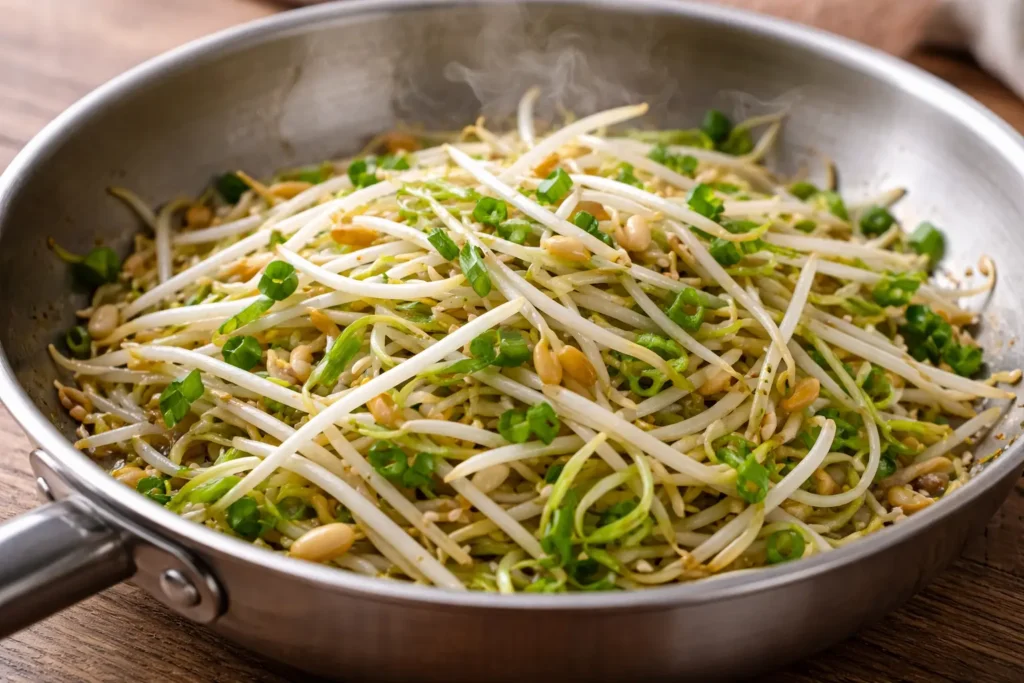
No.
Fiber is structurally stable and not destroyed by heat.
Unlike vitamin C, fiber does not degrade during cooking.
In fact, cooking may increase effective fiber intake.
Here’s why:
- Raw sprouts contain a lot of water and air.
- Light cooking (stir-frying or blanching) reduces volume.
- You can eat more grams of sprouts in one meal.
That means:
Cooked sprouts → Smaller volume → Higher total grams consumed → More fiber eaten.
For people aiming to increase fiber intake, lightly cooked sprouts may be more practical than raw ones.
What Type of Fiber Do Sprouts Contain?
Most sprouts contain primarily:
Insoluble Fiber
- Promotes bowel movement
- Adds stool bulk
- Prevents constipation
They also contain smaller amounts of soluble fiber, which helps:
- Regulate blood sugar
- Support cholesterol balance
Soybean and lentil sprouts generally contain more total fiber, including more insoluble bulk.
Sprouts vs Other Vegetables (Fiber Context)
| Food (100g) | Fiber |
|---|---|
| Lettuce | 1.3g |
| Mung sprouts | 1.8g |
| Soybean sprouts | 2.1–2.4g |
| Spinach | 2.2g |
| Broccoli | 2.6g |
| Lentil sprouts | 3.5–4g |
This comparison makes it clear:
- Mung sprouts → Light fiber
- Soybean sprouts → Comparable to leafy greens
- Lentil sprouts → High fiber category
Which Sprout Should You Choose?
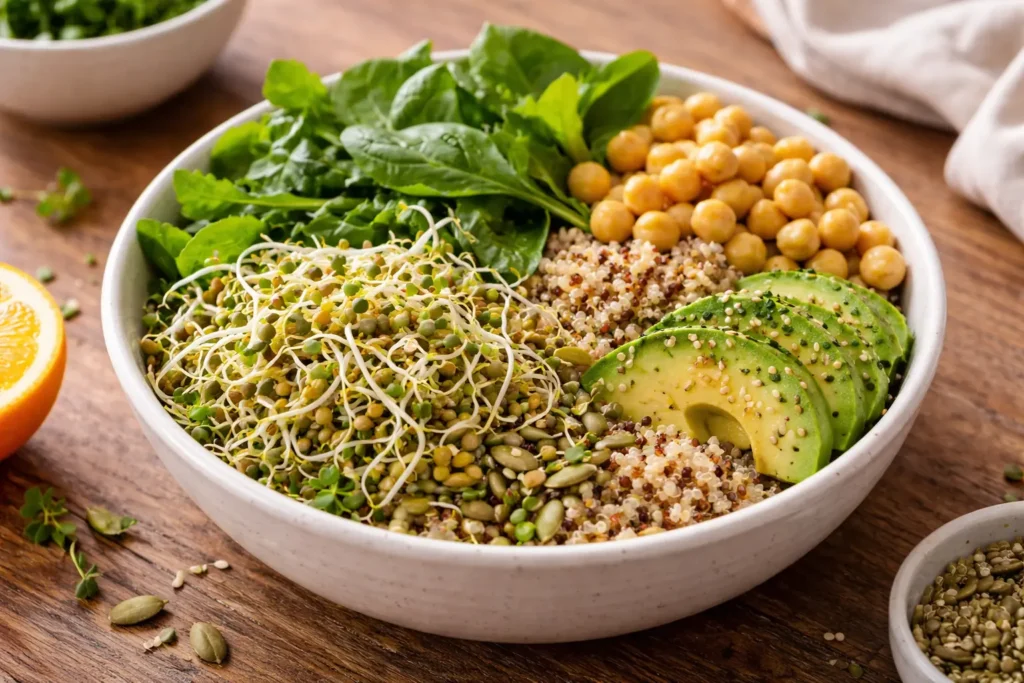
It depends on your goal.
For light digestion & low calories:
Mung bean sprouts
For balanced fiber + protein:
Soybean sprouts
For maximum fiber intake:
Lentil sprouts
To compare all sprout types precisely, including:
- Fiber per 100g
- Fiber per serving size
- Protein content
- Calorie density
- Vitamin levels
Use our Sprout Nutrition Comparison Tool to find the best option for your dietary goal.
FAQ
Are bean sprouts high in fiber?
Mung bean sprouts are moderate. Soybean sprouts contain more. Lentil sprouts are the highest in fiber.
Which sprout has the most fiber?
Lentil sprouts (3.5–4g per 100g).
Does cooking reduce fiber in sprouts?
No. Fiber is heat-stable and remains intact.
Are soybean sprouts better than mung sprouts for digestion?
Yes, they contain more total fiber and provide greater stool bulk.
Final Verdict
Not all bean sprouts are equal.
- Mung sprouts → Moderate fiber
- Soybean sprouts → Higher fiber than commonly reported
- Lentil sprouts → True high-fiber option
If your goal is improving digestion or increasing fiber intake, lentil sprouts are the strongest choice.
And remember:
Light cooking does not destroy fiber — it may actually help you consume more.
For a full comparison tailored to your intake goals, try our Sprout Nutrition Comparison Tool and see which sprout truly fits your diet strategy.
Data Sources
Harvard T.H. Chan School of Public Health – Fiber
https://www.hsph.harvard.edu/nutritionsource/carbohydrates/fiber/
Mayo Clinic – Dietary fiber: Essential for a healthy diet
https://www.mayoclinic.org/healthy-lifestyle/nutrition-and-healthy-eating/in-depth/fiber/art-20043983
Academy of Nutrition and Dietetics – Fiber
https://www.eatright.org/health/wellness/preventing-illness/the-health-benefits-of-fiber
Cleveland Clinic – Why Is Fiber Important?
https://health.clevelandclinic.org/why-is-fiber-important/
Johns Hopkins Medicine – Dietary Fiber
https://www.hopkinsmedicine.org/health/wellness-and-prevention/fiber-and-your-diet