
I. Broccoli Sprouts at a Glance
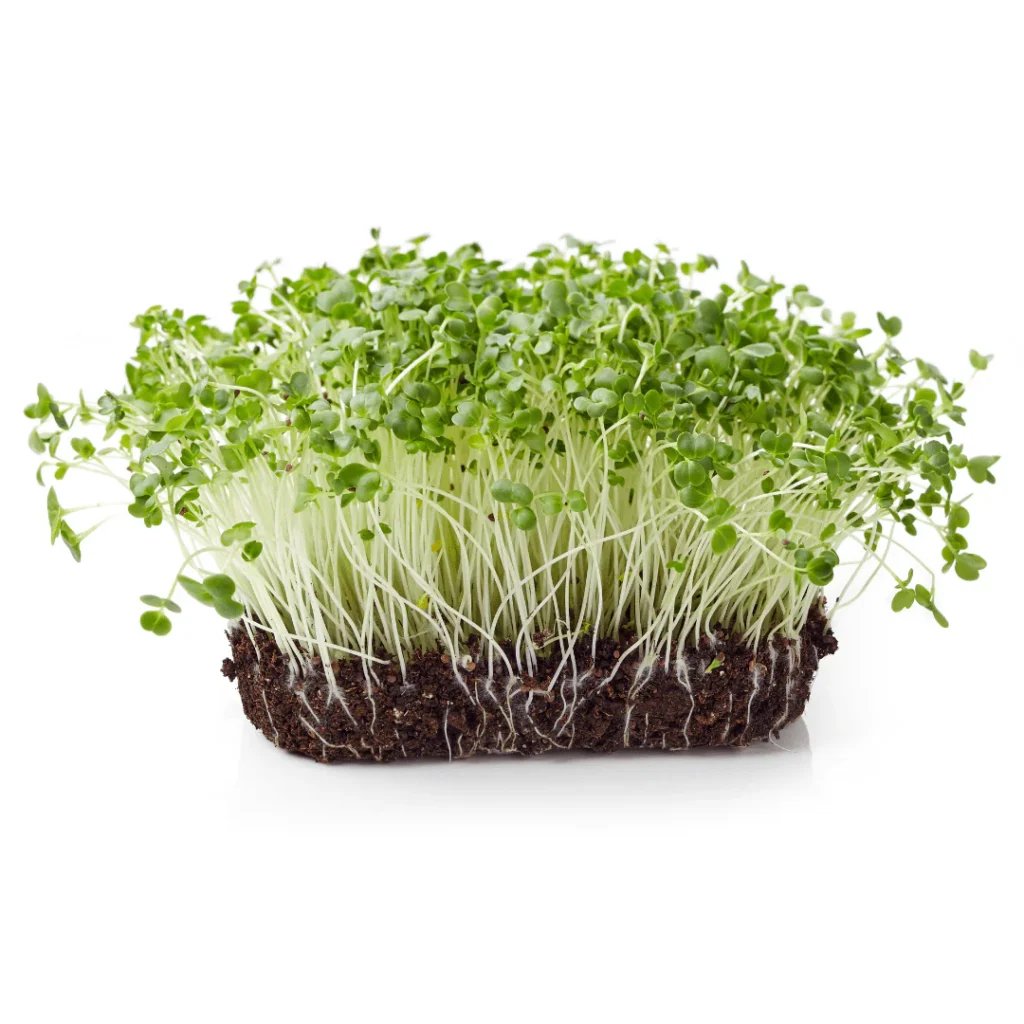
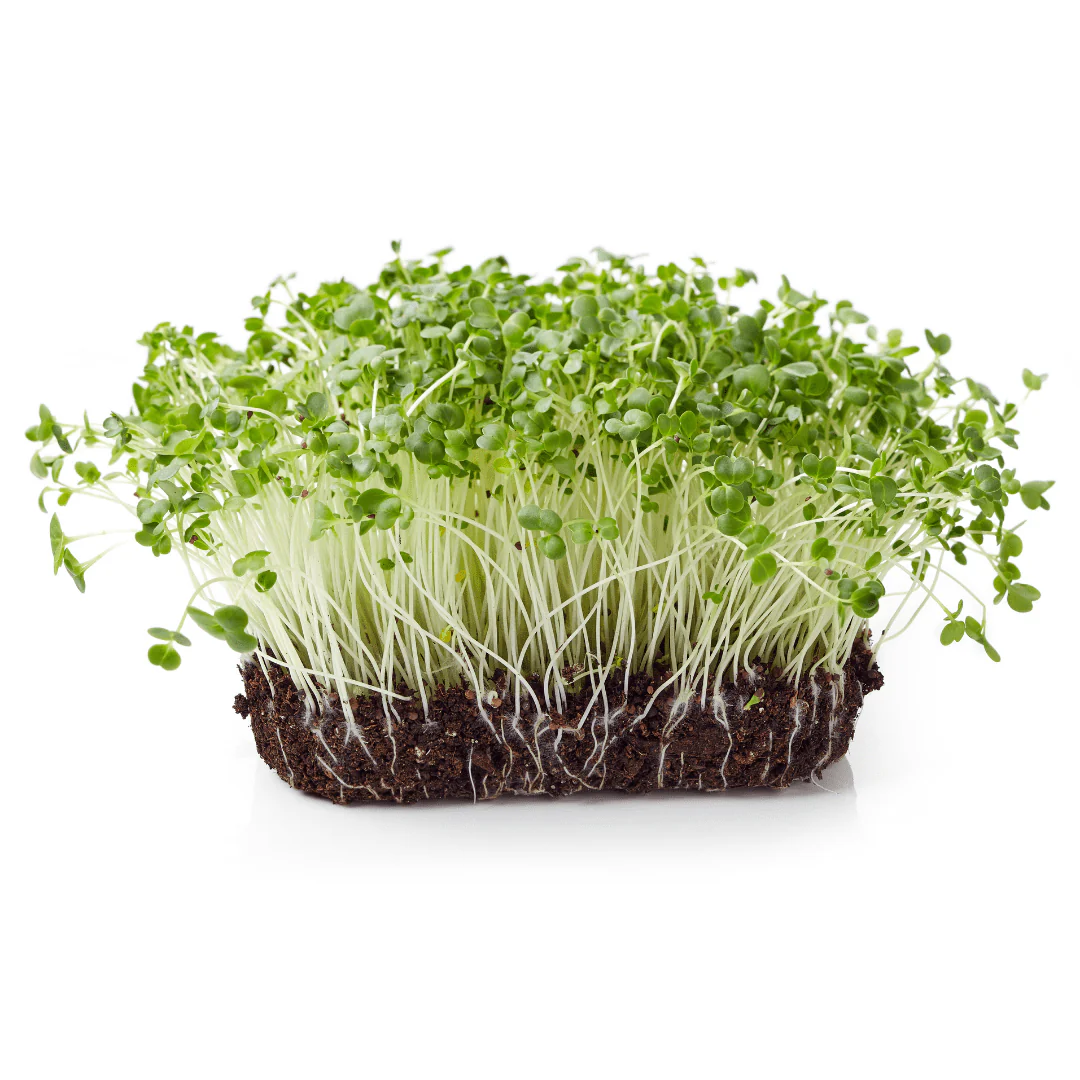
Broccoli sprouts are the seedling stage of broccoli seeds 3–5 days after germination, belonging to the cruciferous sprout family. They are one of the most researched sprouts due to their high content of glucoraphanin and its conversion product, sulforaphane.
Quick Facts
Scientific Name:Brassica oleracea var. italica
Germination & Harvest: 3–5 days Calories (100g): ~20 kcal
Key Active Compound: Sulforaphane
Common Consumption: Raw, lightly heated, salad ingredient
Raw Consumption Risk: ⚠️ Medium-High (same as all sprouts)
II. What Are Broccoli Sprouts?
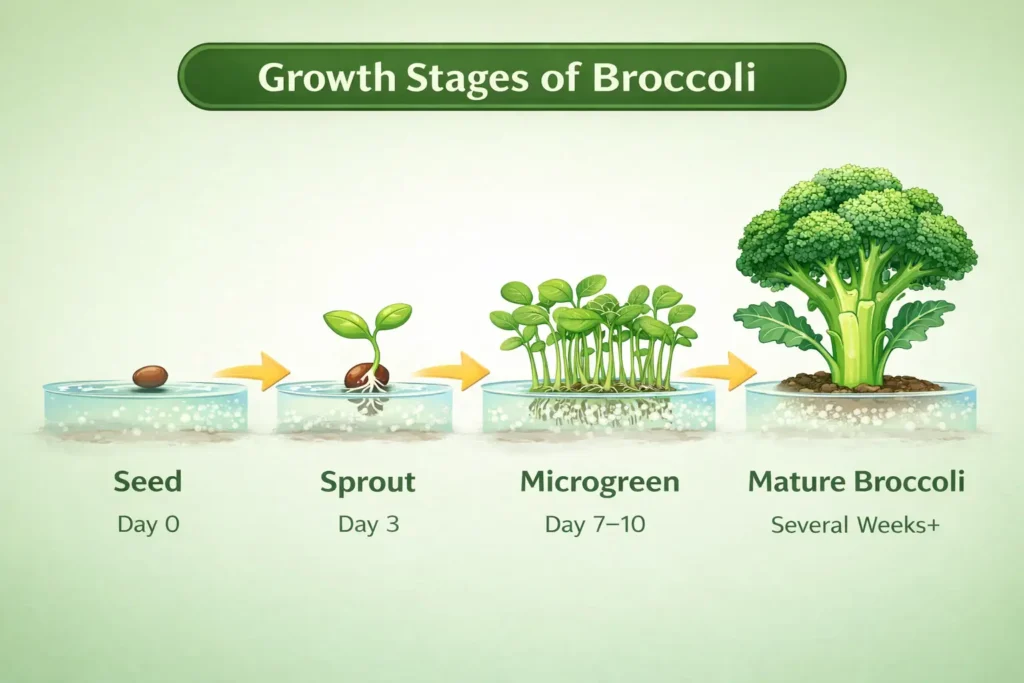
Broccoli sprouts are the form of broccoli in its earliest growth stage. Unlike mature broccoli, they have not yet developed thick stems or florets and consist only of the radicle, hypocotyl, and cotyledons. It's important to distinguish between three concepts:
Sprouts: 3–5 days, almost no true leaves.
Microgreens: 7–14 days, true leaves appear.
Mature Broccoli: Weeks to months. It is precisely this very early stage that allows broccoli sprouts to be highly concentrated with phytochemicals per unit weight.
Illustration: Growth stages of broccoli from seed → sprout → microgreen → mature plant.
III. Nutritional Profile Overview
3.1 Basic Nutrition (Per 100g, Approx.)
| Nutrient | Content |
|---|---|
| Calories | ~20 kcal |
| Protein | ~2.0 g |
| Carbohydrates | ~2.2 g |
| Dietary Fiber | ~2.0 g |
| Fat | <0.5 g |
| Vitamin C | Relatively High |
| Vitamin A (Beta-carotene) | Moderate |
| Calcium / Iron | Trace Amounts |
Data Sources: USDA FoodData Central, Healthline composite values.
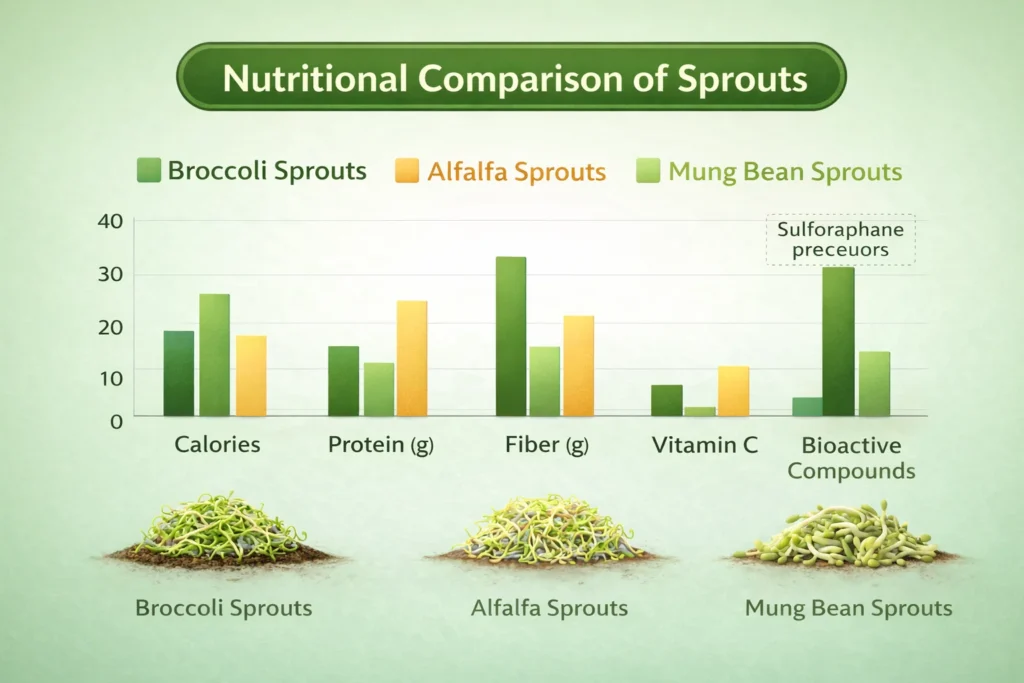
3.2 Nutritional Comparison with Other Sprouts
Chart: Broccoli sprouts vs. Alfalfa sprouts vs. Mung bean sprouts, comparing: Calories, Protein, Fiber, Vitamin C, Active Plant Compounds.Key Conclusion: Broccoli sprouts are not exceptionally outstanding in basic macronutrients. Their real advantage lies in their active compounds, not their macronutrient profile.
IV. The Key Compound: Sulforaphane
4.1 What is Sulforaphane?
Sulforaphane is an isothiocyanate plant compound derived from glucoraphanin in broccoli sprouts. When sprouts are chewed, chopped, or their cell structure is damaged, the endogenous enzyme myrosinase is activated, converting glucoraphanin into sulforaphane.
4.2 Content Advantage
Research shows that the glucoraphanin content in broccoli sprouts can be 20–100 times higher than in mature broccoli (by dry weight or per unit activity). This is why "broccoli sprouts" are often discussed separately, not simply as a regular vegetable.
V. Potential Health Benefits (Based on Research Findings)
The following describes potential effects at the research level and does not constitute medical advice.
5.1 Antioxidant & Detoxification Pathway Support
Sulforaphane has been found to activate the Nrf2 signaling pathway, thereby inducing Phase II detoxification enzymes in the body. This is related to the cell's ability to combat oxidative stress.
5.2 Findings Related to Cancer Research
In laboratory and animal studies, sulforaphane has shown to:
- Inhibit abnormal cell proliferation
- Influence inflammation and apoptosis pathways
⚠️ Important Note: These results cannot be equated with "preventing or treating cancer." Human studies are still limited.
5.3 Research Related to Gut & Metabolism
Some small-scale human studies suggest regular intake of broccoli sprouts may be correlated with:
- Reduced Helicobacter pylori activity
- Decreased markers of gastric inflammation
More long-term studies are needed for support.
VI. Safety & Risks (Crucial)
6.1 Why Are Sprouts Riskier?
All sprouts (including broccoli sprouts) share a common issue: the warm, humid, nutrient-rich sprouting environment is also ideal for bacterial growth. Common risk bacteria include:
- Salmonella
- E. coli
- Listeria
This contamination often occurs at the seed stage, not necessarily during home handling.
6.2 Recommendations for High-Risk Groups
The following groups are advised against consuming raw sprouts:
- Pregnant individuals
- The elderly
- Immunocompromised individuals
- Infants and young children
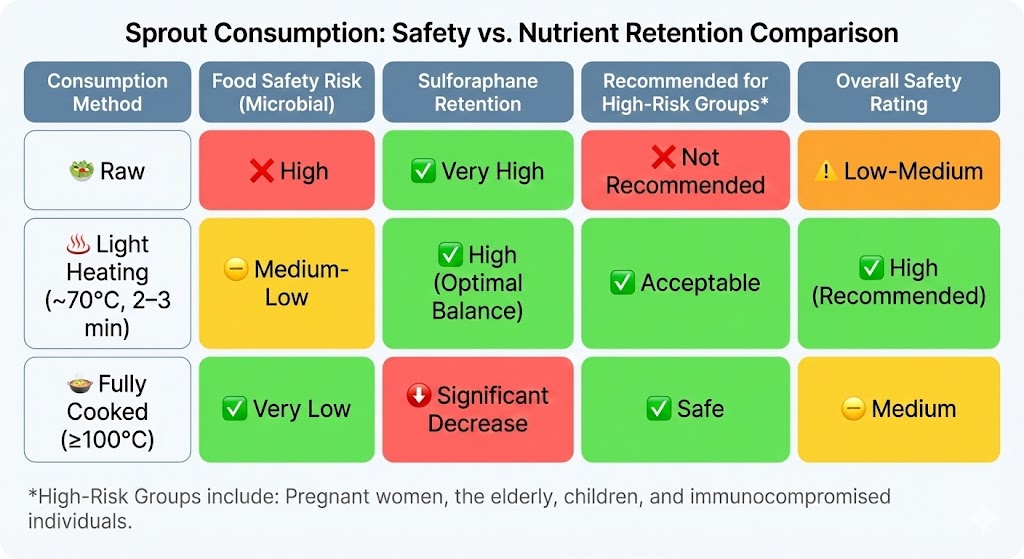
Chart: Safety level comparison for different consumption methods (Raw / Lightly Heated / Cooked).
VII. How to Grow Broccoli Sprouts at Home (Practical Steps)
7.1 Basic Steps
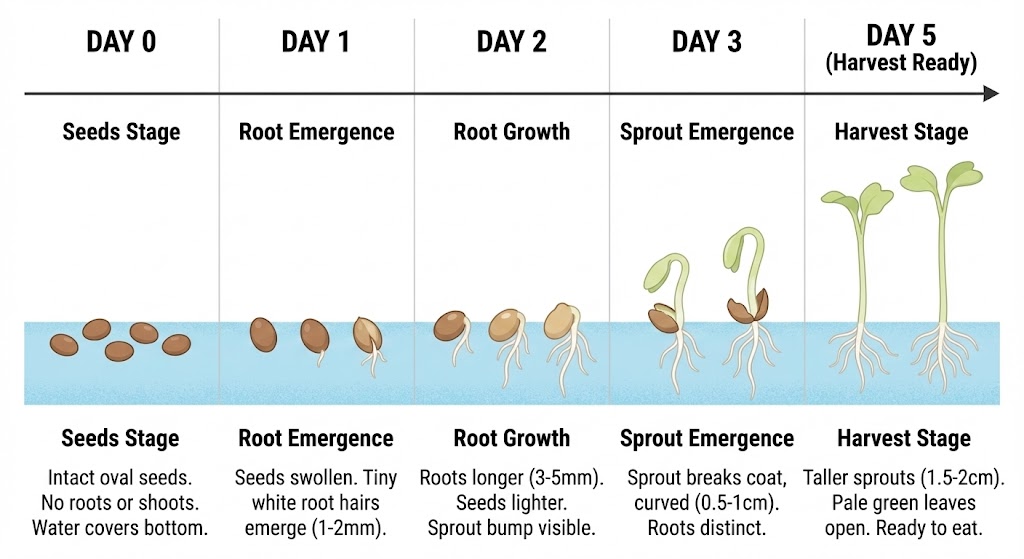
- Wash and soak seeds for 6–12 hours
- Drain and place in a sprouting jar or tray
- Maintain temperature at 18–22°C
- Rinse 2 times daily, ensure ventilation
- Harvest on days 3–5
Chart: Broccoli sprout germination timeline from Day 0 to Day 5.
7.2 Key Precautions
- Ensure complete drainage to avoid waterlogging.
- Discard immediately if off-odor or sliminess appears.
- Use food-grade seeds.
VIII. How to Consume Broccoli Sprouts
Common methods include:
- Eaten raw in salads or sandwiches
- Added to warm (not boiling) soup
- Sprinkled on dishes after cooking (to lower risk)
Tip: High heat destroys myrosinase, but gut microbiota can partially complete the conversion.
IX. Broccoli Sprouts vs. Mature Broccoli
| Aspect | Broccoli Sprouts | Mature Broccoli |
|---|---|---|
| Sulforaphane Potential | Very High | Moderate |
| Typical Consumption Amount | Small | Large |
| Raw Consumption Risk | Higher | Lower |
| Cooking Stability | Low | High |
Compare Nutritional Profiles of Different Sprouts
While we’ve summarized key nutrients for several sprouts above, individual sprouts can vary in nutrient content. To explore and compare the nutritional profiles of multiple sprouts interactively, try our Sprout Nutrition Comparison Tool. This tool allows you to see calories, protein, fiber, vitamins, and more for each type of sprout, helping you make informed dietary choices.
X. Frequently Asked Questions (FAQ)
1. What are Broccoli Sprouts?
Broccoli sprouts are the seedling stage of broccoli seeds about 3–5 days after germination, belonging to the cruciferous sprout family. Compared to mature broccoli, broccoli sprouts are smaller in size but rich in glucoraphanin, an important precursor compound for generating sulforaphane.
2. Which is healthier, broccoli sprouts or mature broccoli?
Each has its own advantages; there is no absolute "healthier" choice.
Broccoli Sprouts: Higher sulforaphane potential, typically consumed in small amounts, carries some food safety risk when raw.
Mature Broccoli: Can be consumed in large quantities, safer when cooked, stable in basic nutrients (fiber, vitamins).
From a daily diet perspective, consuming both is more reasonable.
3. Do broccoli sprouts have to be eaten raw?
Not necessarily.
Raw: Helps preserve the myrosinase enzyme, higher sulforaphane conversion efficiency, but relatively higher food safety risk.
Light Heating (e.g., stirred into hot soup): Can reduce microbial risk; some sulforaphane may still be generated via gut microbiota. For safety-sensitive individuals, light heating is more prudent.
4. Is it safe to eat raw broccoli sprouts?
Like all sprouts, eating raw broccoli sprouts carries a certain food safety risk because: the sprouting environment is warm and humid, and bacteria may already be present at the seed stage.
According to CDC/FDA advice, the following groups should avoid raw sprouts: pregnant individuals, the elderly, immunocompromised individuals, infants, and young children.
5. Can I eat broccoli sprouts every day?
For most healthy adults, broccoli sprouts from reliable sources can be consumed regularly in moderation.
Suggestions: Keep the amount small (as a garnish, not a main dish), monitor gastrointestinal reactions, and avoid long-term, high-volume raw consumption. If you have digestive issues or special health conditions, consult a professional first.
6. Are the "white fine hairs" on broccoli sprouts mold?
Usually not. The white hair-like structures are mostly root hairs, common when humidity is high and sprouting is good. They typically disappear or become less noticeable after rinsing with water.
⚠️ If an off-odor, sliminess, or abnormal color appears, discard immediately.
7. Is it safe to grow broccoli sprouts at home?
Home cultivation can reduce some risks but cannot eliminate them entirely. Practices to improve safety include: using food-grade sprouting seeds, rinsing thoroughly and draining completely daily, maintaining good ventilation, and stopping consumption immediately if abnormalities appear. Nevertheless, home sprouting cannot achieve a sterile environment.
8. Do broccoli sprouts really contain "100 times" more sulforaphane?
A more accurate statement is: The glucoraphanin content in broccoli sprouts, under certain research conditions, can be dozens of times higher (commonly reported as 20–100 times) than in mature broccoli.
Note: The value depends on variety, measurement method, and unit; it does not equal actual human absorption; and it does not mean "100 times more effective."
9. Are broccoli sprouts suitable for children?
Generally, it is not recommended for children to eat raw broccoli sprouts due to food safety risks and their immature immune systems. If consuming, it is advised to: heat thoroughly, serve as a small side dish, and ensure a safe source.
10. Can broccoli sprouts be eaten with other sprouts?
Yes, and it's common. For example: broccoli sprouts + alfalfa sprouts, broccoli sprouts + mung bean sprouts, broccoli sprouts + microgreens.
Combining them can: balance texture, distribute the risk associated with a single sprout type, and provide a richer nutritional source.
References & Data Sources (EEAT)
📚 Nutrition Data Sources
- USDA FoodData Central – Raw Broccoli Sprouts
https://fdc.nal.usda.gov/
(Official nutrition database provided by the U.S. Department of Agriculture. Search for “Broccoli Sprouts, Raw” within the database.) - WhatYouEat – Broccoli Sprouts Nutrition Facts
https://whatyoueat.io/foods/168384-broccoli-sprouts
(Nutrition breakdown based on USDA data.) - NutriVals – Broccoli Sprouts Nutrition Data
https://www.nutrivals.com/nutrition-facts/spices-and-herbs/broccoli-sprouts/
(Independent database aggregating macro- and micronutrient values.)
📌 Health & Nutrient Overview
- Healthline – Broccoli Sprouts: Nutrition, Benefits, and Uses
https://www.healthline.com/nutrition/broccoli-sprouts
(Evidence-based health and nutrition explanations reviewed by medical professionals.) - Verywell Health – Sulforaphane and Broccoli Sprouts
https://www.verywellhealth.com/sulforaphane-5083128
(Information on active compounds and potential health effects.)
📌 Food Safety & Public Health References
- CDC – Sprouts and Food Safety
https://www.cdc.gov/foodsafety/foods/sprouts.html
(U.S. Centers for Disease Control and Prevention guidance on sprout-related food safety.) - FDA – Sprout Safety and Recalls
https://www.fda.gov/food/foodborne-pathogens/sprouts
(U.S. Food and Drug Administration information on sprout production, recalls, and safety.)
🔎 Citation Note
These sources are cited for informational purposes. Please note the access date when citing external databases or public health guidance, as data and recommendations may change over time.
Comparison Tool Data Snapshot
This table is generated from the same data module as the Sprout Nutrition Comparison Tool, so this guide and the interactive comparison stay synchronized. Values are per 100 g fresh weight. “≈” means a species- and stage-matched reference estimate, not a direct measurement of every crop.
| Growth stage | Calories (kcal) | Protein (g) | Fiber (g) | Vitamin C (mg) | Folate (µg) | Iron (mg) | Calcium (mg) | Potassium (mg) |
|---|---|---|---|---|---|---|---|---|
| Whole Sprout | ≈ 20 kcal | ≈ 2.3 g | ≈ 1.1 g | 114 mg | ≈ 65 µg | ≈ 0.7 mg | ≈ 32 mg | ≈ 293 mg |
| Microgreen / Shoot | 21.1 kcal | 2.1 g | ≈ 2.08 g | 49.02 mg | ≈ 72 µg | 2.61 mg | 111.83 mg | 158.88 mg |