Introduction
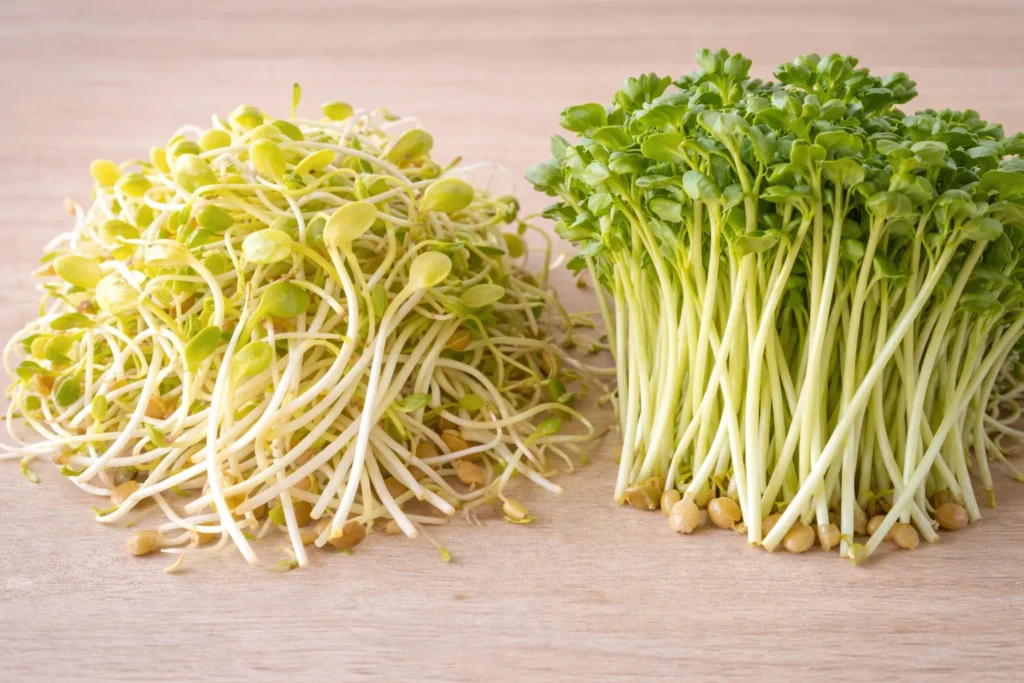
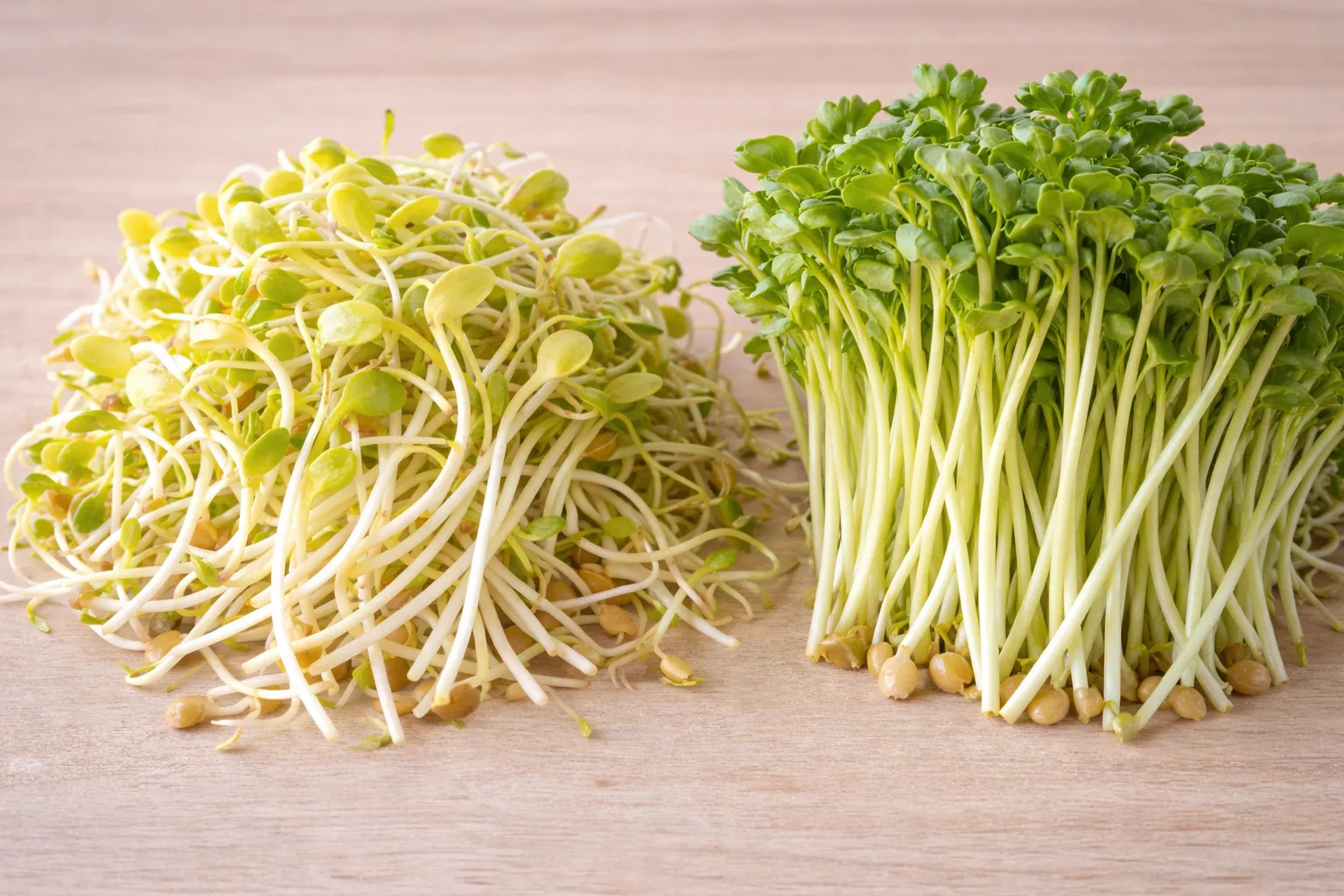
Broccoli sprouts are young broccoli seedlings harvested just days after germination, prized not for basic vitamins—but for their exceptional concentration of glucoraphanin, the precursor to sulforaphane.
What makes broccoli sprouts truly special is timing: at the 3–4 day sprouting stage, they reach a biochemical peak where sulforaphane potential is dramatically higher than mature broccoli. This guide breaks down the real numbers, explains the underlying biology, evaluates evidence-based health benefits, addresses safety considerations, and shows you how to unlock their full potential.
Nutrient Profile — The Numbers That Matter
Nutrient Comparison (per 100 g fresh weight)
| Nutrient | Broccoli Sprouts (3–4 Days Old) | Mature Broccoli (Raw Heads) |
|---|---|---|
| Calories | ~30 kcal | 34 kcal |
| Protein | 2 – 4 g | 2.8 g |
| Dietary Fiber | 2 – 3 g | 2.6 g |
| Vitamin C | 50 – 90 mg | 89 mg |
| Vitamin K | 60 – 100 µg | 102 µg |
| Calcium | 40 – 55 mg | 47 mg |
| Iron | 1.0 – 1.5 mg | 0.7 mg |
| Glucoraphanin | 110 – 250 mg (high potency) | 10 – 60 mg |
| Sulforaphane potential | High (5–15 mg per oz) | Low |
📌 Important context:
Broccoli sprouts are not nutritionally superior across all vitamins or macronutrients. Their real value lies in the 10–100× higher glucoraphanin concentration, which no mature vegetable can match on a per-gram basis.
Interactive Tool: Want to see how your specific serving size stacks up? [Use our [Broccoli Sprout Nutrient Calculator] to compare values.]
Why These Nutrients Matter
Basic Nutrition (Secondary Role)
- Fiber supports gut health and regularity
- Protein contributes modest plant amino acids
- Vitamin C & K support immune and vascular function
These are beneficial—but not the main reason people eat broccoli sprouts.
Sulforaphane: The Real Superpower
Sulforaphane is not stored in the plant. It is created at the moment of eating through a well-studied enzymatic reaction:
Glucoraphanin + myrosinase + cell disruption
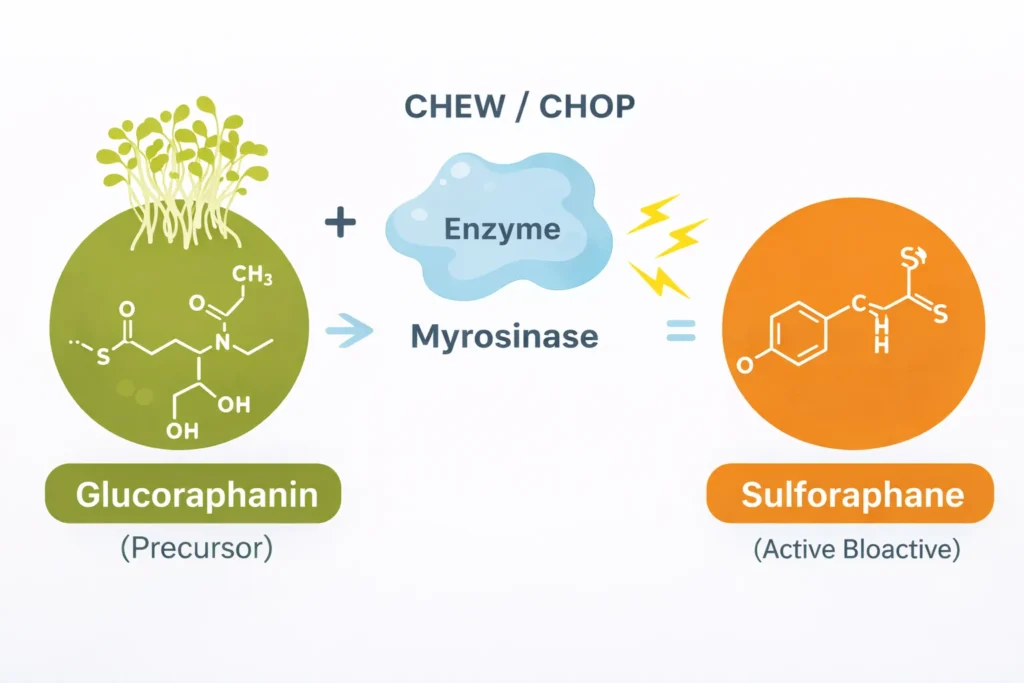
- Broccoli sprouts naturally contain both glucoraphanin and myrosinase
- Chewing, chopping, or blending ruptures plant cells
- This allows sulforaphane to form rapidly
At the 3–4 day sprouting stage, glucoraphanin concentration reaches its biological peak. As the plant grows into microgreens or mature broccoli, increasing water content and biomass dilute this compound significantly.
Health Benefits (Evidence-Based)
A. Strongest Evidence
Antioxidant & Cellular Defense Activation
Sulforaphane activates the Nrf2 pathway, increasing phase II detoxification enzymes (e.g., glutathione S-transferase).
Evidence strength: human clinical + animal studies
B. Moderate Evidence
Cardiometabolic Markers
Some human trials show improvements in oxidative stress markers and inflammation-related indicators.
Evidence strength: limited human, supportive mechanistic data
Blood Sugar Regulation
Animal and cell studies suggest improved insulin sensitivity and glucose metabolism.
Evidence strength: preclinical
C. Emerging / Exploratory Evidence

Anti-cancer Potential
Sulforaphane has been shown to influence cell cycle regulation and apoptosis in laboratory settings. Clinical evidence remains inconclusive, and broccoli sprouts should not be viewed as cancer treatment or prevention.
Evidence strength: lab + observational
How to Maximize Sulforaphane — Practical, Proven Techniques
A. Raw vs Cooked
- Raw sprouts preserve myrosinase
- Heat above ~70°C significantly deactivates the enzyme
- Light blanching reduces—but does not eliminate—potential
B. Chop + Rest Method
- Chop, crush, or chew thoroughly
- Let rest 5–10 minutes before consuming
- Allows enzymatic conversion to complete
C. The Freezing Hack (Highly Effective for Smoothies)
Why it works:
Freezing ruptures plant cell walls at a microscopic level—essentially performing perfect mechanical breakdown.
How to use it:
- Freeze fresh sprouts
- Blend directly into smoothies
- Upon thawing/blending, myrosinase and glucoraphanin mix instantly
👉 This method often produces higher sulforaphane peaks than chopping alone.
D. Pairing Enhancers (When They Matter)
- Mustard or radish seeds provide external myrosinase
- Especially useful if sprouts are lightly cooked or blanched
- For fully raw sprouts, added enzymes are helpful but not required
Healthy fats (olive oil, avocado) may aid absorption.
Safety & Risks (Responsible Science)
Food Safety
Raw sprouts carry higher contamination risk if grown improperly.
Risk reduction:
- Use food-grade seeds
- Rinse daily
- Refrigerate after harvest
- Avoid consumption if immunocompromised or pregnant
Overconsumption & Interactions
- Excess intake may cause digestive discomfort
- Individuals with thyroid disorders should moderate intake
- Possible interactions with certain medications
⚠️ Disclaimer: This content is for educational purposes only and not medical advice.
Broccoli Sprouts vs Other Sprouts
| Sprout | Primary Strength |
|---|---|
| Broccoli sprouts | Sulforaphane & detox pathways |
| Lentil sprouts | Protein & fiber |
| Mung bean sprouts | Mild energy & texture |
| Alfalfa sprouts | Light bulk, low bioactive density |
Broccoli sprouts are biochemically unique, not just another sprout variety.
Q&A: Common Questions
Are broccoli sprouts high in vitamin C?
Yes, but their defining advantage is glucoraphanin—not vitamin C.
How much sulforaphane is in 1 oz of broccoli sprouts?
Approximately 5–15 mg, depending on preparation and conversion efficiency. This represents sulforaphane potential, not guaranteed yield.
What is the best daily serving size?
10–30 g fresh sprouts is sufficient for most adults.
Can I grow them safely at home?
Yes, with proper hygiene and food-grade seeds.
Serving Ideas
- Raw in salads
- Frozen in smoothies (best for sulforaphane)
- Sprinkled over warm foods after cooking
- Wrapped in flatbreads or sandwiches
Sources & Citations
1. Broccoli Sprouts & Sulforaphane Research
- [PNAS] Foundational Study on Broccoli Sprouts
- Fahey, J. W., et al. (1997). Broccoli sprouts: An exceptionally rich source of inducers of enzymes that protect against chemical carcinogens.
- https://www.pnas.org/doi/10.1073/pnas.94.19.10367
- [PubMed] Sulforaphane’s Mechanism via the Nrf2 Pathway
- Sulforaphane and Its Effects on Cancer, Cardiometabolic Diseases, and Cognitive Functions.
- https://www.ncbi.nlm.nih.gov/pmc/articles/PMC6826544/
- [Journal of Food Science] Impact of Processing on Myrosinase Activity
- Effects of Domestic Processing on Glucosinolates and Sulforaphane in Broccoli.
- https://onlinelibrary.wiley.com/journal/17503841
2. Lentil Sprouting & Nutrient Bioavailability
- [PubMed] Nutritional Changes During Sprouting
- Changes in Nutrient Composition and Antinutrient Contents of Sprouted Food.
- https://www.ncbi.nlm.nih.gov/pmc/articles/PMC8912540/
- [USDA] FoodData Central Database
- Official nutritional profiles for raw lentils, sprouts, and mature broccoli.
- https://fdc.nal.usda.gov/
3. Food Safety & Consumption Risk
- [FDA] Safety Guidelines for Consuming Raw Sprouts
- Sprouts: What You Should Know (Consumer Safety Information).
- https://www.fda.gov/food/buy-store-serve-safe-food/sprouts-what-you-should-know