🥗 1. What Are Chickpea Sprouts?
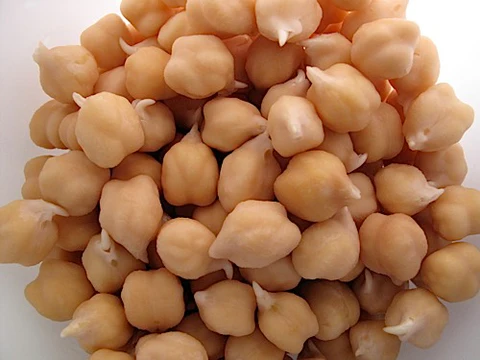
Chickpea sprouts are young shoots produced by soaking chickpea seeds in water and allowing them to germinate for 3–6 days under suitable conditions. Compared to mature chickpeas, chickpea sprouts are tender, easier to digest, and their nutrients are more readily absorbed, making them a common ingredient in healthy diets. They are often used in salads, stir-fries, soups, or as a topping.
Structured Explanation:
- Seed → Sprout → Young sprout structure
- Typically reach optimal eating stage after 3–6 days of sprouting
🥗 2. Nutritional Profile & Chart Description
2.1 Per 100g Chickpea Sprouts Nutrition Facts
| Nutrient | Approx. Content (per 100g) |
|---|---|
| Calories | 35–40 kcal |
| Protein | 6.0–7.0 g |
| Carbohydrates | ~6.5 g |
| Dietary Fiber | ~2.5 g |
| Fat | ~0.4 g |
| Vitamin C | Moderately High |
| Vitamin K | Moderate |
| Potassium | Moderate |
| Iron | Moderate |
Data synthesized from USDA FoodData Central and other authoritative databases.
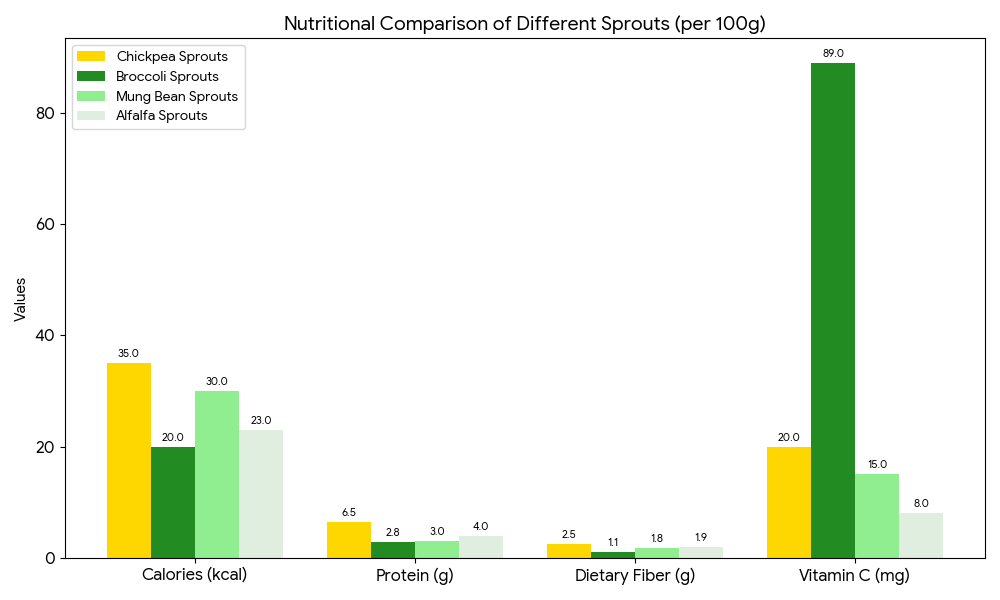
Chart Description (Figure 1)
Chickpea Sprouts Nutrition Overview
Bar chart / radar chart showing metrics such as calories, protein, and dietary fiber.
🍃 3. Bioactive Compounds
Chickpea sprouts are rich in phytochemicals and functional components, including:
- Isoflavones
- Plant phenolics
- Antioxidants
These active compounds have shown antioxidant and anti-inflammatory potential in in vitroand small-scale studies, but evidence from large-scale human intervention studies is still insufficient, so claims should not be exaggerated.
❤️ 4. Potential Health Benefits
The following is based on existing research, nutrition databases, and nutritional theory—not medical advice.
4.1 Promotes Digestive Health
Chickpea sprouts are high in dietary fiber, which may support bowel regularity and digestive function.
4.2 Protein Supplement
Compared to most sprouts, chickpea sprouts are higher in protein, making them a good protein source for vegetarians.
4.3 Antioxidant Support
Vitamin C and phytochemicals may help reduce oxidative stress and support immune health.
4.4 Weight Management
The combination of low calories, high protein, and high fiber makes them suitable as part of a calorie-controlled diet.
⚠️ 5. Risk Notice & Food Safety
5.1 Microbial Risks During Sprouting
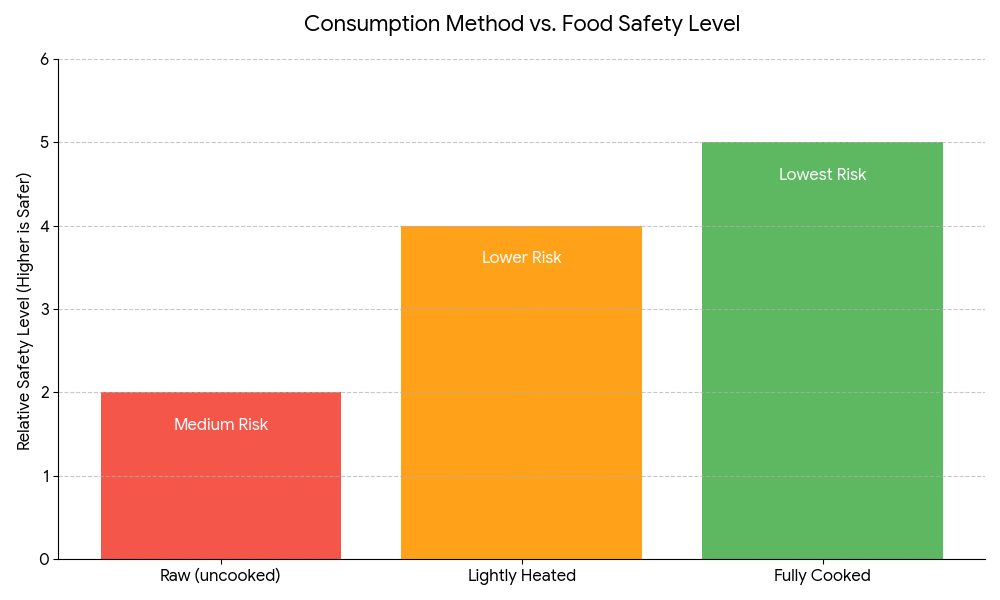
It’s important to understand: sprouts (including chickpea sprouts) grow in a warm, humid, nutrient-rich environment that is also ideal for bacterial growth. Salmonella and E. coli have been detected in sprouted foods on multiple occasions.
Public health agencies (e.g., FDA, CDC) have issued risk warnings related to sprout-associated outbreaks.
5.2 Recommendations for High-Risk Groups
- Pregnant individuals
- Immunocompromised individuals
- The elderly
- Infants and young children
These groups should avoid raw sprouts or choose to eat them only after heating.
5.3 Safe Consumption Tips
- Thoroughly wash sprouts
- Rinse sprouting containers and sprouts with clean water
- Briefly blanch or lightly heat before eating
- Refrigerate and consume promptly
🏡 6. How to Grow Chickpea Sprouts at Home (Home Sprouting Guide)
Chickpea sprouts are one of the most common sprouts to grow at home. The process is as follows:
6.1 Materials Needed
- Food-grade chickpea seeds (labeled for sprouting/edible use)
- Sprouting jar or tray
- Clean water
6.2 Standard Sprouting Steps
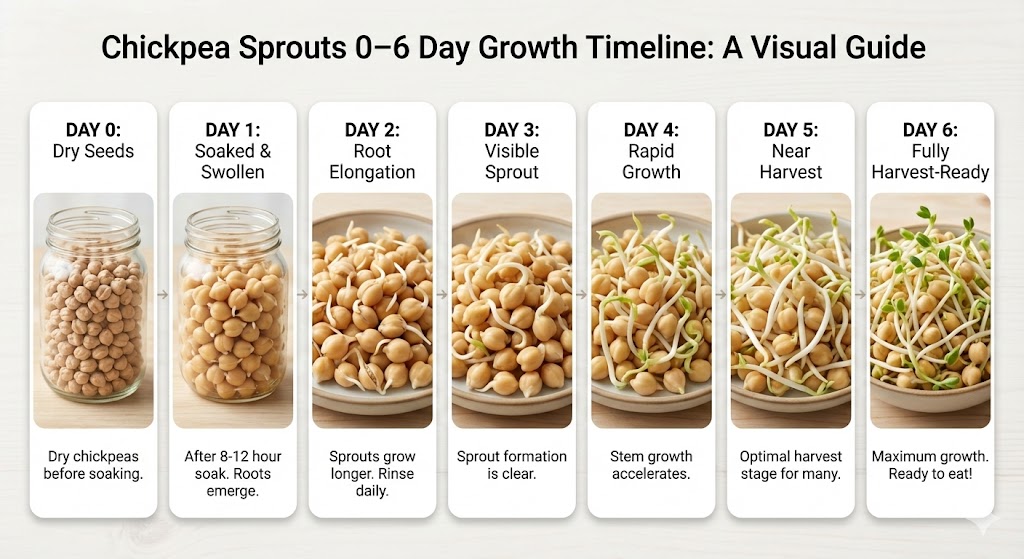
- Soak: Soak chickpeas in cool water for 8–12 hours
- Drain: Discard soaking water
- Place in sprouting container: Transfer to a sprouting tray or jar
- Rinse 2–3 times daily: Rinse with cool water and drain
- Environment: Keep in a well-ventilated, slightly cool place
- Harvest: Ready in 3–6 days
Chart Description (Figure 2)
Chickpea Sprouts 0–6 Day Growth Timeline: A horizontal timeline showing daily growth stages, ideal for visual guidance.
🍽️ 7. How to Eat Chickpea Sprouts
Chickpea sprouts are very versatile:
- Salads: With greens, olive oil, and lemon juice
- Stir-fry: Quick stir-fry for a few minutes
- Soups: Add just before serving
- Wraps/Sandwiches: For added texture
For those concerned about food safety, it’s recommended to lightly heat rather than eat raw.
🔄 8. Chickpea Sprouts vs. Common Sprouts
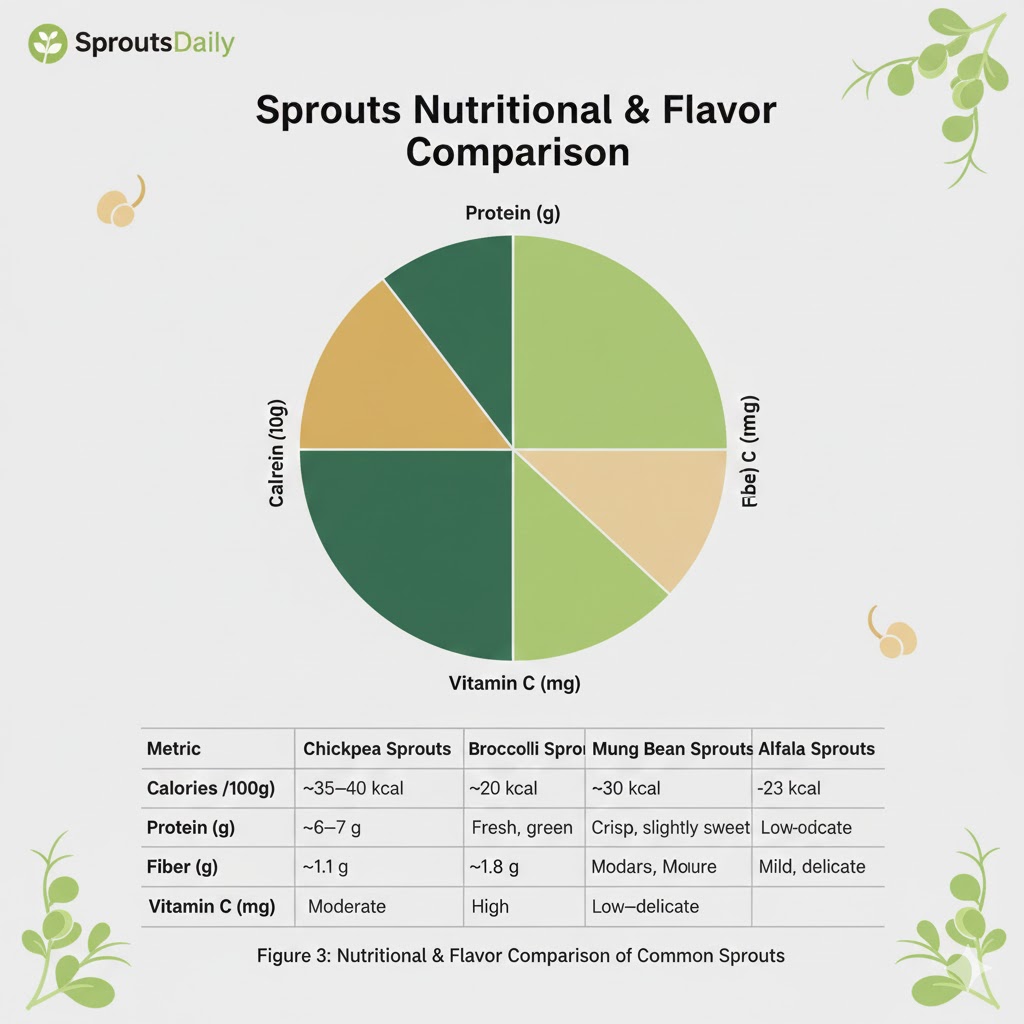
| Metric | Chickpea Sprouts | Broccoli Sprouts | Mung Bean Sprouts | Alfalfa Sprouts |
|---|---|---|---|---|
| Calories (/100g) | ~35–40 kcal | ~20 kcal | ~30 kcal | ~23 kcal |
| Protein | ~6–7 g | ~2.8 g | ~3.0 g | ~4.0 g |
| Fiber | ~2.5 g | ~1.1 g | ~1.8 g | ~1.9 g |
| Vitamin C | Moderate | High | Moderate | Low–Moderate |
| Flavor | Rich, nutty | Fresh, green | Crisp, slightly sweet | Mild, delicate |
Chart Description (Figure 3)
Sprouts Nutritional & Flavor Comparison: Radar or bar chart showing comparison results.
Compare Nutritional Profiles of Different Sprouts
While we’ve summarized key nutrients for several sprouts above, individual sprouts can vary in nutrient content. To explore and compare the nutritional profiles of multiple sprouts interactively, try our Sprout Nutrition Comparison Tool. This tool allows you to see calories, protein, fiber, vitamins, and more for each type of sprout, helping you make informed dietary choices.
❓ 9. Frequently Asked Questions (FAQ)
Q1: Can chickpea sprouts be eaten raw?
A1: While many people eat them raw, due to the higher microbial risk, it’s recommended to wash and lightly heat them before consumption.
Q2: What’s the difference between chickpea sprouts, chickpea flour, and mature chickpeas?
A2: Chickpea sprouts are germinated young shoots with more easily digestible protein; mature chickpeas usually require cooking and have a different nutrient density.
Q3: Can children eat chickpea sprouts?
A3: Children should avoid raw sprouts; they can eat them after a quick stir-fry or light cooking.
Q4: Are chickpea sprouts good for weight loss?
A4: Due to their low calories, high protein, and fiber, they are suitable as a healthy side in a weight management diet.
Data Sources
USDA FoodData Central — Nutrition database
https://fdc.nal.usda.gov/
Healthline — Raw sprouts safety & nutrition info
https://www.healthline.com/nutrition/raw-sprouts
Eat This, Not That — Chickpea sprouts benefits
https://www.eatthis.com/chickpea-sprouts/
Forages Sprout Varieties
https://forages.co/blogs/sprout-varieties
Comparison Tool Data Snapshot
This table is generated from the same data module as the Sprout Nutrition Comparison Tool, so this guide and the interactive comparison stay synchronized. Values are per 100 g fresh weight. “≈” means a species- and stage-matched reference estimate, not a direct measurement of every crop.
| Growth stage | Calories (kcal) | Protein (g) | Fiber (g) | Vitamin C (mg) | Folate (µg) | Iron (mg) | Calcium (mg) | Potassium (mg) |
|---|---|---|---|---|---|---|---|---|
| Whole Sprout | ≈ 55 kcal | ≈ 5.2 g | ≈ 3.5 g | ≈ 3 mg | ≈ 172 µg | ≈ 1.2 mg | ≈ 49 mg | ≈ 291 mg |
| Microgreen / Shoot | ≈ 52 kcal | ≈ 5.8 g | ≈ 3.8 g | ≈ 25 mg | ≈ 190 µg | ≈ 1.8 mg | ≈ 80 mg | ≈ 380 mg |