Yes — sprouts absolutely contain protein. In fact, for their calorie count, some varieties are among the most protein-dense plant foods you can find.
However, the "protein power" of a sprout depends on its family and its water content. In this guide, we’ll look at the real numbers and how sprouting makes that protein easier for your body to use.
How Much Protein Is in Sprouts? (Per 100g Comparison)
Not all sprouts are equal. While a Mung Bean Sprout is mostly water, a soybean sprout is a nutritional heavyweight.
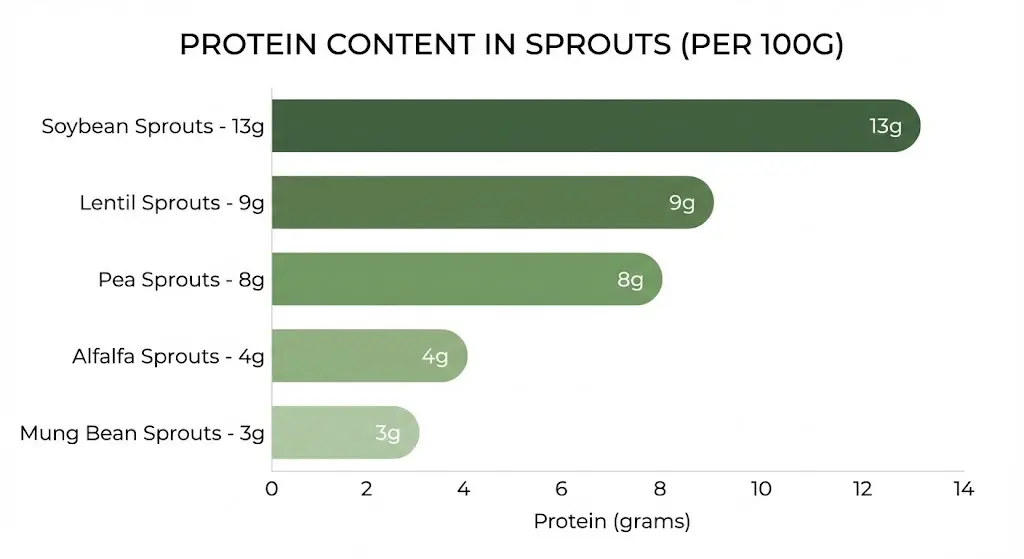
| Sprout Type | Protein (per 100g) | Protein Level |
| Soybean Sprouts | ~13.1g | High |
| Lentil Sprouts | ~9.0g | Moderate-High |
| Pea Sprouts | ~5.0 – 8.0g | Moderate |
| Alfalfa Sprouts | ~4.0g | Moderate |
| Mung Bean Sprouts | ~3.0g | Light |
| Broccoli Sprouts | ~2.5 – 3.0g | Light |
Interactive Tool: Want to see how these stack up against steak or tofu? Check out our Sprouts Protein Comparison Tool to calculate your specific serving size.
The Sprouting Secret: Why Content "Changes"
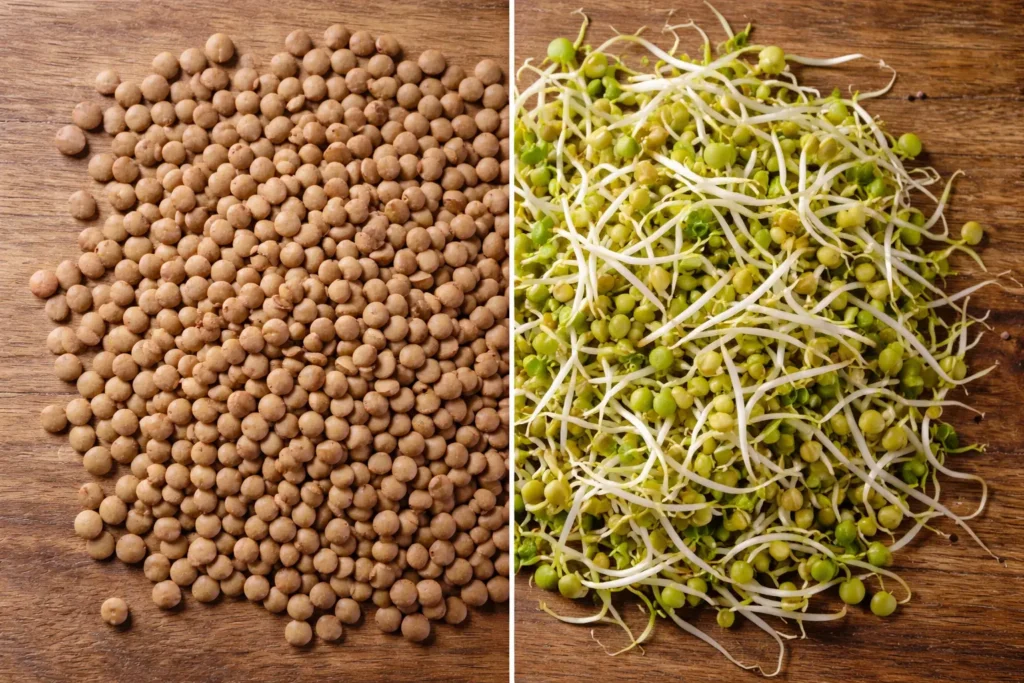
Sprouts are germinated seeds. During this "awakening," the seed doesn't necessarily create new protein, but it transforms what it has:
- Increased Bioavailability: Sprouting reduces "anti-nutrients" like phytates and trypsin inhibitors. These are the "bodyguards" of the seed that usually block your body from absorbing protein.
- Amino Acid Shift: Germination can improve the profile of essential amino acids (the building blocks of protein), making the sprout more "complete" than the dormant seed.
- The Water Factor: 100g of dry lentils has more protein than 100g of lentil sprouts because the sprouts have absorbed water. However, you can eat a much larger volume of fresh sprouts more easily!
Which Sprouts Are Best for Your Goals?
🥇 The Muscle Builder: Soybean Sprouts (~13g/100g)
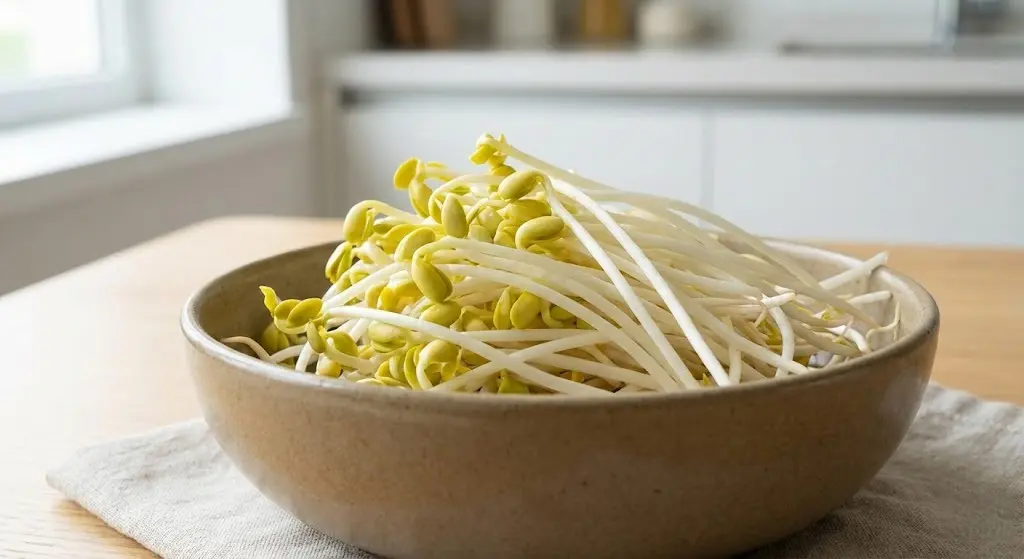
If you are on a plant-based fitness journey, these are your best friend. They hold their crunch well in stir-fries and provide a protein hit comparable to some processed meat alternatives—but in whole-food form.
🥈 The Balanced Choice: Lentil Sprouts (~9g/100g)
Lentil Sprouts offer a fantastic trifecta of Protein + Iron + Fiber. They are perfect for stabilizing energy levels throughout the afternoon.
🥉 The Versatile Booster: Pea Sprouts (~5-8g/100g)
With a sweet, mild flavor, these are the easiest to "hide" in smoothies or wraps if you’re looking to sneak extra protein into a picky eater's diet.
Plan Your Diet: Discover more in our guide: Does Sprouting Increase Nutrition?
Is Sprout Protein "Complete"?
Most plant proteins are "incomplete," meaning they are low in one or two essential amino acids (usually methionine or lysine).
To ensure you are getting everything your muscles need, try these Synergy Pairings:
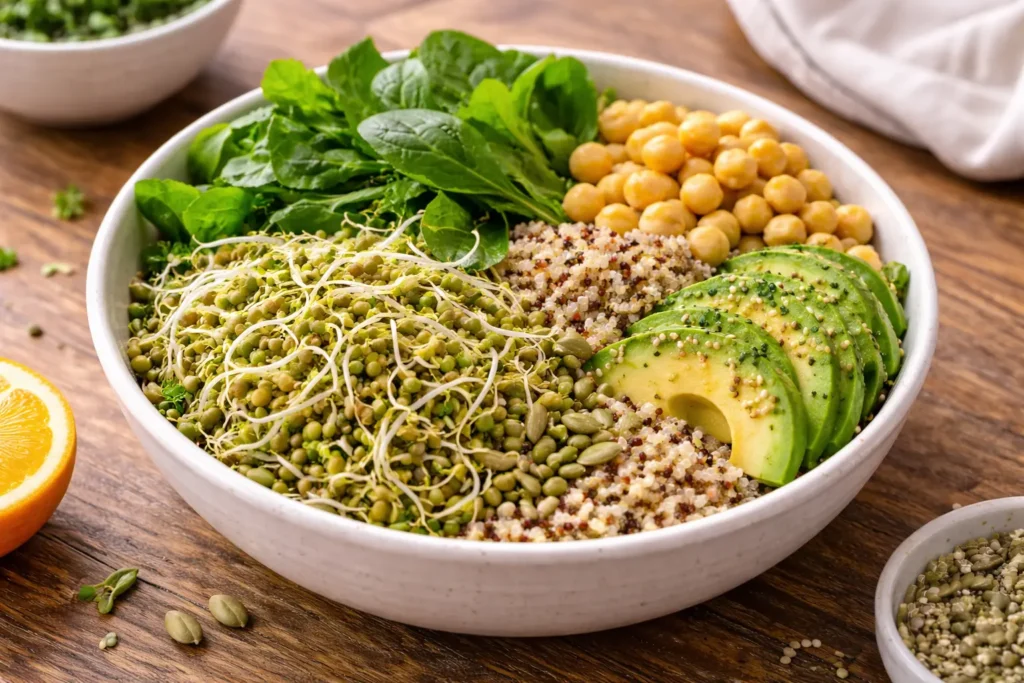
- Lentil Sprouts + Quinoa (A complete amino acid profile)
- Soybean Sprouts + Brown Rice
- Sprouts + Hummus (Chickpeas)
Quick Check: Use our Plant Protein Completeness Checker to see if your meal hits the mark.
Raw vs. Cooked: Does Heat Destroy Protein?
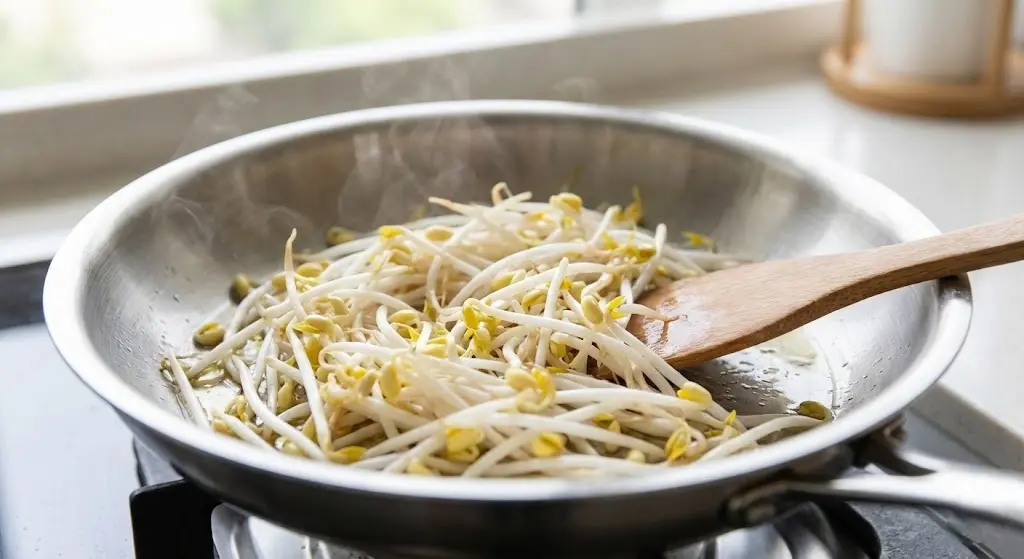
No. Protein is remarkably heat-stable. While heat might slightly alter the shape of the protein (denaturation), the amino acids remain intact.
- Pro Tip: Lightly steaming soybean or kidney bean sprouts is actually better for protein absorption because it neutralizes any remaining enzyme inhibitors that might interfere with your digestion.
Safety & Digestion
Sprouts are safe and healthy for most, but keep these three rules in mind:
- Rinse Daily: If growing your own, keep them clean.
- Heat for Safety: If you have a sensitive immune system, a quick 1-minute steam or stir-fry kills potential bacteria without sacrificing the protein.
- Store Cold: Always keep harvested sprouts in the refrigerator.
Frequently Asked Questions
Are sprouts a complete protein source?
Most sprouts are not "perfectly" complete on their own (they may be low in certain amino acids like methionine). However, soybean sprouts come very close. To ensure you get all essential amino acids, simply combine your sprouts with a whole grain like quinoa or brown rice.
Which sprout has the most protein?
Soybean sprouts are the clear winner, offering about 13.1g of protein per 100g. This is significantly higher than mung bean sprouts (3g) or alfalfa sprouts (4g).
Does sprouting actually increase the protein in a seed?
Sprouting doesn't "create" more total protein grams, but it increases protein quality. It breaks down complex proteins into simpler amino acids and neutralizes anti-nutrients (like phytates) that normally block protein absorption. Essentially, your body can "use" more of the protein in a sprout than in a dry seed.
Can I use sprouts for muscle building?
Yes! High-protein sprouts (Soybean and Lentil) are excellent whole-food additions to a plant-based fitness diet. They provide a high protein-to-calorie ratio, making them ideal for lean muscle support.
Final Verdict
If you’re looking for a protein boost, don't just reach for a protein shake. High-protein sprouts like Soybean and Lentil offer a whole-food, fiber-rich alternative that supports both muscle growth and gut health.
Ready to optimize your intake? Use our Daily Protein Requirement Calculator to see how many servings of sprouts you need to reach your peak performance.