Microgreens vs. Sprouts: The Ultimate 2026 Nutrition & Safety Comparison
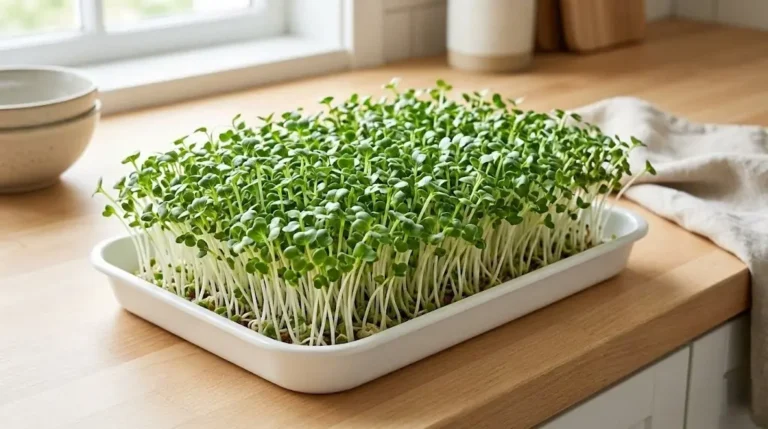
Both sprouts and microgreens are young plants harvested early in their life cycle. They are nutrient-dense, fast to grow, and widely used in healthy diets.
However, they are not the same thing.
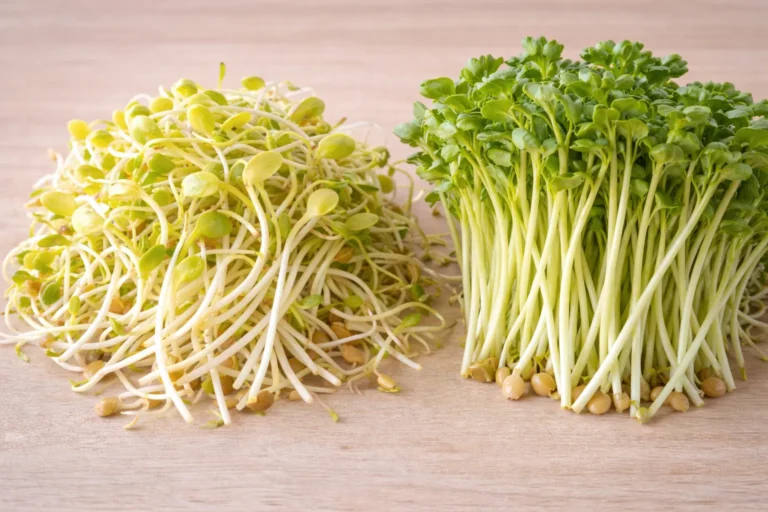
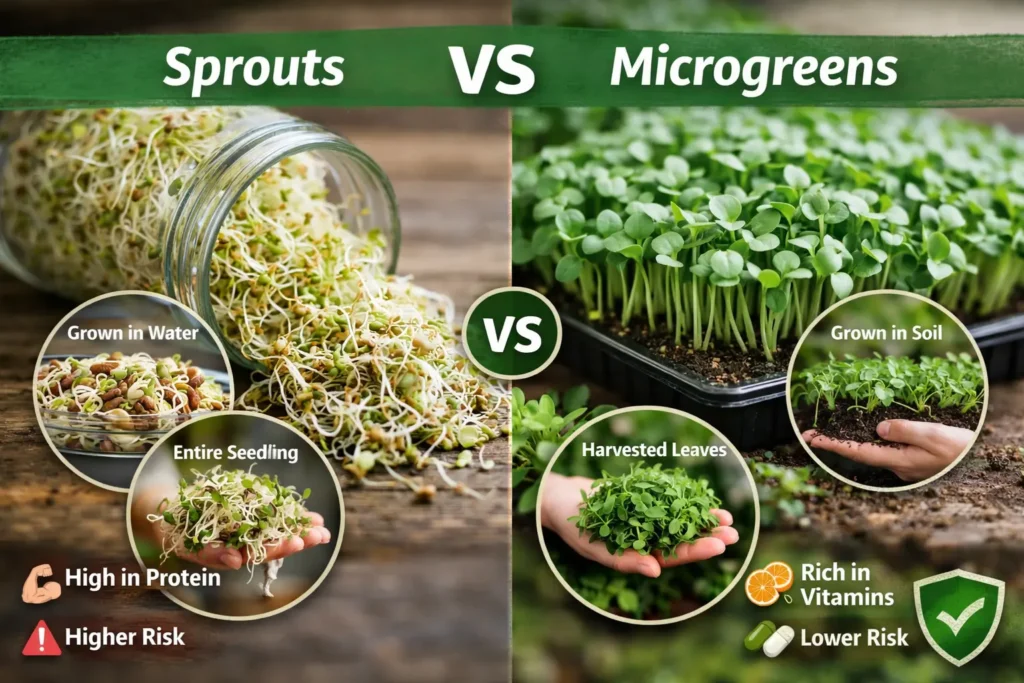
Sprouts are germinated seeds eaten whole, while microgreens are young vegetable plants grown in soil or growing media and harvested after leaves appear.
Understanding the difference helps you choose the right option depending on whether your goal is higher protein, stronger antioxidants, better flavor, or safer raw consumption.
Contents
- 1 I. One-Minute Decision Matrix (Featured Snippet Section)
- 2 II. The Biological Difference: From Seed Awakening to Mini Plant
- 3 III. Nutrition Showdown: Which One Is Healthier?
- 4 IV. The Food Safety Truth
- 5 V. Flavor and Culinary Uses
- 6 VI. Growing at Home: Which Is Easier?
- 7 VII. FAQ (Long-Tail Keyword Section)
- 8 The Ultimate Comparison: Broccoli Sprouts vs Broccoli Microgreens
- 9 The Sprout Safety Checker
- 10 Final Verdict: Microgreens vs Sprouts
- 11 Sources
I. One-Minute Decision Matrix (Featured Snippet Section)
What’s the Difference Between Sprouts and Microgreens?
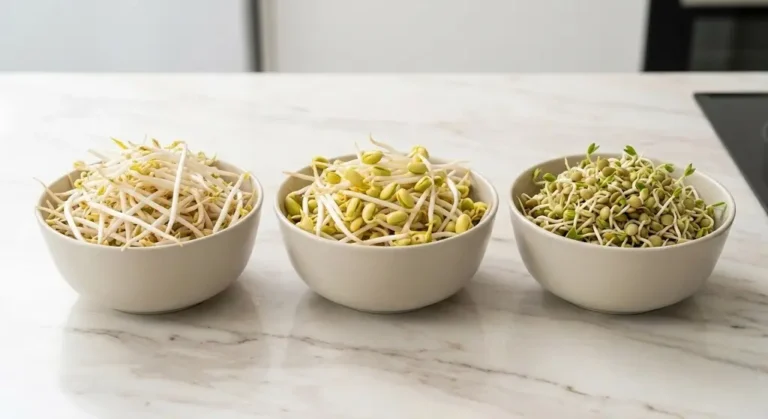
- Sprouts are germinated seeds grown in water and eaten whole (root, stem, and seed).
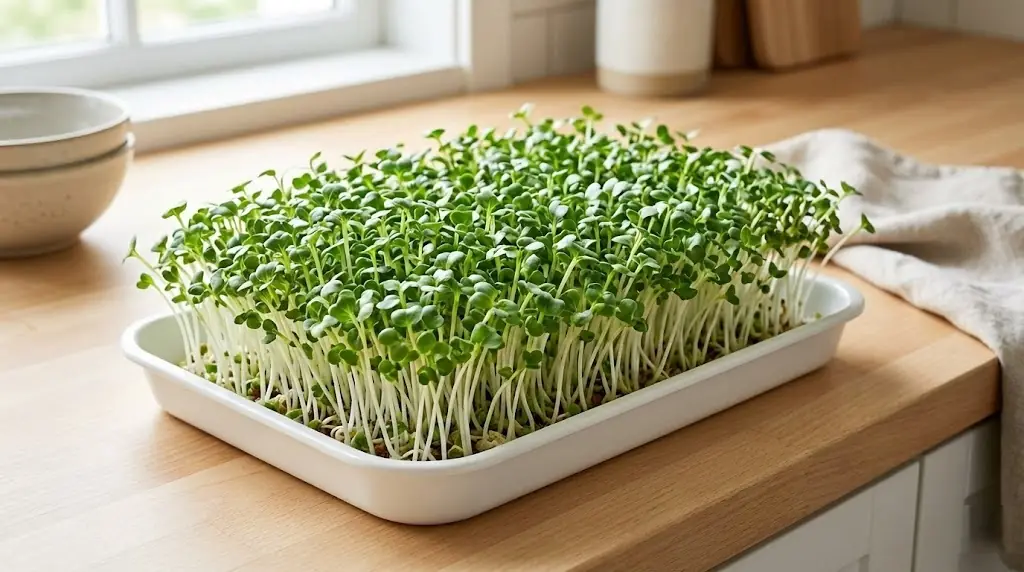
- Microgreens are young vegetable plants grown in soil or fiber mats and harvested for their stems and leaves.
Quick Comparison Table
| Feature | Sprouts | Microgreens |
|---|---|---|
| Growing Medium | Water only | Soil, coconut coir, or fiber mat |
| Light Requirement | Dark or low light | Sunlight or grow lights |
| Harvest Time | 3–7 days | 10–21 days |
| Edible Parts | Entire plant (seed, root, stem) | Stems and leaves only |
| Nutritional Focus | Higher protein, enzymes, reduced phytates | High antioxidants, chlorophyll, very high vitamin C & E |
| Food Safety Risk | Higher bacterial risk (humid environment) | Lower risk with airflow |
Quick takeaway:
Choose sprouts for protein and enzyme activity, and microgreens for antioxidants and vitamins.
II. The Biological Difference: From Seed Awakening to Mini Plant
To understand the nutrition difference, we need to look at the plant life cycle.
Sprouts: The “Enzyme Factory”
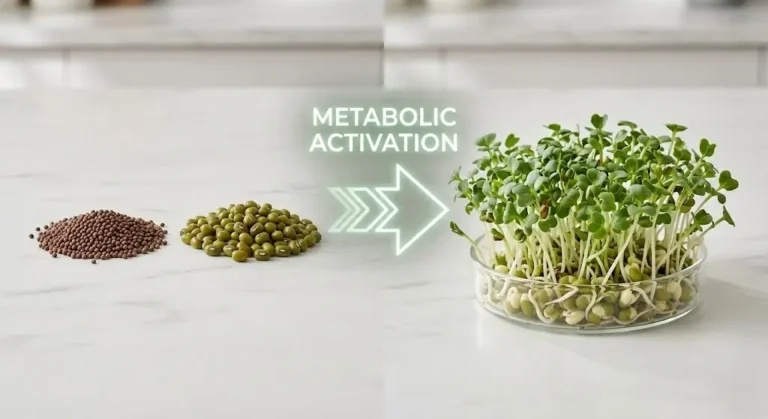
When a seed germinates, it activates metabolic enzymes needed for growth.
During this stage:
- Stored proteins begin breaking into amino acids
- Enzyme activity increases dramatically
- Anti-nutrients such as phytic acid begin breaking down
This makes sprouts highly digestible and rich in bioavailable nutrients.
Microgreens: The “Mini Vegetable”
Microgreens are harvested later, after the plant begins photosynthesis.
At this stage the plant produces:
- Polyphenols
- Flavonoids
- Chlorophyll
- Vitamins C, E, and K
These compounds are responsible for the strong antioxidant properties found in microgreens.
In short:
Sprouts focus on metabolic activation.
Microgreens focus on plant defense compounds.
III. Nutrition Showdown: Which One Is Healthier?
Both are nutritious, but their strengths differ.
Microgreens: The Antioxidant Champions
A widely cited USDA study found that many microgreens contain 4 to 40 times more nutrients than mature vegetables.
Notable examples include:
- Red cabbage microgreens
- Cilantro microgreens
- Amaranth microgreens
These tiny plants often contain extremely high levels of:
- Vitamin C
- Vitamin E
- Beta-carotene
- Polyphenols
Because of their antioxidant density, microgreens are popular in longevity and anti-inflammatory diets.
Sprouts: The Bioavailability Advantage
Sprouts excel in a different way: nutrient absorption.
The germination process:
- Breaks down phytic acid
- Increases enzyme activity
- Improves mineral absorption
This means nutrients like iron, zinc, and calcium are easier for the body to absorb.
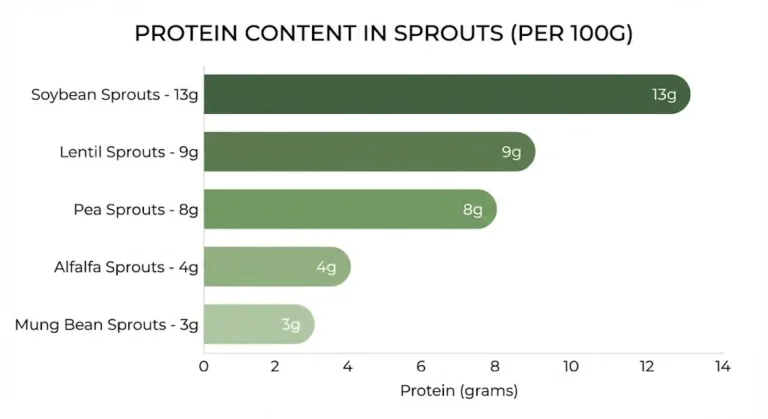
Many sprouts also contain more protein per gram than microgreens.
You can explore detailed comparisons in our
Sprout Nutrition Comparison Tool.
Spotlight Comparison
Broccoli Sprouts
Broccoli sprouts are famous for their extremely high levels of sulforaphane precursors.
Sulforaphane is associated with:
- detoxification pathways
- anti-inflammatory activity
- potential cancer-preventive effects
Learn more in our deep guide:
How Much Sulforaphane in Broccoli Sprouts
Red Cabbage Microgreens
Red cabbage microgreens are considered nutritional powerhouses.
They contain exceptionally high levels of:
- Vitamin C
- Vitamin U
- Anthocyanins
These compounds support immune function and gut health.
IV. The Food Safety Truth
Safety is one of the biggest differences between sprouts and microgreens.
Why Sprouts Have Higher Bacterial Risk
Sprouts grow in warm, humid conditions, which are ideal environments for bacteria.
The most commonly reported pathogens include:
- E. coli
- Salmonella
- Listeria
Because the entire seed is eaten, contamination can occur if the seed itself carries bacteria.
How to Reduce Sprout Risk
Follow these three principles:
- Use high-quality seeds specifically labeled for sprouting
- Ensure good airflow and regular rinsing
- Lightly cook sprouts if you are high-risk
Cooking significantly reduces food safety concerns.
Microgreen Risks
Microgreens are generally safer but still have potential issues.
Possible problems include:
- Soil contamination
- Mold growth (damping-off disease)
- Cross-contamination during harvest
Maintaining clean trays and proper airflow usually prevents these issues.
Expert Recommendation
People with weakened immune systems — including:
- pregnant women
- older adults
- transplant patients
should prioritize microgreens or cooked sprouts rather than raw sprouts.
V. Flavor and Culinary Uses
Taste is another key difference.
Sprouts
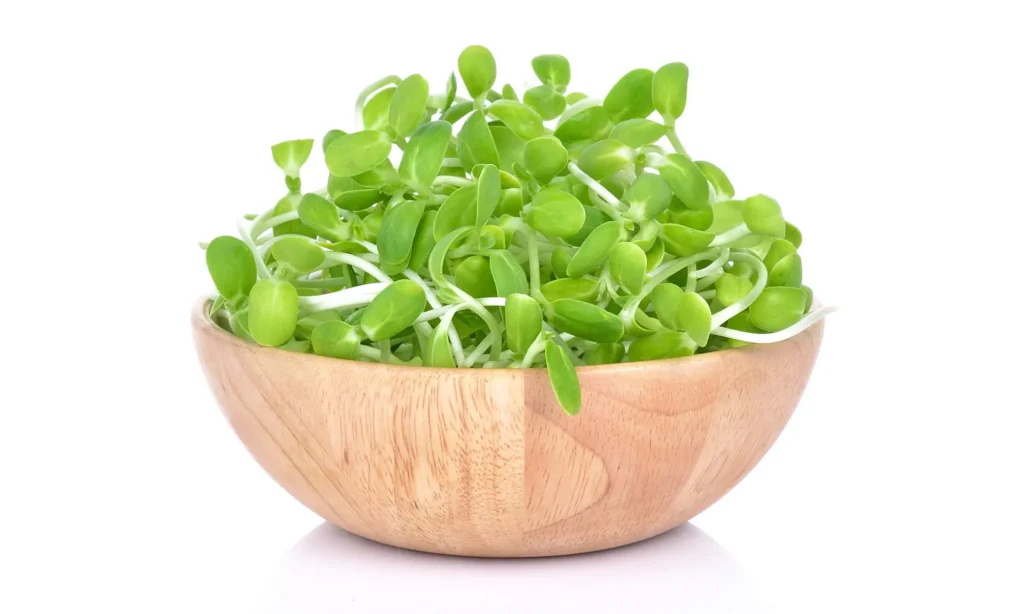
Flavor profile:
- crisp
- juicy
- slightly nutty or earthy
Best uses:
- stir-fries
- sandwiches
- power bowls
- Asian dishes
Microgreens
Flavor profile:
- intense
- aromatic
- sometimes spicy
Examples:
- arugula microgreens → peppery
- pea shoots → sweet
- radish microgreens → spicy
Best uses:
- gourmet plating
- smoothies
- pizza topping
- salads
VI. Growing at Home: Which Is Easier?
Both are beginner-friendly but require different setups.
Growing Sprouts
Sprouts are extremely simple to grow.
You only need:
- a glass jar
- water
- seeds
Daily rinsing is usually enough.
Advantages:
- very low cost
- minimal space
- harvest within a week
Growing Microgreens
Microgreens require a slightly more advanced setup.
Typical equipment:
- seed trays
- soil or fiber mat
- grow lights or sunlight
- airflow
Although the setup costs more, many gardeners enjoy the visual satisfaction of growing miniature vegetables.
Cost Comparison
| Factor | Sprouts | Microgreens |
|---|---|---|
| Equipment | Very minimal | Moderate |
| Time to harvest | 3–7 days | 10–21 days |
| Seed cost per harvest | Lower | Slightly higher |
| Yield per tray | Moderate | High |
VII. FAQ (Long-Tail Keyword Section)
Are sprouts more filling than microgreens?
Yes, in many cases sprouts contain more protein and fiber, which can increase satiety.
Can microgreens grow without soil?
Yes. Many growers use hydroponic fiber mats or coconut coir instead of soil.
Why do some sprouts taste bitter?
Bitterness usually occurs when:
- sprouts are not rinsed enough
- seeds contain residual phytates
- sprouts are harvested too late
Fresh sprouts should taste clean and mildly nutty.
The Ultimate Comparison: Broccoli Sprouts vs Broccoli Microgreens
Even when plants share the same species, their nutrition differs.
| Feature | Broccoli Sprouts | Broccoli Microgreens |
|---|---|---|
| Growth Stage | Germinated seed | Young plant |
| Harvest Time | 3–5 days | 10–14 days |
| Key Nutrient | Sulforaphane precursors | Vitamin C and antioxidants |
| Flavor | Mild, slightly radish-like | Green, cabbage-like |
| Culinary Use | Smoothies, salads | Garnish, salads |
Both are healthy — they simply serve different nutritional purposes.
The Sprout Safety Checker
Before eating sprouts, quickly check these signs.
Safe sprouts should have:
- a fresh smell
- crisp texture
- bright color
Discard sprouts if you notice:
- slimy texture
- sour smell
- gray or dark spots
These signs indicate bacterial or mold growth.
Final Verdict: Microgreens vs Sprouts
Both sprouts and microgreens offer impressive nutritional benefits.
Choose sprouts if you want:
- higher protein
- digestive enzymes
- fast home growing
Choose microgreens if you want:
- powerful antioxidants
- intense flavor
- lower food safety risk
For the best results, many nutrition experts recommend eating both regularly as part of a balanced plant-rich diet.
Sources
- USDA FoodData Central – Sprouts and Microgreens Nutrition
https://fdc.nal.usda.gov - Boeing et al., “Nutrient Composition of Microgreens and Sprouts” – Journal of Food Science, 2019
https://doi.org/10.1111/1750-3841.14454 - Choe et al., “Antioxidant and Phytochemical Content of Sprouts vs Microgreens” – Food Chemistry, 2020
https://doi.org/10.1016/j.foodchem.2020.126897 - Cornell University, “Growing Microgreens at Home”
https://hort.cals.cornell.edu/extension/gardening/microgreens - SproutsDaily Interactive Tool – Compare nutritional content of sprouts and microgreens
https://www.sproutsdaily.com/sprout-nutrition-comparison-tool/