I. Quick Overview
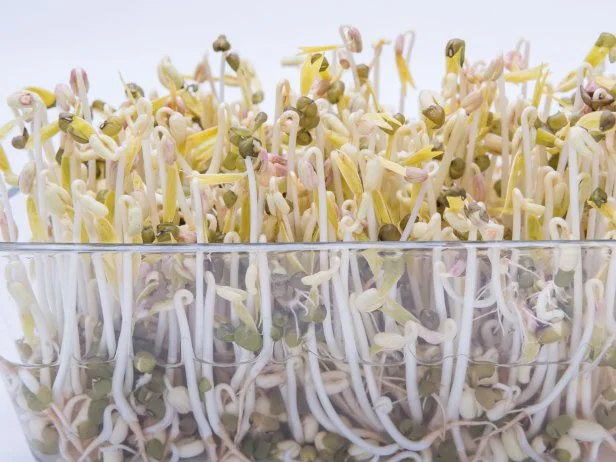
Mung bean sprouts are seedlings formed by sprouting mung bean seeds in water for 3–6 days. They are one of the most widely consumed sprouts globally, known for their crisp, juicy texture, ease of pairing with various cuisines, and rich nutritional content.
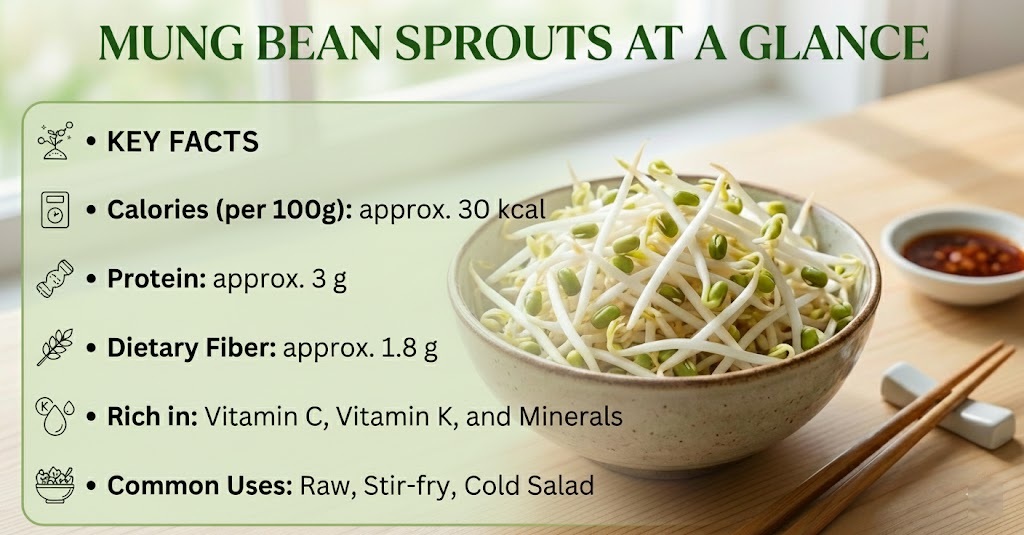
Figure 1: Mung Bean Sprouts at a Glance
II. What Are Mung Bean Sprouts?
Mung bean sprouts are the seedlings produced after soaking and sprouting mung beans in water, typically ready for harvest within 3–6 days. Extremely common in Asian cuisine and global healthy eating, they can be eaten raw or cooked and are a frequent ingredient in many soups, salads, stir-fries, wraps, and more. Unlike mature mung beans, the sprouts are more easily digestible and have a fresher, crisper texture. (Source example: Healthline — mung bean sprouts nutrition)
Verified Nutrition Facts
The table below uses the USDA FoodData Central entry Mung beans, mature seeds, sprouted, raw (FDC 169957). Every value is per 100 g so it matches the site comparison tool. “≈” marks a reference estimate used only when the USDA record does not report that field.
| Nutrient | Per 100 g |
|---|---|
| Calories | 30 kcal |
| Protein | 3.04 g |
| Fiber | 1.8 g |
| Vitamin C | 13.2 mg |
| Folate | 61 µg |
| Iron | 0.91 mg |
| Calcium | 13 mg |
| Potassium | 149 mg |
Per-100 g figures are a comparison standard, not a suggested serving. Natural variation can occur by cultivar and growing conditions.
IV. Active Compounds & Functional Nutrients
Mung bean sprouts contain not only basic nutrients but are also rich in many active phytochemicals:
- Isoflavones: Possess antioxidant properties.
- Plant phenolic compounds.
- Have potential anti-inflammatory and antioxidant capabilities.
These components can, to some extent, help reduce oxidative stress and support the body's defense systems (primarily based on experimental/observational data).
V. Potential Health Benefits (Evidence-Based)
The following health benefits are based on evidence and consensus from mainstream nutritional bodies, strictly avoiding exaggeration.
5.1 Supports Digestive Health
The selected USDA record reports 1.8 g of fiber per 100 g—a modest contribution rather than a high-fiber claim. (Endorsed by some clinical nutrition guidelines.)
5.2 Antioxidant Support
Vitamin C and active plant compounds may help alleviate oxidative stress in the body. (Referenced from health and nutrition reviews.)
5.3 Low-Calorie, High-Nutrient
As a low-calorie food, they are suitable for weight management dietary plans. (Dietary Guidelines & Nutrition Data)
VI. Food Safety & Risk Notice
The warm, humid environment during the sprouting stage makes mung bean sprouts susceptible to pathogens, potentially making them a vector for foodborne illness. Numerous cases have linked various sprouts to contamination with bacteria like Salmonella.
6.1 Primary Risk Sources
- Seeds may carry bacteria on their surface.
- The sprouting environment is warm and humid.
- Raw consumption is susceptible to microbial contamination.
(CDC/FDA sprout safety)
6.2 Recommendations for High-Risk Groups
The following groups are advised to avoid consuming raw mung bean sprouts:
- Pregnant individuals
- Children
- The elderly
- Immunocompromised individuals
It is recommended to heat-treat sprouts (e.g., quick stir-fry, blanching) before consumption to reduce risk. (Source: Healthline food safety guides)
VII. How to Grow Mung Bean Sprouts at Home (Home Sprouting Guide)
Mung bean sprouts are known for their fast sprouting speed and low barrier to entry.
Seven-Step Standard Process
- Seed Selection: Use food-grade mung bean seeds.
- Soaking: Soak in cool water for 8–12 hours.
- Drain and place in a breathable container (sprouting tray or jar with mesh lid).
- Rinse 2–3 times daily, ensuring they are moist but not waterlogged.
- Avoid direct sunlight; maintain ambient temperature around 18–24°C.
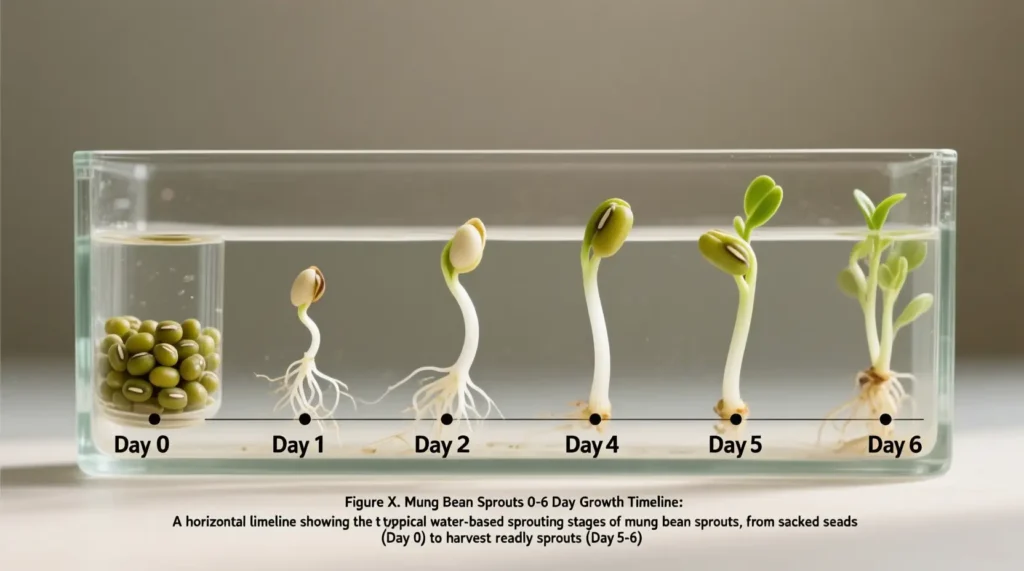
- They reach harvestable state in 3–6 days.
- After thorough rinsing and draining, store refrigerated.
Chart: Mung Bean Sprouts 0–6 Day Growth Timeline
A horizontal timeline illustrating the typical appearance at each day.
VIII. How to Eat Mung Bean Sprouts
Mung bean sprouts are highly versatile in preparation:
- Cold salads (briefly seasoned with salt/lemon)
- Quick stir-fry (avoid prolonged high heat)
- Soups (added last to retain crispness)
- Added to sandwiches or wraps
It is advised to thoroughly wash or briefly blanch them before raw consumption to lower risk.
Nutrition Comparison With Other Sprouts
These rows use the same raw sprouted-food records and 100 g basis as our Sprout Nutrition Comparison Tool.
| Raw sprout (100 g) | Calories | Protein (g) | Fiber (g) | Vitamin C (mg) | Folate (µg) |
|---|---|---|---|---|---|
| Mung Bean Sprouts | 30 | 3.04 | 1.8 | 13.2 | 61 |
| Soybean Sprouts | 122 | 13.09 | 1.1 | 15.3 | 172 |
| Alfalfa Sprouts | 23 | 3.99 | 1.9 | 8.2 | 36 |
| Lentil Sprouts | 106 | 8.96 | ≈ 3.2 | 16.5 | 100 |
| Radish Sprouts | 43 | 3.81 | ≈ 2.3 | 28.9 | 95 |
| Pea Sprouts | 124 | 8.8 | ≈ 3 | 10.4 | 144 |
| Sprouted Wheat | 198 | 7.49 | 1.1 | 2.6 | 38 |
X. Frequently Asked Questions (FAQ)
Q1: Can I eat mung bean sprouts every day?
A1: Moderate daily consumption is generally safe, but it's recommended to avoid large amounts raw; prioritize cooked preparations.
Q2: What's the difference between mung bean sprouts and soybean sprouts?
A2: Mung bean sprouts are more tender and easier to digest, while soybean sprouts are higher in protein and have a coarser dietary fiber.
Q3: Can children eat mung bean sprouts?
A3: Children are advised to eat thoroughly cooked mung bean sprouts to reduce risk.
Q4: Can mung bean sprouts help with weight loss?
A4: At 30 calories and 1.8 g of fiber per 100 g, mung bean sprouts can fit a balanced eating pattern, but no single food determines weight loss.
Conclusion
Mung bean sprouts are a highly nutritious, simple-to-make, and versatile sprout option. With scientific handling and safe consumption, they can be a healthy part of a daily diet. This article provides a comprehensive encyclopedia-style content flow—from definition, nutrition, and health benefits to safety, cultivation, and practical comparisons—covering all major search intents, making it a truly authoritative page that surpasses ordinary content.
Data Sources
📌 Nutrition & Composition
- USDA FoodData Central: https://fdc.nal.usda.gov/
- WhatYouEat: https://whatyoueat.io/foods/168395-mung-bean-sprouts
📌 Health & Safety
- Healthline Raw Sprouts Safety: https://www.healthline.com/nutrition/raw-sprouts
- WebMD Sprout Nutrition: https://www.webmd.com/diet/health-benefits-mung-bean-sprouts
📌 Sprouting Guides
- Forages Sprout Varieties: https://forages.co/blogs/sprout-varieties
Comparison Tool Data Snapshot
This table is generated from the same data module as the Sprout Nutrition Comparison Tool, so this guide and the interactive comparison stay synchronized. Values are per 100 g fresh weight. “≈” means a species- and stage-matched reference estimate, not a direct measurement of every crop.
| Growth stage | Calories (kcal) | Protein (g) | Fiber (g) | Vitamin C (mg) | Folate (µg) | Iron (mg) | Calcium (mg) | Potassium (mg) |
|---|---|---|---|---|---|---|---|---|
| Whole Sprout | 30 kcal | 3.04 g | 1.8 g | 13.2 mg | 61 µg | 0.91 mg | 13 mg | 149 mg |
| Microgreen / Shoot | ≈ 62.4 kcal | 6.81 g | 7.82 g | 110.96 mg | ≈ 76 µg | ≈ 1.2 mg | ≈ 35 mg | ≈ 140 mg |