🌱 1. What Are Radish Sprouts?
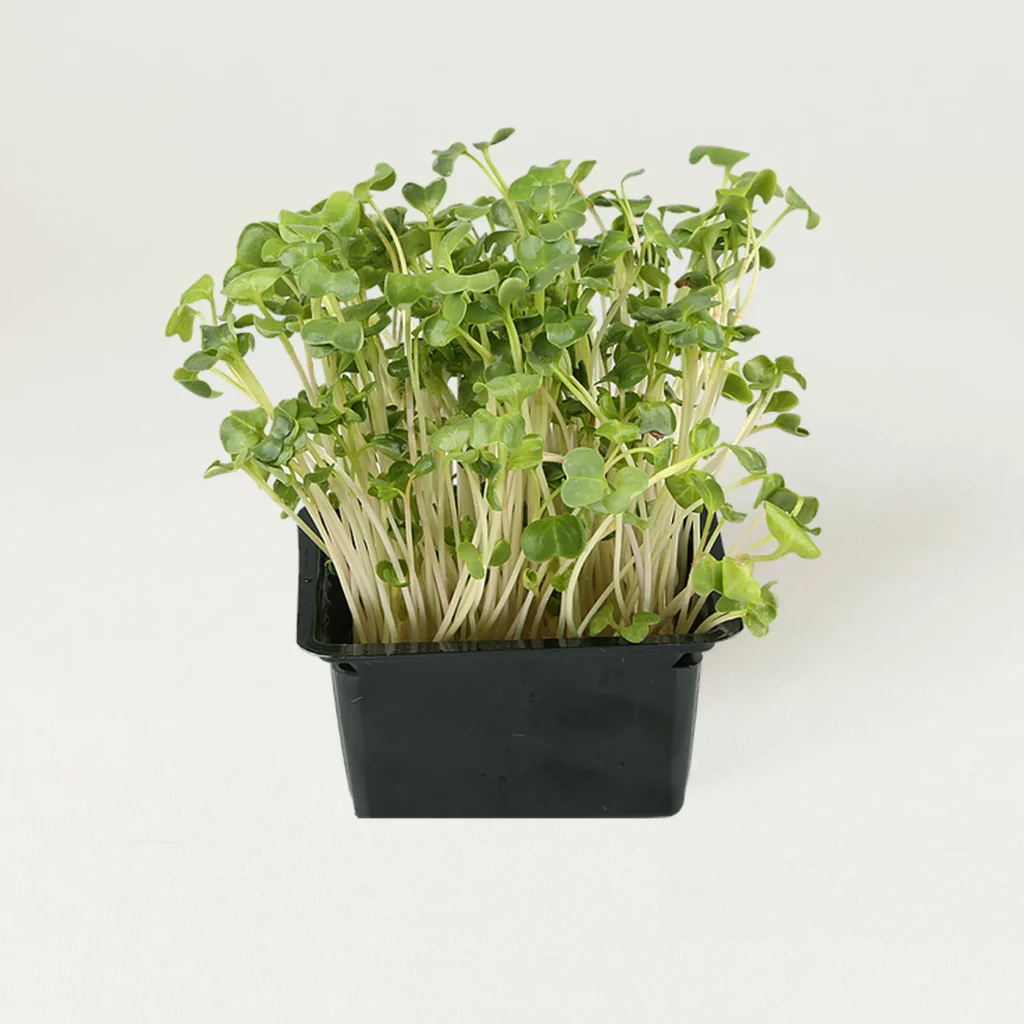
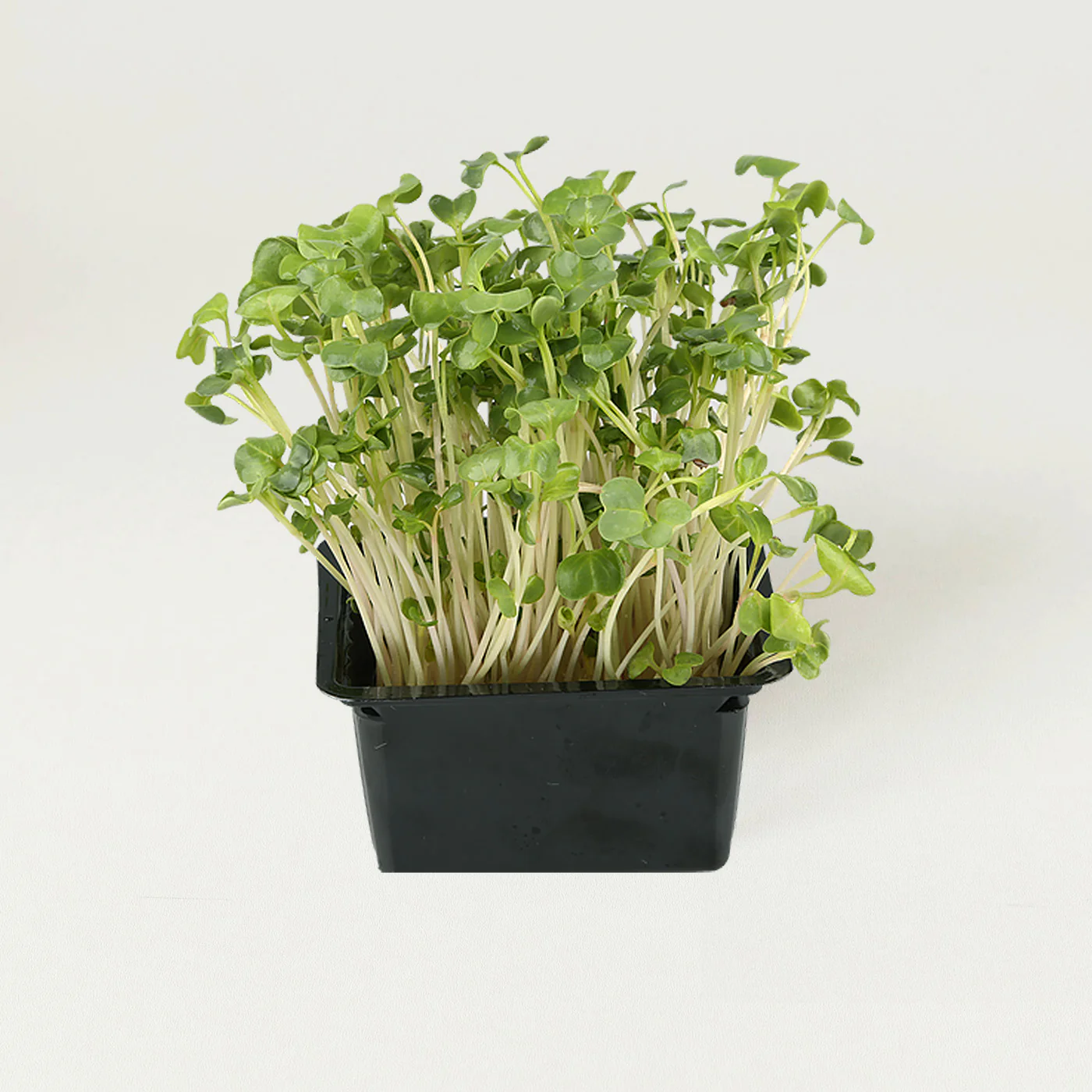
Radish sprouts are tender seedlings obtained by germinating radish seeds (such as red or daikon radish seeds) in a moist environment. Compared to mature radishes, radish sprouts have a crisp texture, a slightly spicy flavor, and contain unique carotenoids and glucosinolate compounds, making them commonly used as a garnish or a main/auxiliary ingredient in dishes. Radish sprouts carry the typical pungent flavor of radishes but are more easily digestible and have a tender texture. They are often used in:
- Salads
- Sandwiches/Wraps
- Added at the final stage of hot dishes
- Sprinkled on soups or grain bowls as a garnish
Verified Nutrition Facts
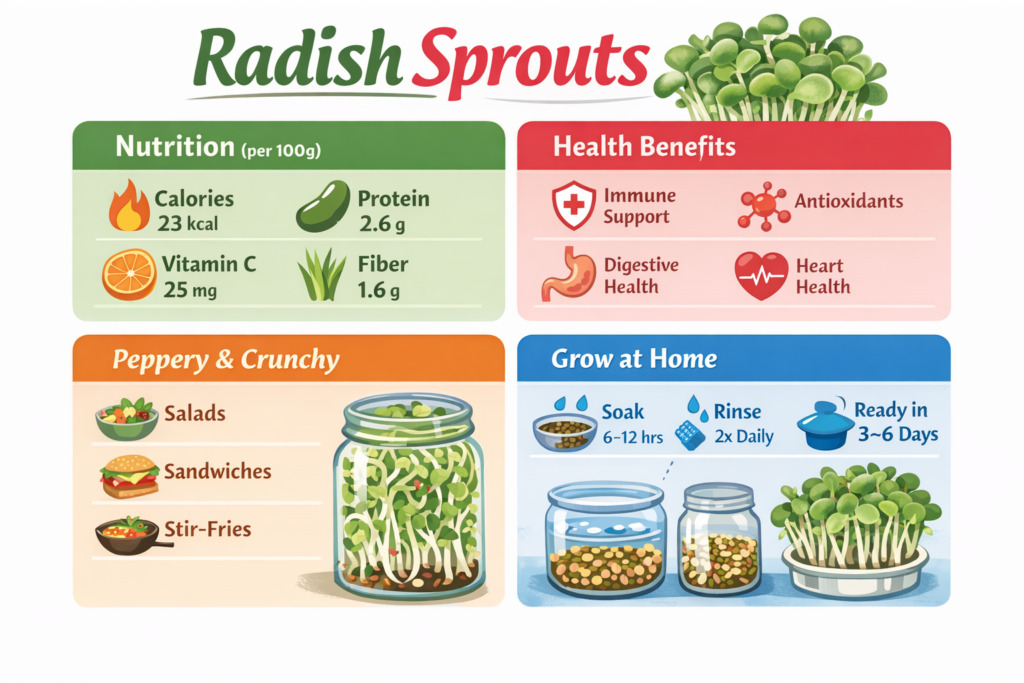
The table below uses the USDA FoodData Central entry Radish seeds, sprouted, raw (FDC 170095). Every value is per 100 g so it matches the site comparison tool. “≈” marks a reference estimate used only when the USDA record does not report that field.
| Nutrient | Per 100 g |
|---|---|
| Calories | 43 kcal |
| Protein | 3.81 g |
| Fiber | ≈ 2.3 g |
| Vitamin C | 28.9 mg |
| Folate | 95 µg |
| Iron | 0.86 mg |
| Calcium | 51 mg |
| Potassium | 86 mg |
Per-100 g figures are a comparison standard, not a suggested serving. Natural variation can occur by cultivar and growing conditions.
🌿 3. Bioactive Compounds
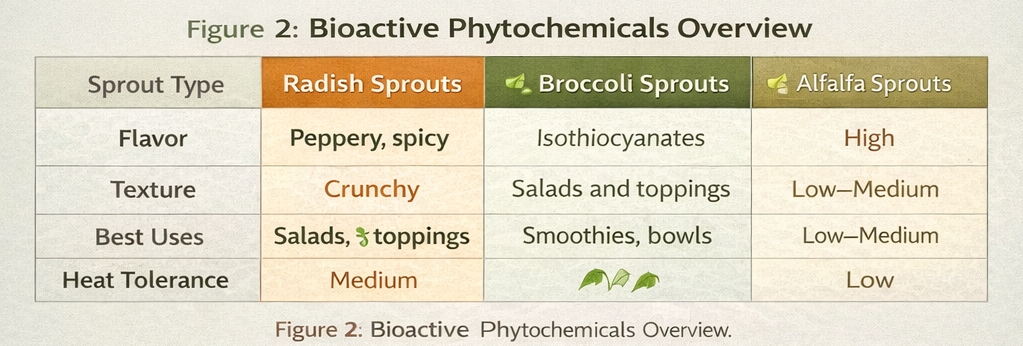
Radish sprouts are not only rich in basic nutrients but also contain various active phytocompounds, such as:
- Glucosinolates: Can be converted in the body into anti-inflammatory or antioxidant isothiocyanates.
- Flavonoids and other antioxidant substances that help protect cells.
Research indicates that during the sprouting process, these compounds are often more concentrated compared to the mature plant, giving radish sprouts potentially higher functional activity.
❤️ 4. Potential Health Benefits
Although scientific research is still limited, multiple sources suggest radish sprouts may offer the following benefits:
👍 Supports the Immune System
The high content of Vitamin C is an important supporting factor for immune health, aiding in antioxidation and cell protection.
👍 Promotes Digestive Health
The selected USDA record does not report a fiber value for raw radish sprouts, so this guide does not quantify or classify their fiber content.
👍 Cardiovascular Health
Minerals like potassium aid in blood pressure regulation, and sulfur-containing compounds may be associated with reducing inflammation.
⚠️ Potential Against Chronic Diseases
Some studies and nutritional organizations suggest that the isothiocyanate compounds in radish sprouts may have positive effects on inhibiting inflammation and slowing cellular oxidation, helping to reduce chronic disease risk.
⚠️ 5. Risks & Food Safety
Like all sprouts, the primary safety risk for radish sprouts comes from microbial contamination. Since sprouts require a warm, humid environment for germination, it is also an ideal condition for pathogens like Salmonella and E. coli to grow.
👉 Recommendations
- Store refrigerated; avoid storage at room temperature.
- Wash thoroughly before consuming raw.
- High-risk groups (pregnant women, young children, the elderly, immunocompromised) are advised to avoid raw consumption or to consume them cooked if possible.
🏡 6. How to Grow Radish Sprouts at Home
Radish sprouts have a short growth cycle and are easy to sprout, making them suitable for beginners.
Simple Sprouting Steps
- Prepare food-grade radish seeds.
- Soak for 6–12 hours.
- Drain and place in a sprouting jar or tray.
- Rinse 2 times daily.
- Harvest in 3–6 days.
This process is similar to other sprouts, emphasizing cleanliness and ventilation.
🍽️ 7. How to Eat Radish Sprouts
Radish sprouts can be:
- Sprinkled directly into salads
- Added to sandwiches or wraps
- Mixed into soups and hot dishes (add at the end to retain crispness)
- Blended into green smoothies or healthy drinks
Due to their slightly spicy flavor, adjust the amount according to personal taste.
Nutrition Comparison With Other Sprouts
These rows use the same raw sprouted-food records and 100 g basis as our Sprout Nutrition Comparison Tool.
| Raw sprout (100 g) | Calories | Protein (g) | Fiber (g) | Vitamin C (mg) | Folate (µg) |
|---|---|---|---|---|---|
| Radish Sprouts | 43 | 3.81 | ≈ 2.3 | 28.9 | 95 |
| Mung Bean Sprouts | 30 | 3.04 | 1.8 | 13.2 | 61 |
| Soybean Sprouts | 122 | 13.09 | 1.1 | 15.3 | 172 |
| Alfalfa Sprouts | 23 | 3.99 | 1.9 | 8.2 | 36 |
| Lentil Sprouts | 106 | 8.96 | ≈ 3.2 | 16.5 | 100 |
| Pea Sprouts | 124 | 8.8 | ≈ 3 | 10.4 | 144 |
| Sprouted Wheat | 198 | 7.49 | 1.1 | 2.6 | 38 |
❓ 9. Frequently Asked Questions (FAQ)
Q: Can I eat radish sprouts every day?
A: Moderate daily intake is safe for most healthy individuals, but attention should be paid to washing and storage.
Q: Can children eat radish sprouts?
A: It is recommended that children avoid consuming large amounts raw; they can choose to eat them after light cooking.
Q: Are radish sprouts the same as radish microgreens?
A: They are similar but not identical; radish sprouts are an earlier stage with shorter stems, while microgreens have true leaves, and there are differences in nutrition and use.
Q: Are radish sprouts spicy?
A: Yes, radish sprouts are typically spicier than other sprouts, which is one of their distinctive flavors.
📑10.Data Sources
Radish Sprout ingredients & nutrition — Chefadora: https://www.chefadora.com/ingredients/radish-sprout Chefadora
Raw Sprouts benefits & risks — Healthline: https://www.healthline.com/nutrition/raw-sprouts Healthline
Radish sprouts nutritional overview — HealWithFood.org: https://www.healwithfood.org/health-benefits/radish-sprouts-nutrition-facts-benefits.php healwithfood.org
Preparation & safety tips — Veggipedia: https://www.veggipedia.nl/en/fruits-and-vegetables/radish-sprouts Veggipedia
Sprouting tips & characteristics — Forages blog: https://forages.co/blogs/sprout-varieties/radish-sprouts-the-pop-star Forages
Comparison Tool Data Snapshot
This table is generated from the same data module as the Sprout Nutrition Comparison Tool, so this guide and the interactive comparison stay synchronized. Values are per 100 g fresh weight. “≈” means a species- and stage-matched reference estimate, not a direct measurement of every crop.
| Growth stage | Calories (kcal) | Protein (g) | Fiber (g) | Vitamin C (mg) | Folate (µg) | Iron (mg) | Calcium (mg) | Potassium (mg) |
|---|---|---|---|---|---|---|---|---|
| Whole Sprout | 43 kcal | 3.81 g | ≈ 2.3 g | 28.9 mg | 95 µg | 0.86 mg | 51 mg | 86 mg |
| Microgreen / Shoot | 26.12 kcal | 2.35 g | 3.09 g | 33.37 mg | ≈ 80 µg | 0.565 mg | 93.94 mg | 187.07 mg |