🥬 1. What Are Soybean Sprouts?
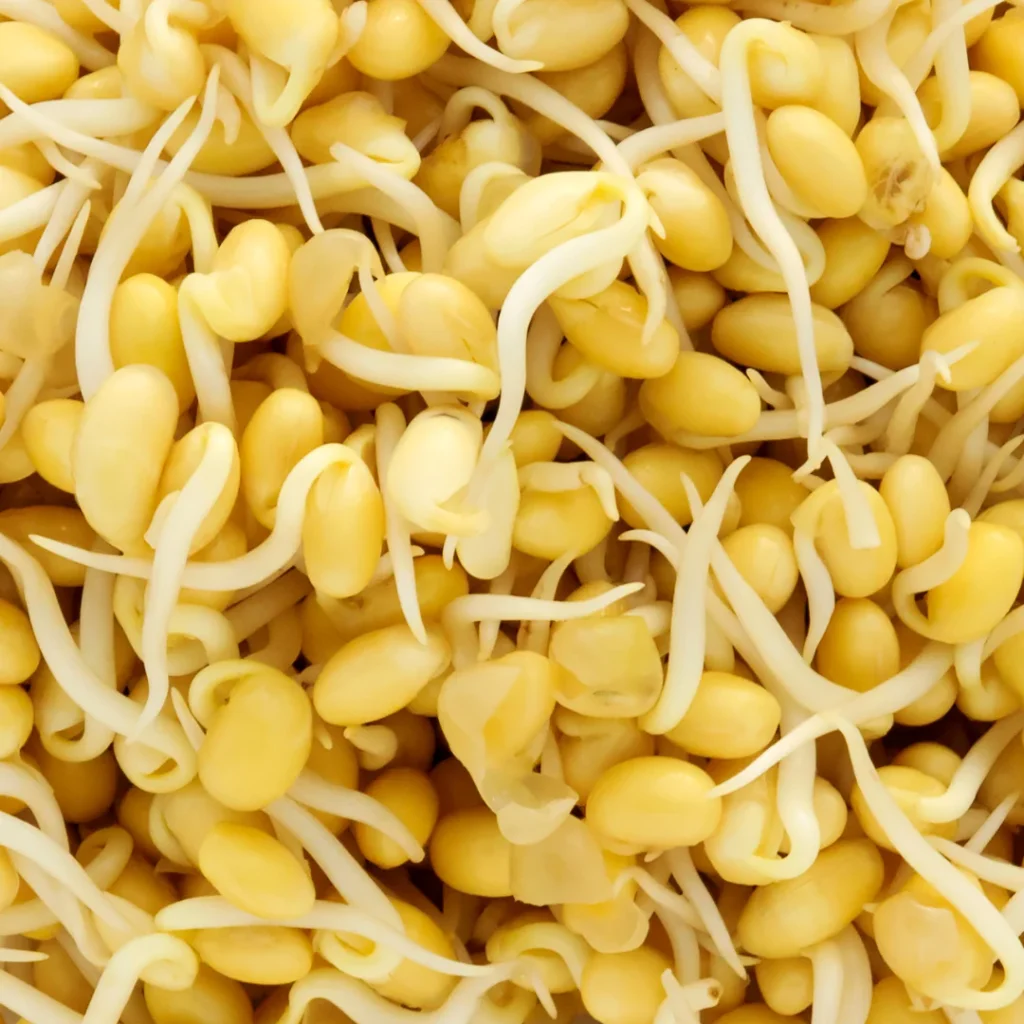
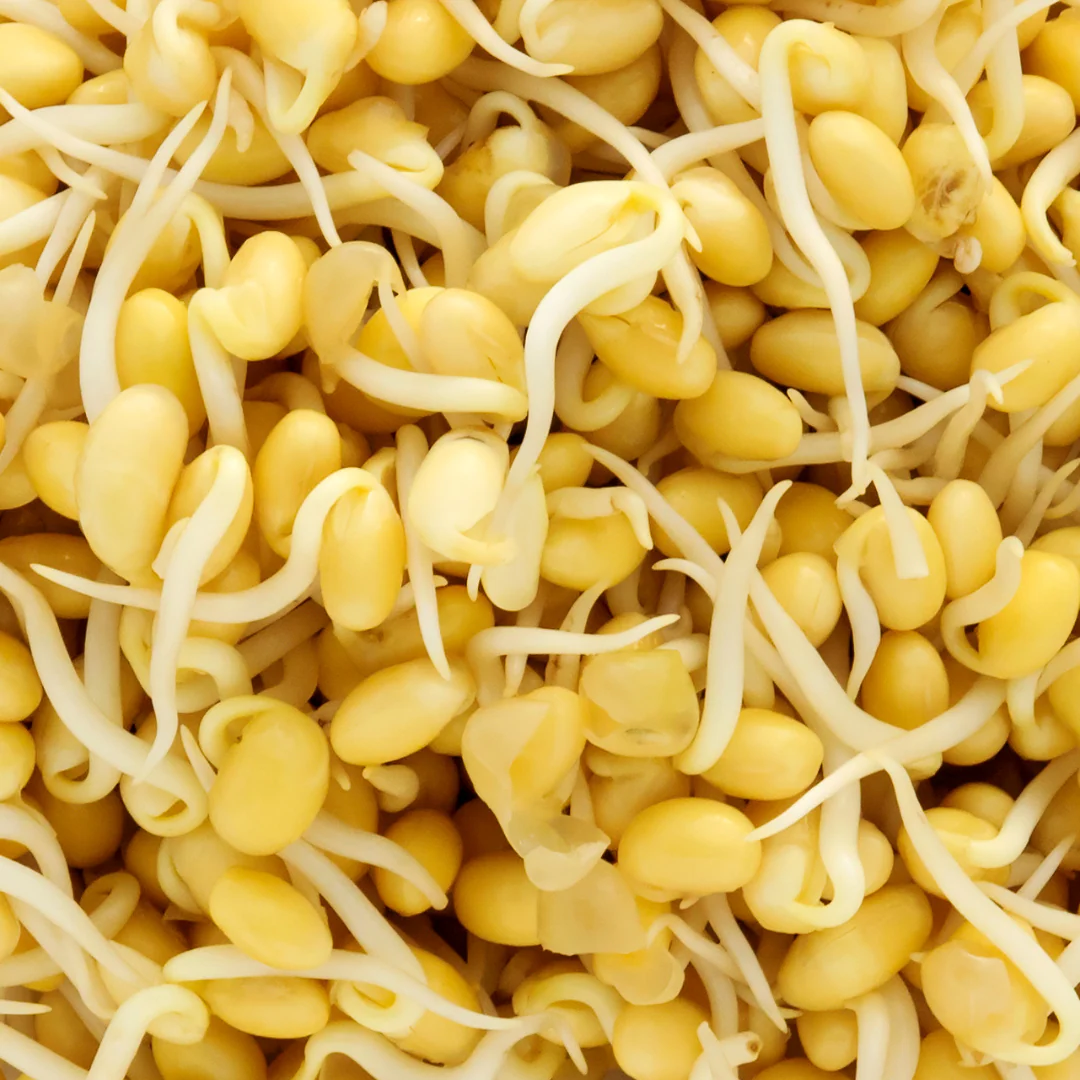
Soybean sprouts are tender shoots formed by germinating soybean (soy) seeds for 4–7 days.
Sprouting significantly alters the chemical structure of the beans, making protein more digestible, reducing anti-nutrients (such as phytic acid), and producing a crisp, slightly sweet taste. Compared to mung bean sprouts, soybean sprouts are higher in protein and contain distinctive soy phytochemicals; the selected USDA record reports 1.1 g fiber per 100 g.
Common uses include:
- Chinese stir-fries
- Soups and broths
- Korean bibimbap
- Cold salads
Note:Soybean sprouts are not the same as soybean microgreens, which are more mature leafy seedlings.
Verified Nutrition Facts
The table below uses the USDA FoodData Central entry Soybeans, mature seeds, sprouted, raw (FDC 169284). Every value is per 100 g so it matches the site comparison tool. “≈” marks a reference estimate used only when the USDA record does not report that field.
| Nutrient | Per 100 g |
|---|---|
| Calories | 122 kcal |
| Protein | 13.09 g |
| Fiber | 1.1 g |
| Vitamin C | 15.3 mg |
| Folate | 172 µg |
| Iron | 2.1 mg |
| Calcium | 67 mg |
| Potassium | 484 mg |
Per-100 g figures are a comparison standard, not a suggested serving. Natural variation can occur by cultivar and growing conditions.
🍃 3. Bioactive Compounds & Functional Nutrition
In addition to basic nutrients, soybean sprouts contain various phytochemicals and functional components, including:
- Isoflavones: Unique to soy, associated with antioxidant and hormone-modulating potential
- Saponins
- Soluble fiber and oligosaccharides
These components are studied for their potential benefits for cardiovascular health and anti-inflammatory effects, but evidence from large-scale human clinical trials is still accumulating.
❤️ 4. Potential Health Benefits
The following health benefits are based on nutritional science and some human/experimental studies, presented with caution and not as medical advice.
4.1 Supports Cardiovascular Health
Soybean sprouts provide protein and soluble fiber, which may help improve cholesterol levels and support heart health.
4.2 Supports Weight Management
Soybean sprouts provide 13.09 g protein per 100 g, but they are not a high-fiber food in this USDA record. They can be one component of a balanced meal.
4.3 Promotes Digestion
The selected USDA record reports 1.1 g fiber per 100 g, so this guide does not classify soybean sprouts as a high-fiber food.
4.4 Phytoestrogens (Isoflavones)
Isoflavones are unique to soy foods and have been studied for their potential effects on hormone regulation, but they should not be viewed as a definitive treatment.
⚠️ 5. Risks & Food Safety
5.1 Fungal and Bacterial Risks
Like all sprouts, soybean sprouts grow in warm, moist conditions that are ideal for bacterial growth. Salmonella and E. coli have been linked to sprout-related foodborne illness outbreaks.
5.2 Recommendations for High-Risk Groups
The following groups are advised to avoid raw soybean sprouts:
- Pregnant individuals
- The elderly
- Immunocompromised individuals
- Young children
5.3 Risk Reduction Measures
- Thorough washing
- Refrigerated storage
- Cooking before consumption (e.g., stir-frying, blanching)
- Use food-grade clean water
🏡 6. How to Grow Soybean Sprouts at Home
Soybean sprouts are very suitable for home sprouting—low barrier to entry and short cycle.
6.1 Materials Needed
- Food-grade soybean seeds (labeled for sprouting/edible use)
- Sprouting jar or tray
- Clean water
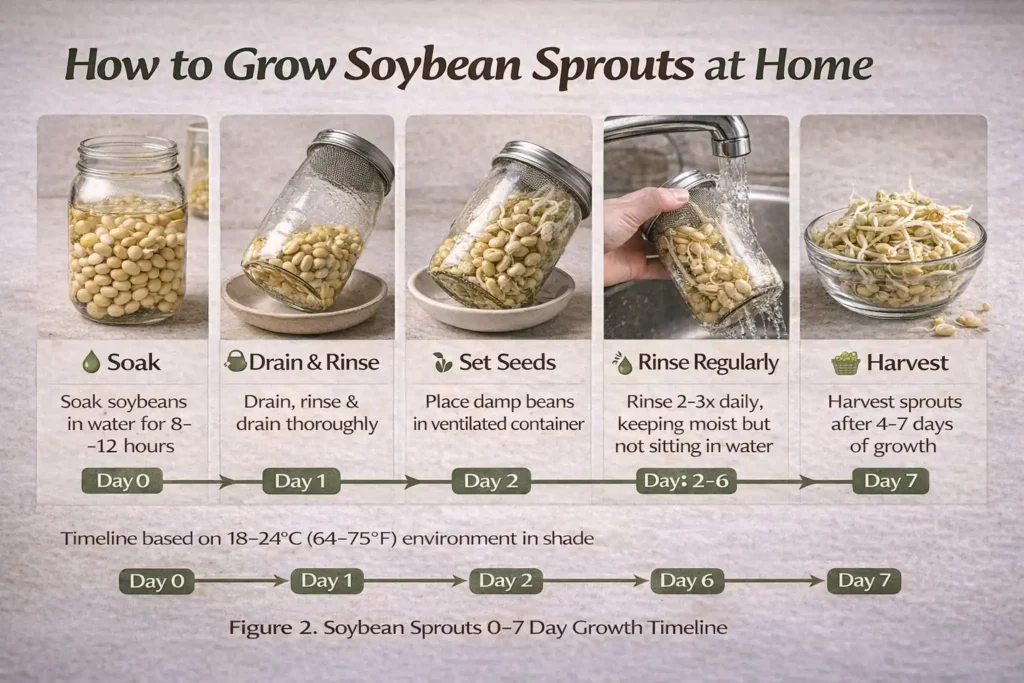
6.2 Sprouting Process (Detailed Steps)
- Soak: Soak soybeans in clean water for 8–12 hours.
- Drain & Rinse: Discard soaking water, rinse thoroughly, and drain well.
- Place Seeds: Transfer drained beans to a container with ventilation holes.
- Regular Rinsing: Rinse 2–3 times daily, keeping moist but not waterlogged.
- Germination: Sprout in a warm (18–24°C), dark place for 4–7 days.
- Harvest: Ready when sprouts are 3–5 cm long and tender green.
Chart Description (Figure 2)
Soybean Sprouts 0–7 Day Growth Timeline
Horizontal timeline showing typical appearance from Day 0 (soaking) to Day 7 (harvest).
🍽️ 7. How to Eat Soybean Sprouts
Soybean sprouts can be eaten cooked or in cold dishes:
- Quick stir-fry (medium-high heat for 1–2 minutes)
- Cold salad (blanched briefly or raw, depending on safety preference)
- Soups and hot pots
- Rice bowls and toppings
For food safety, it’s recommended to cook them early in the process.
Nutrition Comparison With Other Sprouts
These rows use the same raw sprouted-food records and 100 g basis as our Sprout Nutrition Comparison Tool.
| Raw sprout (100 g) | Calories | Protein (g) | Fiber (g) | Vitamin C (mg) | Folate (µg) |
|---|---|---|---|---|---|
| Soybean Sprouts | 122 | 13.09 | 1.1 | 15.3 | 172 |
| Mung Bean Sprouts | 30 | 3.04 | 1.8 | 13.2 | 61 |
| Alfalfa Sprouts | 23 | 3.99 | 1.9 | 8.2 | 36 |
| Lentil Sprouts | 106 | 8.96 | ≈ 3.2 | 16.5 | 100 |
| Radish Sprouts | 43 | 3.81 | ≈ 2.3 | 28.9 | 95 |
| Pea Sprouts | 124 | 8.8 | ≈ 3 | 10.4 | 144 |
| Sprouted Wheat | 198 | 7.49 | 1.1 | 2.6 | 38 |
❓ 9. Frequently Asked Questions (FAQ)
Q1: Can I eat soybean sprouts every day?
A: For most healthy adults, moderate daily consumption is safe. However, attention should be paid to washing and cooking to reduce infection risk.
Q2: Are soybean sprouts nutritionally different from soy milk or soy flour?
A: Yes. Sprouting changes the protein and anti-nutrient structure, making them generally more digestible. Soy milk and soy flour are processed products with different nutritional profiles and uses.
Q3: Can children eat soybean sprouts?
A: Children should avoid raw sprouts; cooked soybean sprouts can be consumed in moderation.
Q4: Can soybean sprouts help with protein intake?
A: They are a plant-based protein source, but for daily protein needs, it’s still recommended to combine a variety of high-quality protein foods.
📑 10. Data Sources
- USDA FoodData Central – Nutrition database
https://fdc.nal.usda.gov/ - Healthline – Bean Sprouts Nutrition & Safety
https://www.healthline.com/nutrition/bean-sprouts-nutrition - WebMD – Sprouts Food Safety & Benefits
https://www.webmd.com/diet/sprouts-good-for-you - CDC – Sprouts & Food Safety Tips
https://www.cdc.gov/foodsafety/communication/sprouts.html - FDA – Sprouts Food Safety Guidance
https://www.fda.gov/food/buy-store-serve-safe-food/sprouts-what-you-should-know
Comparison Tool Data Snapshot
This table is generated from the same data module as the Sprout Nutrition Comparison Tool, so this guide and the interactive comparison stay synchronized. Values are per 100 g fresh weight. “≈” means a species- and stage-matched reference estimate, not a direct measurement of every crop.
| Growth stage | Calories (kcal) | Protein (g) | Fiber (g) | Vitamin C (mg) | Folate (µg) | Iron (mg) | Calcium (mg) | Potassium (mg) |
|---|---|---|---|---|---|---|---|---|
| Whole Sprout | 122 kcal | 13.09 g | 1.1 g | 15.3 mg | 172 µg | 2.1 mg | 67 mg | 484 mg |
| Microgreen / Shoot | ≈ 44 kcal | ≈ 5.6 g | ≈ 2.6 g | ≈ 32 mg | ≈ 180 µg | ≈ 2.4 mg | ≈ 85 mg | ≈ 420 mg |