
What are Wheat Sprouts?
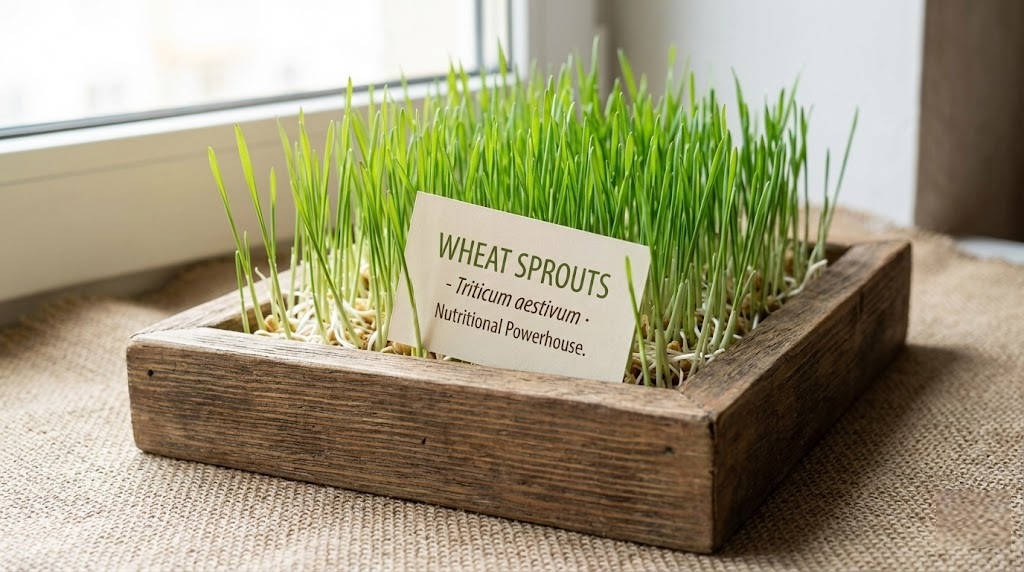
Wheat sprouts are the young shoots that emerge during the early germination of whole wheat berries (Triticum aestivum). The sprouting process typically begins after wheat berries are soaked and rinsed, and sprouts are usually ready to harvest within 3–5 days. Compared to mature wheat kernels, wheat sprouts may offer increased digestibility, different nutrient availability, and a fresh, mild flavor.
Important Distinctions:
Wheat berries are the whole, unsprouted wheat kernel.
Wheat sprouts are the sprouted, tender shoots (used for eating).
Wheatgrass refers to longer, greener, more mature seedlings, typically used for juicing (different from sprouts).
Verified Nutrition Facts
The table below uses the USDA FoodData Central entry Wheat, sprouted (FDC 169725). Every value is per 100 g so it matches the site comparison tool. “≈” marks a reference estimate used only when the USDA record does not report that field.
| Nutrient | Per 100 g |
|---|---|
| Calories | 198 kcal |
| Protein | 7.49 g |
| Fiber | 1.1 g |
| Vitamin C | 2.6 mg |
| Folate | 38 µg |
| Iron | 2.14 mg |
| Calcium | 28 mg |
| Potassium | 169 mg |
Per-100 g figures are a comparison standard, not a suggested serving. Natural variation can occur by cultivar and growing conditions.
Bioactive Compounds and Functional Nutrition
Wheat sprouts contain a variety of functional compounds formed during germination:
Antioxidants (phenolic compounds)
Active enzymes
Higher bioavailability of vitamins and minerals
Reduced anti-nutritional factors (e.g., phytic acid)
These changes may enhance nutrient absorption in the body, but specific mechanisms and clinical effects require more high-quality research for support.
Potential Health Benefits (Evidence-Based)
The following content is summarized from existing nutritional science and observational studies and does not constitute medical advice.
Improved Protein Availability and Vitamin Profile
Wheat sprouts demonstrate higher available protein and some vitamin content compared to mature wheat, which may contribute to dietary variety and nutritional supplementation.
Easy Digestion and Dietary Fiber
The selected USDA record reports 1.1 g fiber per 100 g. Sprouting changes the grain, but this amount should not be described as high fiber.
Plant Compounds and Antioxidant Support
Plant compounds in wheat sprouts may provide support against oxidative stress and inflammatory responses, but specific effects require more clinical validation.
Risks and Food Safety
Risk of Microbial Contamination
All sprouts carry a risk of microbial contamination, such as Salmonella, E. coli, and other bacteria, in the warm, moist sprouting environment. Wheat sprouts are no exception.
Recommendations for High-Risk Groups
Pregnant women, young children, the elderly, and immunocompromised individuals are generally advised to avoid eating raw sprouts, including wheat sprouts, or to choose to consume them only after heating.
Safety Suggestions
Rinse thoroughly first.
Store refrigerated.
Cooking or light heating can reduce risks.
These suggestions are consistent with CDC/FDA guidelines on sprout safety.
Home Sprouting Process (How-To)
Wheat sprouts are relatively simple to sprout and are suitable for home production.
Materials Needed
Edible-grade wheat berries (unroasted, unheated)
Sprouting container (sprouting tray or jar with breathable lid)
Clean water
Standard Sprouting Steps
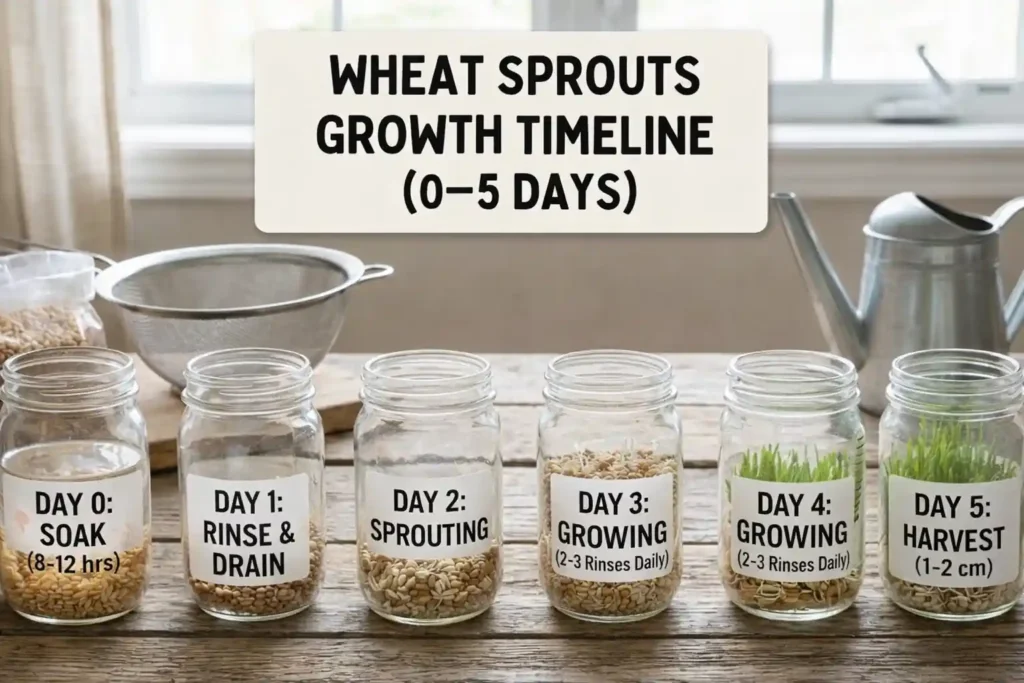
Soaking: Soak wheat berries in clean water for 8–12 hours.
Draining and Rinsing: Drain the soaking water, rinse with fresh water, and drain completely.
Placing in Container: Place the drained wheat berries in a sprouting tray or container with a breathable lid.
Daily Rinsing: Rinse 2–3 times daily to keep moist but not waterlogged.
Sprouting: Harvest is possible in about 3–5 days when the wheat sprouts are 1–2 cm long.
Figure 2: Wheat Sprouts Growth Timeline (0–5 Days)
— A horizontal timeline showing the daily status and typical growth changes during sprouting.
How to Eat Wheat Sprouts
Wheat sprouts can be eaten in various ways:
Salad or Sandwich Topping — Add raw tender sprouts for a fresh texture.
Stir-fry — Stir-fry for a few minutes.
Soups — Add at the end to preserve nutrients.
Mixed Grain Bowls — Combine with other grains or sprouts.
The decision to eat them raw should be based on individual health and food safety considerations.
Nutrition Comparison With Other Sprouts
These rows use the same raw sprouted-food records and 100 g basis as our Sprout Nutrition Comparison Tool.
| Raw sprout (100 g) | Calories | Protein (g) | Fiber (g) | Vitamin C (mg) | Folate (µg) |
|---|---|---|---|---|---|
| Sprouted Wheat | 198 | 7.49 | 1.1 | 2.6 | 38 |
| Mung Bean Sprouts | 30 | 3.04 | 1.8 | 13.2 | 61 |
| Soybean Sprouts | 122 | 13.09 | 1.1 | 15.3 | 172 |
| Alfalfa Sprouts | 23 | 3.99 | 1.9 | 8.2 | 36 |
| Lentil Sprouts | 106 | 8.96 | ≈ 3.2 | 16.5 | 100 |
| Radish Sprouts | 43 | 3.81 | ≈ 2.3 | 28.9 | 95 |
| Pea Sprouts | 124 | 8.8 | ≈ 3 | 10.4 | 144 |
Frequently Asked Questions (FAQ)
Q1: Can wheat sprouts be eaten every day?
A1: Consuming a moderate amount daily is safe for the vast majority of people, but thorough rinsing is recommended. High-risk groups should consume them after heating.
Q2: What is the difference between wheat sprouts and wheatgrass?
A2: Wheat sprouts are the newly sprouted tender shoots, while wheatgrass refers to longer, more mature seedlings (often used for juicing).
Q3: Can children eat wheat sprouts?
A3: Children are advised to avoid eating them raw; cooking them is safer.
Q4: Are wheat sprouts more nutritious than mature wheat?
A4: The sprouting process alters the nutritional profile, increasing certain vitamins and absorbable minerals, but a varied diet is still recommended.
Data Sources
USDA FoodData Central – Nutrition database (wheat, sprouts proxy data)
https://fdc.nal.usda.gov/
Healthline – Bean and sprout nutrition analysis
https://www.healthline.com/nutrition/bean-sprouts-nutrition
WebMD – Sprout safety and nutrition
https://www.webmd.com/diet/sprouts-good-for-you
CDC – Sprout related food safety guidance
https://www.cdc.gov/foodsafety/communication/sprouts.html
FDA – Sprouts safety recommendations
https://www.fda.gov/food/buy-store-serve-safe-food/sprouts-what-you-should-know
Comparison Tool Data Snapshot
This table is generated from the same data module as the Sprout Nutrition Comparison Tool, so this guide and the interactive comparison stay synchronized. Values are per 100 g fresh weight. “≈” means a species- and stage-matched reference estimate, not a direct measurement of every crop.
| Growth stage | Calories (kcal) | Protein (g) | Fiber (g) | Vitamin C (mg) | Folate (µg) | Iron (mg) | Calcium (mg) | Potassium (mg) |
|---|---|---|---|---|---|---|---|---|
| Whole Sprout | 198 kcal | 7.49 g | 1.1 g | 2.6 mg | 38 µg | 2.14 mg | 28 mg | 169 mg |
| Microgreen / Shoot | ≈ 28 kcal | ≈ 2.7 g | ≈ 3.5 g | ≈ 30 mg | ≈ 38 µg | 1.26 mg | ≈ 30 mg | 368.38 mg |