
How to Grow Broccoli Sprouts in Trays (Complete Step-by-Step Guide)
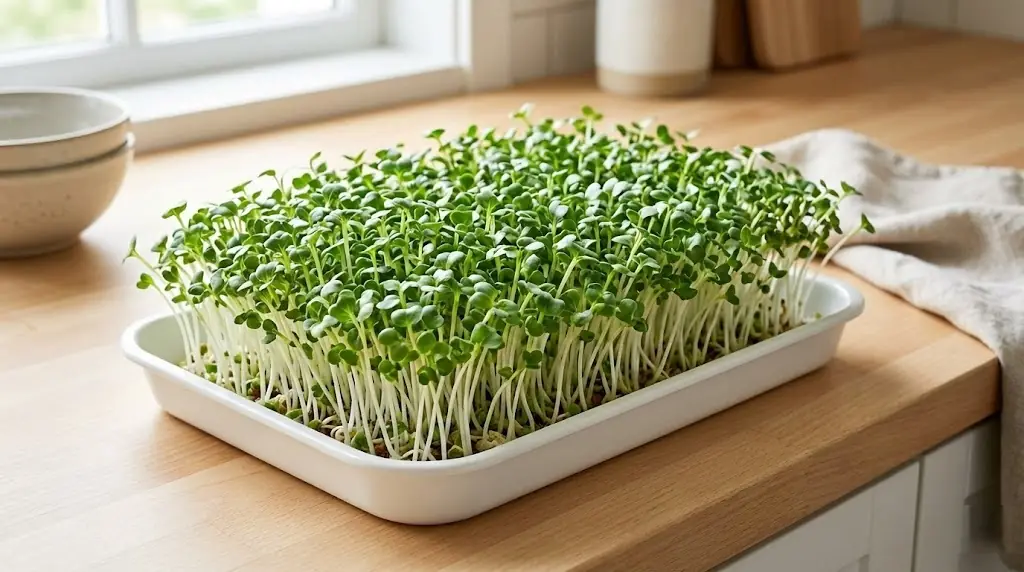
Broccoli sprouts are widely regarded as one of the most nutrient-dense foods you can grow at home.
Rich in sulforaphane and other bioactive compounds, these young sprouts have attracted attention from nutrition researchers, health-conscious eaters, and home growers alike.
While broccoli sprouts are often grown in jars, using trays offers a more stable, scalable, and beginner-friendly method, especially for growers who want consistent results and lower mold risk.
This guide will walk you through exactly how to grow broccoli sprouts in trays, explain why the tray method works so well, and help you avoid the most common mistakes that cause failure.
Pro Tip: Before you start growing, you can use our Sprout Nutrition Comparison Tool to see exactly how broccoli sprouts compare to mung beans, radish, and other popular sprouts.
Why Grow Broccoli Sprouts in Trays?
Most beginner guides focus on jars because they are simple and cheap. However, jars are not always ideal for broccoli sprouts.
Growing broccoli sprouts in trays offers several clear advantages:
- Better airflow and drainage
- Lower risk of mold and sour odors
- More even germination
- Easier to scale for larger yields
- Better visual monitoring of sprout health
Because broccoli sprouts are harvested very young (usually within 4–5 days), controlling moisture and density is far more important than depth, which makes shallow trays an excellent choice.
Broccoli Sprouts vs Broccoli Microgreens (Important Distinction)
Before growing, it’s essential to understand the difference between broccoli sprouts and broccoli microgreens. Many online guides confuse the two, leading to unrealistic expectations.
| Feature | Broccoli Sprouts | Broccoli Microgreens |
| Harvest time | 4–5 days | 10–14 days |
| Light required | No | Yes |
| Growing medium | None (water only) | Soil or mat |
| Stem length | ~1–3 cm | 5–10 cm |
| Nutritional focus | Sulforaphane | Chlorophyll & fiber |
This article focuses only on broccoli sprouts, not microgreens.
If your sprouts are long, leafy, and green, you are growing microgreens—not sprouts.
What You Need to Grow Broccoli Sprouts in Trays
Essential Equipment
You do not need expensive equipment, but cleanliness and drainage matter.
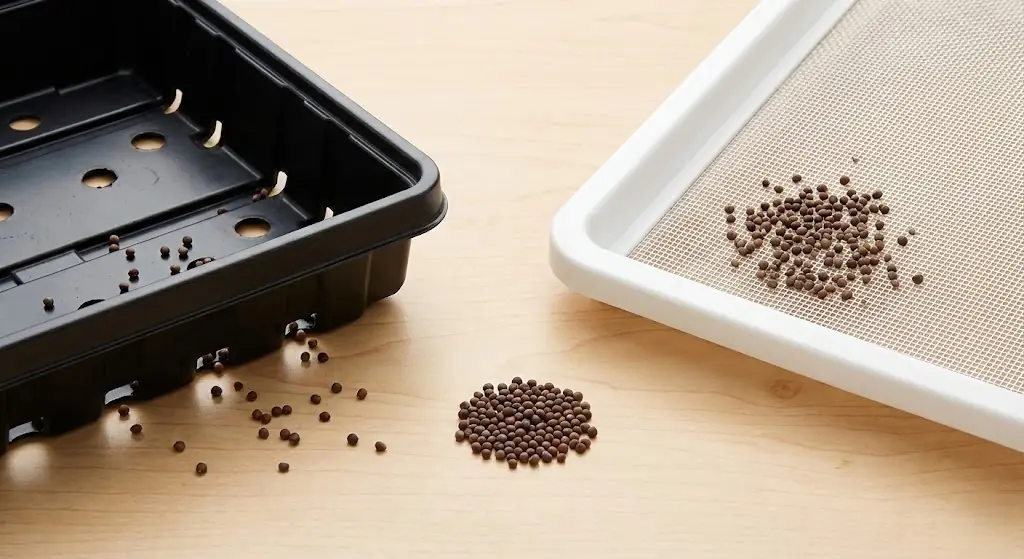
- Fine-Mesh Sprouting Trays: Crucial Step — Broccoli seeds are extremely small. Standard seed trays have holes that are too large, causing seeds to fall through. You must use a fine-mesh tray or line a regular tray with unbleached sprouting paper.
- A solid catch tray underneath
- Food-safe broccoli sprouting seeds
- Clean drinking water
- Breathable cover or blackout dome (optional but helpful)
Choosing the Right Seeds (Critical Step)
Not all broccoli seeds are suitable for sprouting. Always use seeds labeled specifically for sprouting or human consumption.
“Organic” alone is not enough. Quality sprouting seeds should be:
- Tested for pathogens
- Untreated (no fungicides)
- Uniform in size
Step-by-Step: How to Grow Broccoli Sprouts in Trays
Step 1: Soak the Seeds (8–12 Hours)
Measure 1–2 tablespoons of broccoli seeds per standard tray.
- Place seeds in a clean container.
- Add plenty of water (at least 3–4× the seed volume).
- Soak for 8–12 hours only. Over-soaking can cause fermentation and off-smells.
Step 2: Drain Thoroughly
After soaking:
- Drain all water completely.
- Rinse once with fresh water.
- Drain again. Seeds should feel moist but never submerged.
Step 3: Spread Seeds Evenly in the Tray
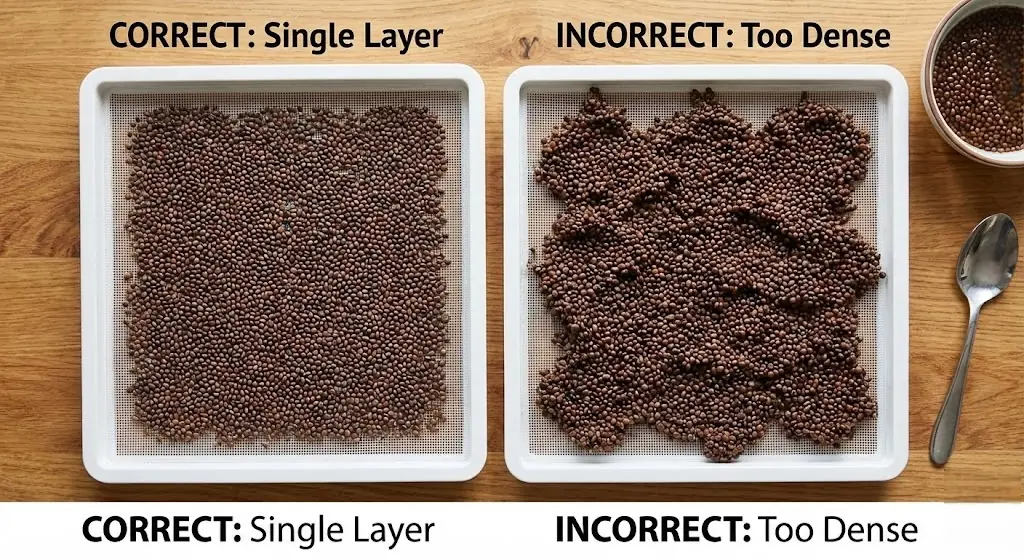
Transfer the soaked seeds into the tray.
Key principle: single-layer distribution.
Seeds should not pile up. Overcrowding is the #1 cause of mold. Aim for even spacing across the tray surface.
Step 4: Rinse and Drain (2–3 Times Daily)
Rinse sprouts gently with clean water:
- 2–3 times per day.
- Tilt the tray to allow full drainage.
- Empty the catch tray each time. Standing water is dangerous for sprouts.
Step 5: Blackout Phase (Day 1–3)
Broccoli sprouts do not require light. During the first 2–3 days:
- Keep trays in a shaded, ventilated area.
- Optional: lightly cover to maintain humidity.
- Temperature ideal range: 18–22°C (65–72°F).
Step 6: Harvest at the Right Time (Day 4–5)
Broccoli sprouts are ready when:
- Stems are ~1–3 cm long.
- Cotyledons (seed leaves) are visible.
- Smell is fresh and mild (not sour).
Broccoli Sprouts Growth Timeline (Tray Method)
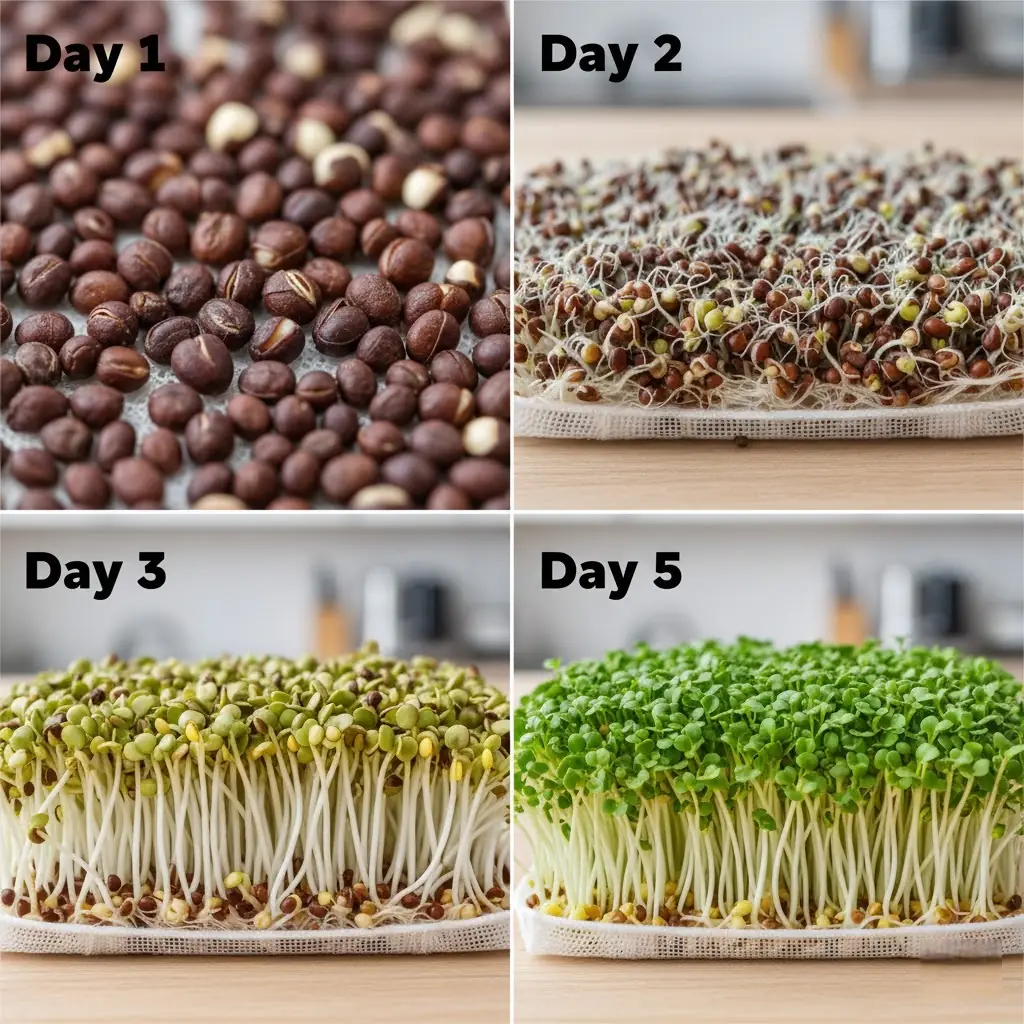
- Day 0: Dry seeds
- Day 1: Seeds swell and begin germinating
- Day 2: Root hairs and short shoots appear
- Day 3: Dense sprout mat forms
- Day 4–5: Harvest-ready sprouts
Common Problems When Growing Broccoli Sprouts (And Fixes)
Mold vs Root Hairs
- Root hairs look fuzzy but appear only near roots.
- Mold smells bad and spreads irregularly like spider webs.
- If it smells unpleasant, discard immediately.
Seeds Falling Through Tray
If your seeds are escaping through the drainage holes, you need to use fine-mesh inserts or sprouting paper. Do not attempt to grow broccoli sprouts in standard large-hole garden trays without a liner.
How to Store and Eat Broccoli Sprouts
Storage Safety (Important Fix)
Sprouts are highly perishable. Proper storage is essential to prevent bacterial growth.
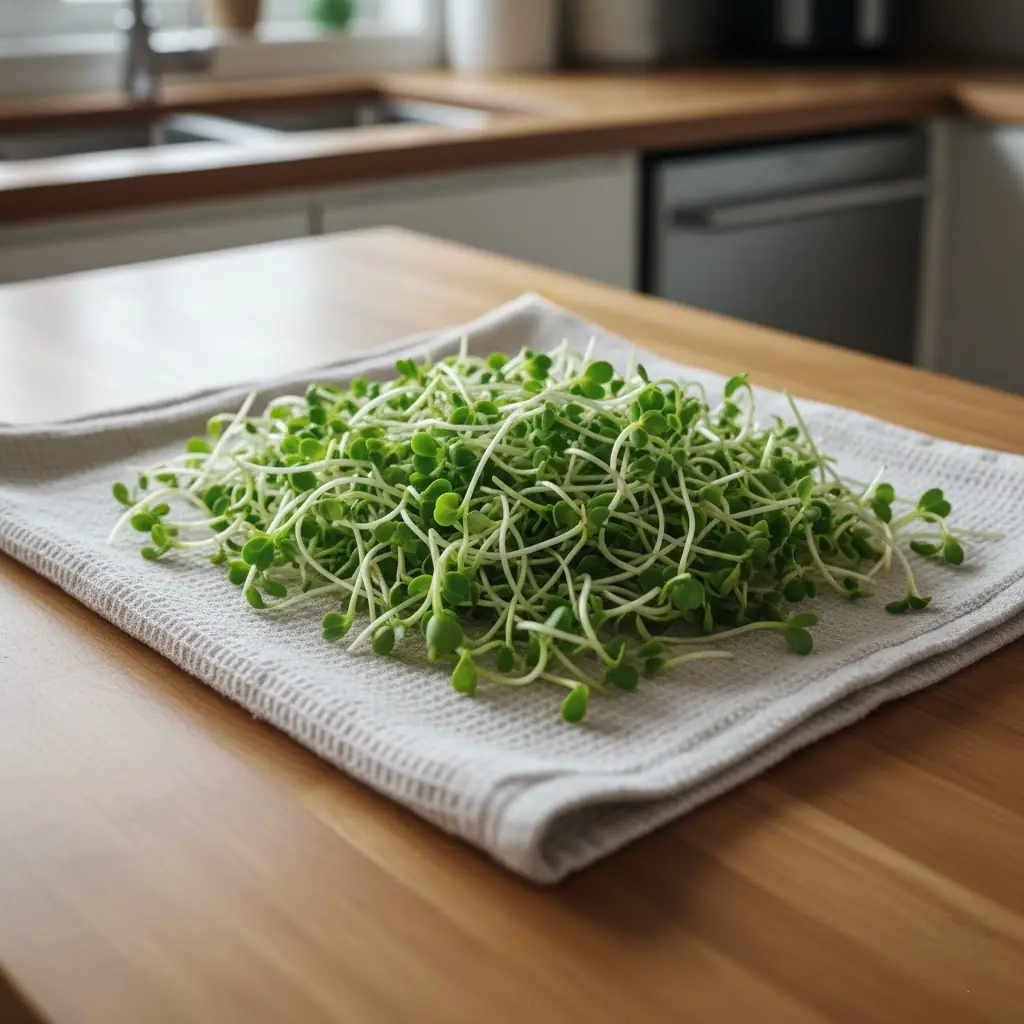
- Dry-Down (Mandatory): Before storing, let your sprouts air-dry on a clean towel for 4–8 hours. Storing wet sprouts is the fastest way to cause slime and rot.
- Avoid Airtight Containers: Do not store sprouts in a completely sealed plastic bag or airtight jar. This creates an anaerobic environment that promotes rapid spoilage and mold.
- Use Breathable Storage: Store in a container with a breathable lid or a bowl covered with a paper towel.
- Absorb Moisture: Place a clean paper towel inside the container to absorb residual moisture.
Best Uses
- Salads and Grain bowls
- Sandwiches and Smoothies
- Light cooking reduces sulforaphane but may improve digestibility.
Frequently Asked Questions
Do broccoli sprouts need light?
No. Light is unnecessary for sprout-stage growth, though a few hours of indirect light on the last day can turn them green.
How many seeds per tray?
Usually 1–2 tablespoons for a standard shallow tray. Do not over-seed.
Can I grow broccoli sprouts year-round?
Yes, indoors with a stable temperature.
Scientific References and Data Sources
Johns Hopkins University – Sulforaphane Research
Foundational research identifying high sulforaphane levels in broccoli sprouts
https://www.hopkinsmedicine.org/news/media/releases/broccoli_sprouts
National Institutes of Health (NIH)
Review of glucosinolate metabolism and health effects
https://www.ncbi.nlm.nih.gov/pmc/articles/PMC5452224/
USDA FoodData Central
Nutrient composition data for broccoli sprouts
https://fdc.nal.usda.gov/
International Journal of Food Sciences and Nutrition
Comparative antioxidant activity of sprouts vs mature vegetables
https://pubmed.ncbi.nlm.nih.gov/