
How to Grow Lentil Sprouts
A Clean, Safe, and Nutrient-Dense Tray Method
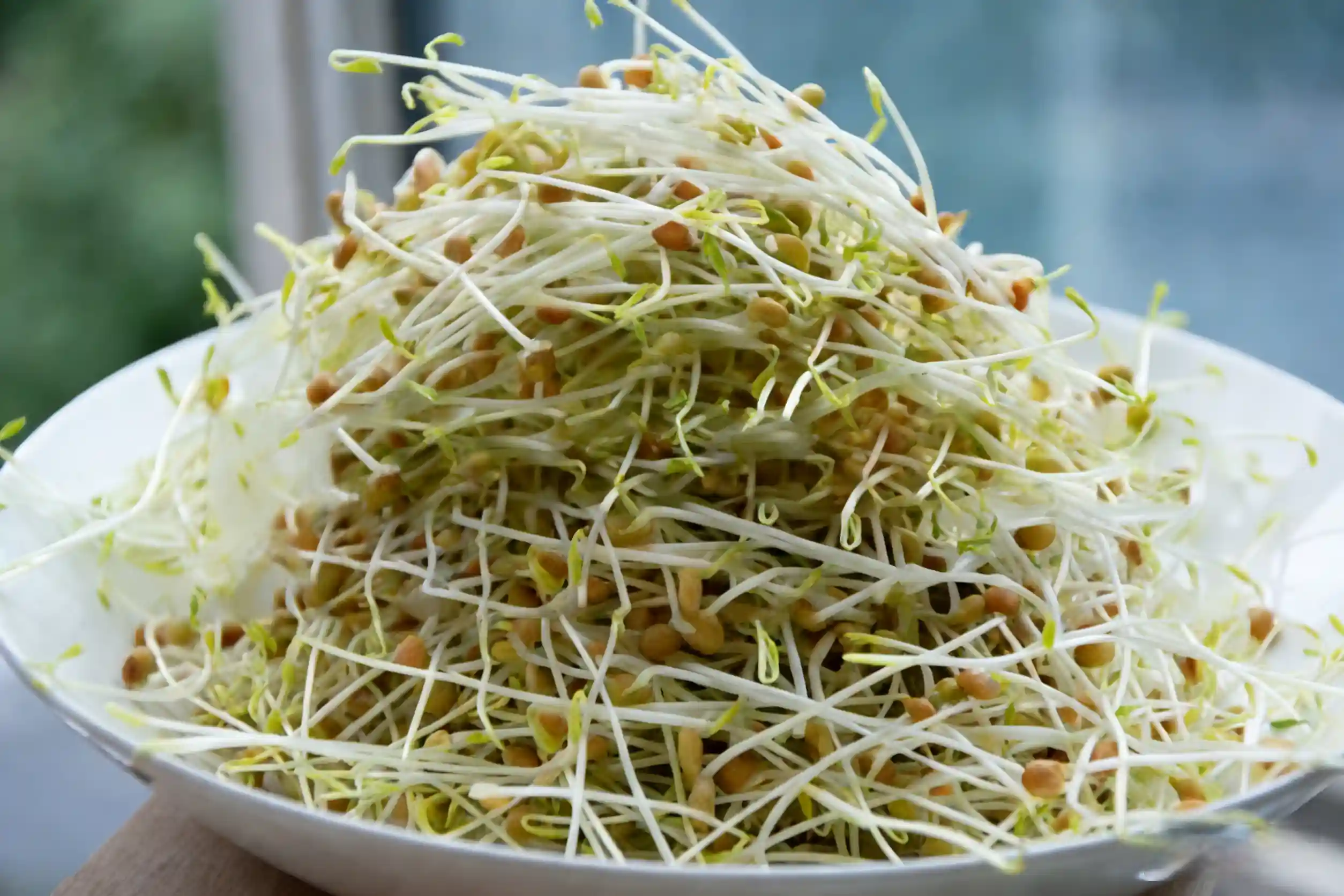
Lentil sprouts are one of the fastest and easiest edible sprouts, prized for their mild nutty flavor, crisp texture, and impressive nutritional upgrade compared to dry lentils.
Unlike microgreens, lentil sprouts are harvested very early, before true leaves appear, making timing and technique especially important.
This guide focuses on a tray-based method (not jars) to ensure even growth, proper drainage, and food safety.
Why Grow Lentil Sprouts?
- Ready in 2–4 days
- No soil required
- High digestibility compared to dry lentils
- Rich in enzymes, vitamin C, and bioavailable minerals
- Ideal for salads, wraps, bowls, and light cooking
What You Need
Recommended equipment (tray-based, not jar-based):
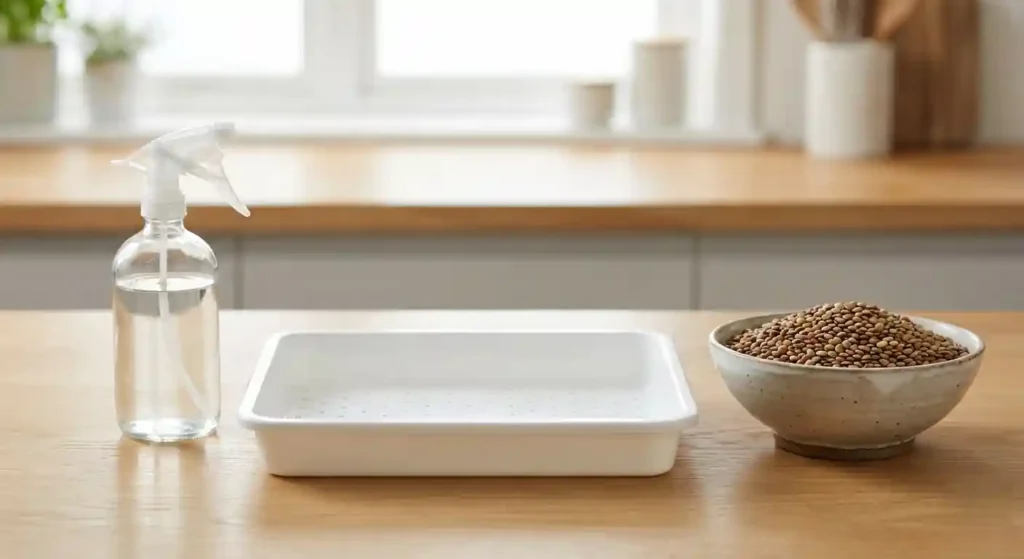
- Shallow sprouting tray with drainage holes
- Solid tray underneath for runoff
- Spray bottle or gentle watering can
- Food-grade lentils (brown or green lentils; avoid red split lentils)
- A second tray or flat lid for pressure
- A small weight (0.5–1 kg, e.g., a water bottle)
Step-by-Step: How to Grow Lentil Sprouts
Step 1: Rinse and Soak
Rinse lentils thoroughly, then soak in clean water for 6–8 hours.
This rehydrates the seed and initiates enzyme activity.
Step 2: Spread Lentils Evenly
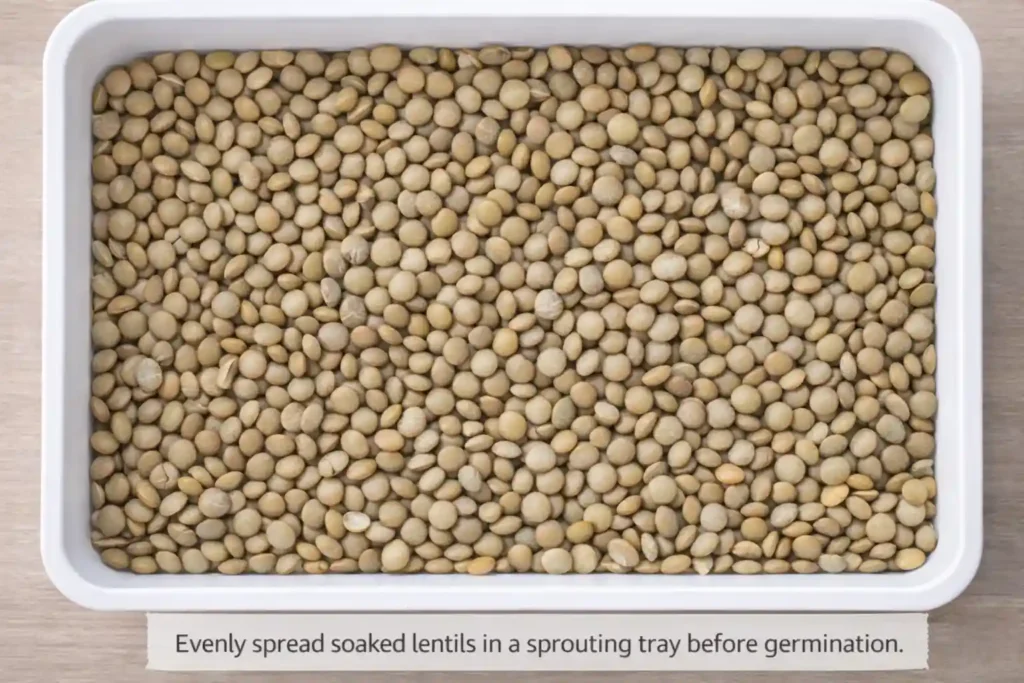
Drain well and spread the lentils evenly in the sprouting tray.
- Dense is good
- Overlapping is not
Each seed should touch its neighbors but not pile up. This ensures uniform sprouting and airflow.
Step 3: Apply Pressure (Key Technique)
Place a second tray or flat lid directly on top of the lentils and add gentle weight (about 0.5–1 kg).
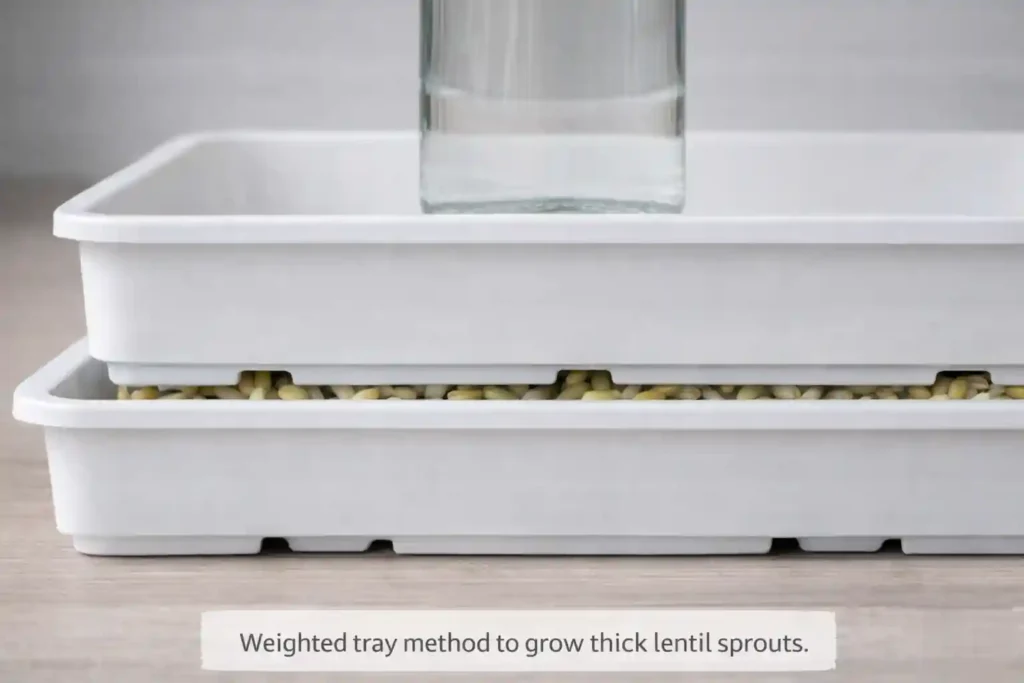
Why pressure matters:
- Encourages thicker, juicier sprouts
- Prevents hollow or leggy growth
- Mimics natural underground resistance
Tip: Check once a day to ensure the weight hasn’t shifted. Uneven pressure leads to crooked growth.
Step 4: Rinse and Drain (Twice Daily)
Rinse gently 2 times per day.
- Drain thoroughly every time
- Never let sprouts sit in water
Good drainage is the most effective way to prevent sour smells and mold.
Step 5: Keep Them in the Dark
For lentil sprouts, darkness is ideal.
- No light needed
- Light is unnecessary before harvest
- Darkness keeps flavor mild and texture crisp
Step 6: Monitor Growth
Within 24–48 hours, you’ll see short white sprouts emerge.
At this stage:
- Roots are tender
- Flavor is still sweet and nutty
Do not wait too long.
Step 7: Harvest at the Right Length (Critical)
Best harvest window: 1–3 cm
(About 1–2× the length of the dry lentil)
Why this matters:
- Beyond 3 cm, roots begin to fiberize
- Flavor shifts from clean and nutty to grassy
- Digestibility and mouthfeel decline rapidly
Harvest by cutting just above the root mass or gently lifting the sprouts.
Nutritional Changes During Sprouting
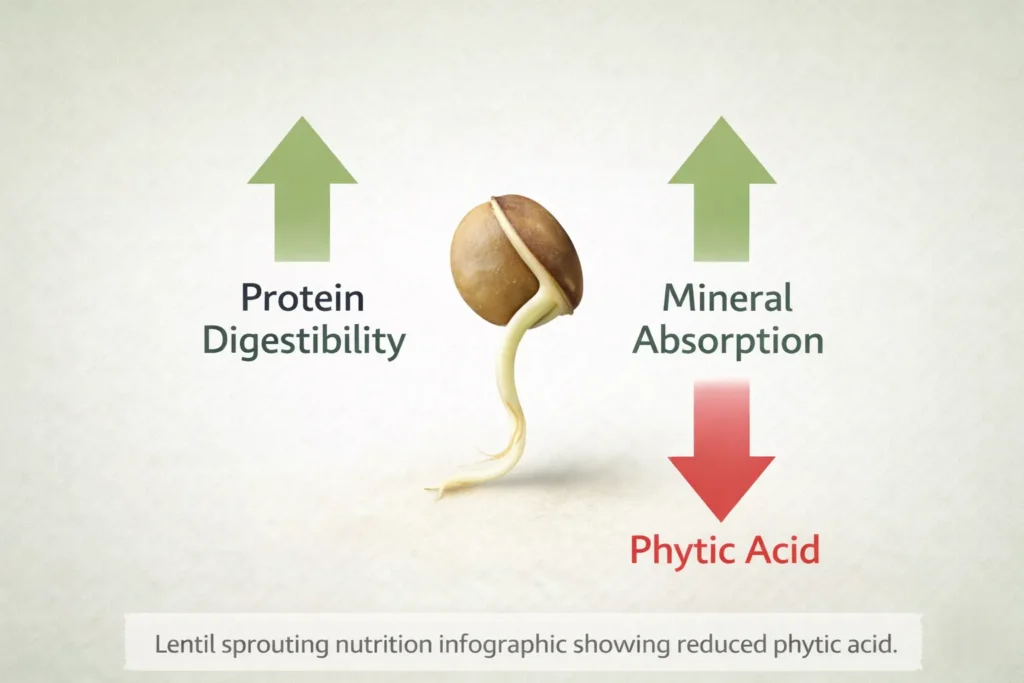
Sprouting dramatically changes how lentils behave in the body.
Key improvements:
- Vitamin C increases up to 20× after 3–4 days of sprouting
- Phytic acid decreases, improving mineral absorption
- Protein digestibility increases
- Enzymes become active, reducing digestive burden
Dry lentils contain almost no usable vitamin C, but sprouting unlocks it quickly.
Storage Tips
- Rinse once more after harvest
- Dry gently with a towel
- Store in a breathable container
- Refrigerate up to 3 days
For best flavor, consume within 24–48 hours.
Frequently Asked Questions (FAQ)
1. Are lentil sprouts the same as lentil microgreens?
No. Lentil sprouts are harvested very early (1–3 cm) before leaf development.
Microgreens require light, longer growth, and often soil or a growing medium.
2. Why do my lentil sprouts smell sour?
Usually due to:
- Poor drainage
- Standing water
- Overcrowding
Rinse less aggressively and drain more thoroughly.
3. Are lentil sprouts safe to eat raw?
Mostly yes, but with a caveat.
Lentils contain lectins. Sprouting significantly reduces them, but because lentil sprouts are harvested quickly, very sensitive digestive systems (children, elderly, IBS) may still experience bloating.
Recommendation:
If digestion is a concern, blanch the sprouts in boiling water for 30 seconds before eating.
This preserves most enzymes while ensuring maximum safety.
4. Do lentil sprouts need light?
No. Darkness produces better texture and flavor at the sprout stage.
5. Can I grow lentil sprouts in a jar?
Technically yes, but jars:
- Drain unevenly
- Encourage tangling
- Increase spoilage risk
Tray-based methods are more consistent and safer.
6. Which lentils work best?
- Brown lentils
- Green lentils
Avoid red or split lentils—they won’t sprout properly.
Final Thoughts
Lentil sprouts reward precision more than patience.
Harvesting early (1–3 cm) is the single biggest factor separating crisp, sweet sprouts from fibrous, grassy ones.
Once dialed in, this becomes one of the highest return, lowest effort sprouts you can grow at home.
Data Sources
- USDA FoodData Central
https://fdc.nal.usda.gov/ - Peer-reviewed sprouting research
https://www.ncbi.nlm.nih.gov/ - SproutsDaily Nutrition Comparison Tool
/sprout-nutrition-comparison-tool/