
How to Grow Mung Bean Sprouts at Home
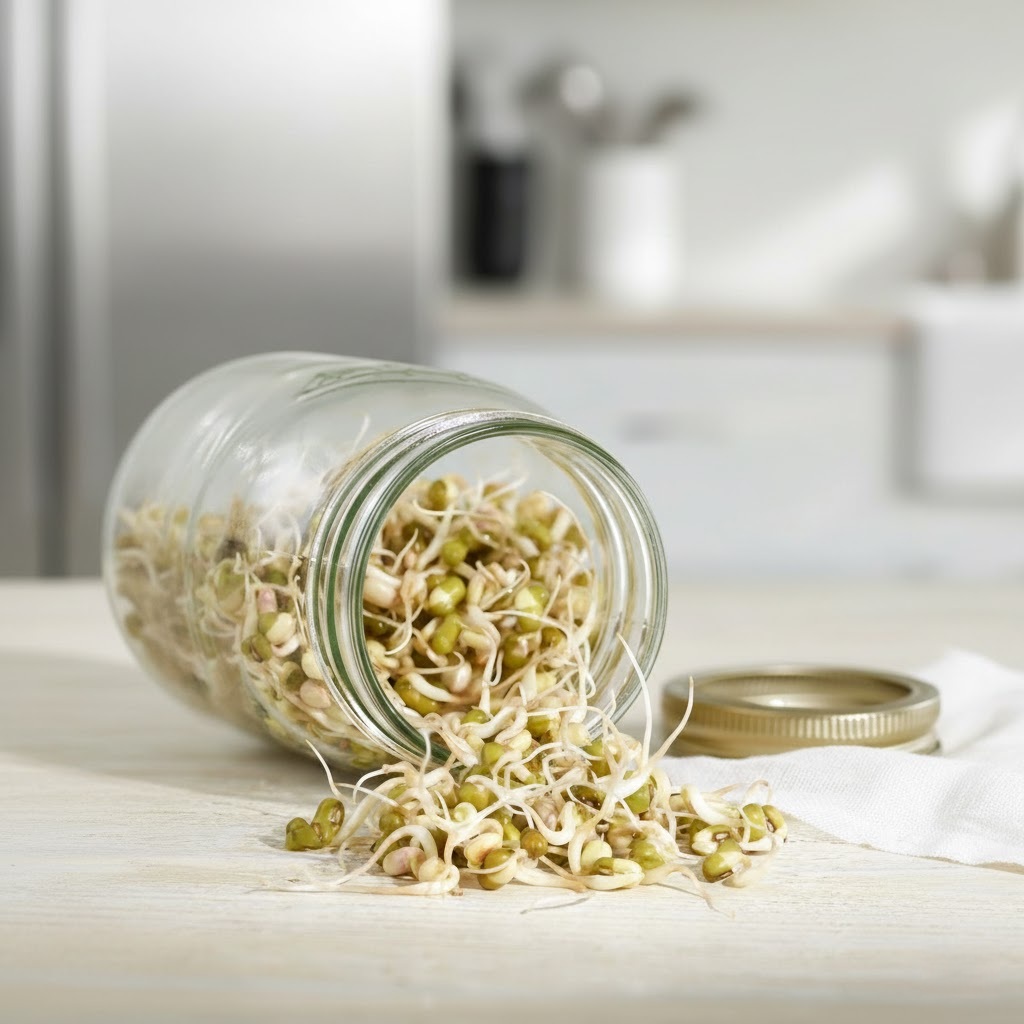
Mung bean sprouts are crisp, juicy, and mildly sweet — a staple in Asian cooking and one of the easiest sprouts to grow at home. With the right technique, you can grow thick, restaurant-style mung bean sprouts without soil, sunlight, or special equipment.
This guide walks you through the exact step-by-step method, explains why commercial sprouts are grown in darkness and under pressure, and shows how sprouting dramatically improves nutrition compared to dry mung bean seeds.
What You Need to Grow Mung Bean Sprouts
- Whole mung beans (not split or hulled)
- A wide-mouth glass jar or sprouting container
- Breathable lid (mesh lid or cheesecloth)
- Clean drinking water
- A dark place (cabinet or covered box)
- Optional but recommended: a small clean weight (for pressure)
Step-by-Step: How to Grow Mung Bean Sprouts at Home
Step 1: Measure and Rinse the Mung Beans
Use about ¼ cup of dry mung beans. Rinse thoroughly under cool running water to remove dust and debris.
Remove any damaged or floating beans.
Step 2: Soak the Beans
Soak mung beans in plenty of clean water for 8–12 hours at room temperature.
This hydration step activates germination enzymes and prepares the seed for sprouting.
Step 3: Drain Completely
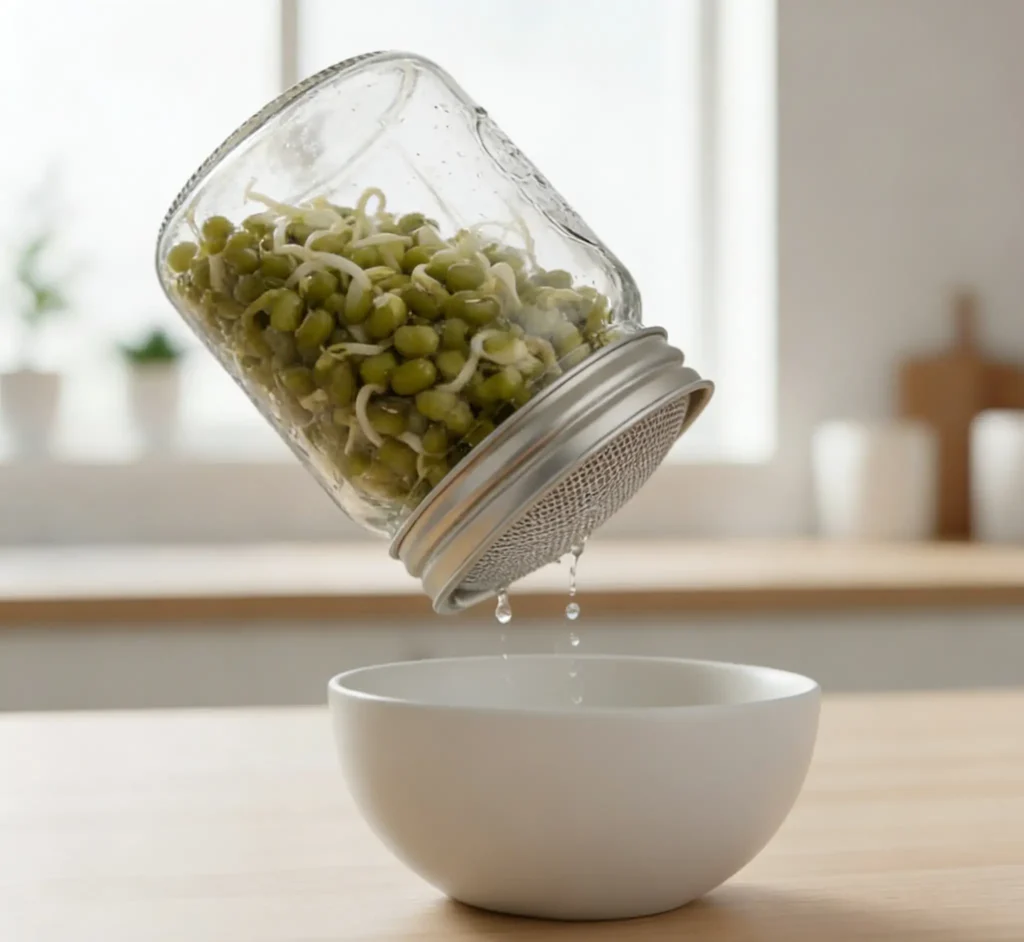
After soaking, drain all water thoroughly. Excess standing water can cause rot and unpleasant odors.
Tilt the jar at an angle to ensure continuous drainage.
Step 4: Keep Sprouts in Complete Darkness (Critical Step)
Place the jar in a completely dark environment — such as a closed cabinet or covered box.
⚠️ Important correction & explanation
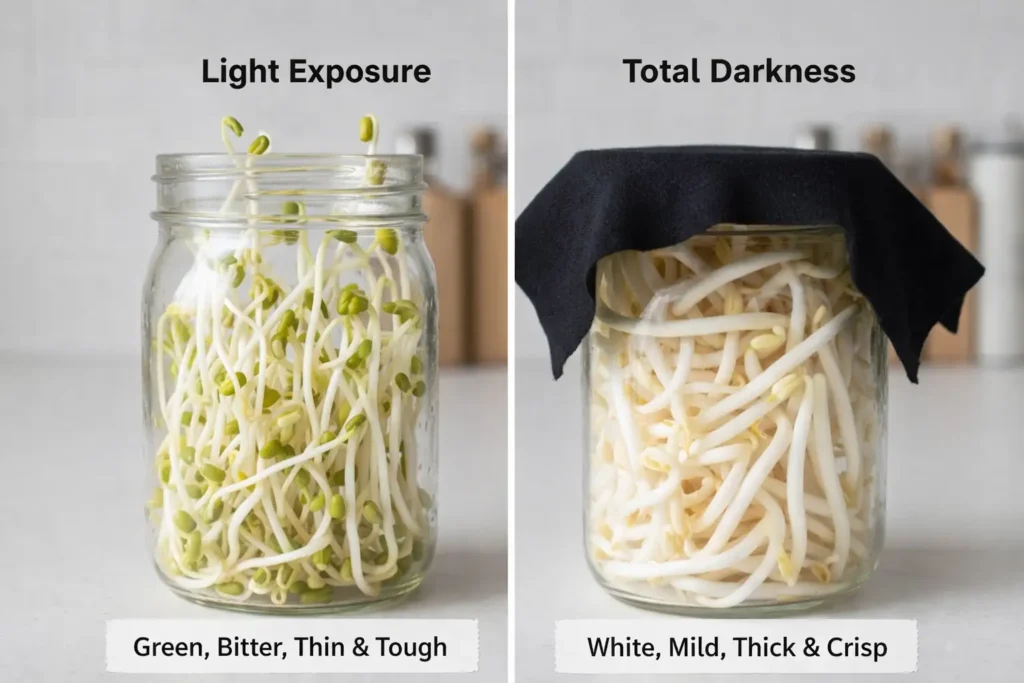
If mung bean sprouts are exposed to light:
- They turn green due to chlorophyll formation
- They produce polyphenols, which:
- Harden the stem
- Introduce a bitter taste
- Reduce the classic crunchy texture
This is why commercial mung bean sprouts are always grown in total darkness. Darkness prevents polyphenol accumulation and keeps sprouts white, thick, and tender.
Step 5: Rinse and Drain Twice Daily
Rinse sprouts with fresh water 2 times per day (morning and evening), then drain completely.
Good airflow and drainage prevent mold and off-flavors.
Step 6: Apply Pressure for Thick, Crunchy Sprouts (Restaurant Secret)
This is the key difference between thin home sprouts and thick restaurant-style sprouts.
Why pressure works:
When sprouts are gently compressed, they are forced to grow upward against resistance. This stimulates thicker hypocotyl development, making sprouts shorter, crunchier, and juicier.
How to apply pressure at home:
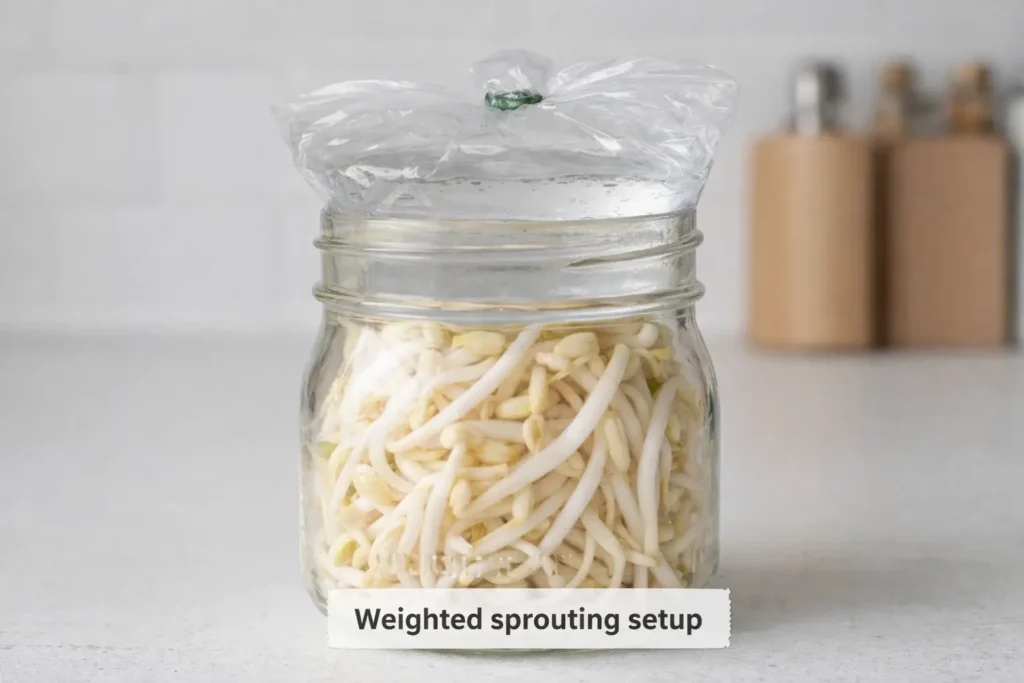
- Place a clean small weight (e.g., a sealed water-filled plastic bag) on top of the sprouts inside the jar
- Apply gentle pressure only — do not crush
- Keep pressure consistent during the growing phase
This single step dramatically improves texture.
Step 7: Continue Growing in Darkness
Keep rinsing, draining, and maintaining pressure while sprouts grow in darkness.
Avoid checking too often — light exposure, even briefly, can affect texture and flavor.
Step 8: Harvest at the Right Length
Harvest mung bean sprouts when they reach 5–7 cm (2–3 inches) in length.
- Shorter than 5 cm → underdeveloped crunch
- Longer than 7 cm → fibrous texture
For most home growers, day 3–4 is ideal.
Step 9: Final Rinse and Storage
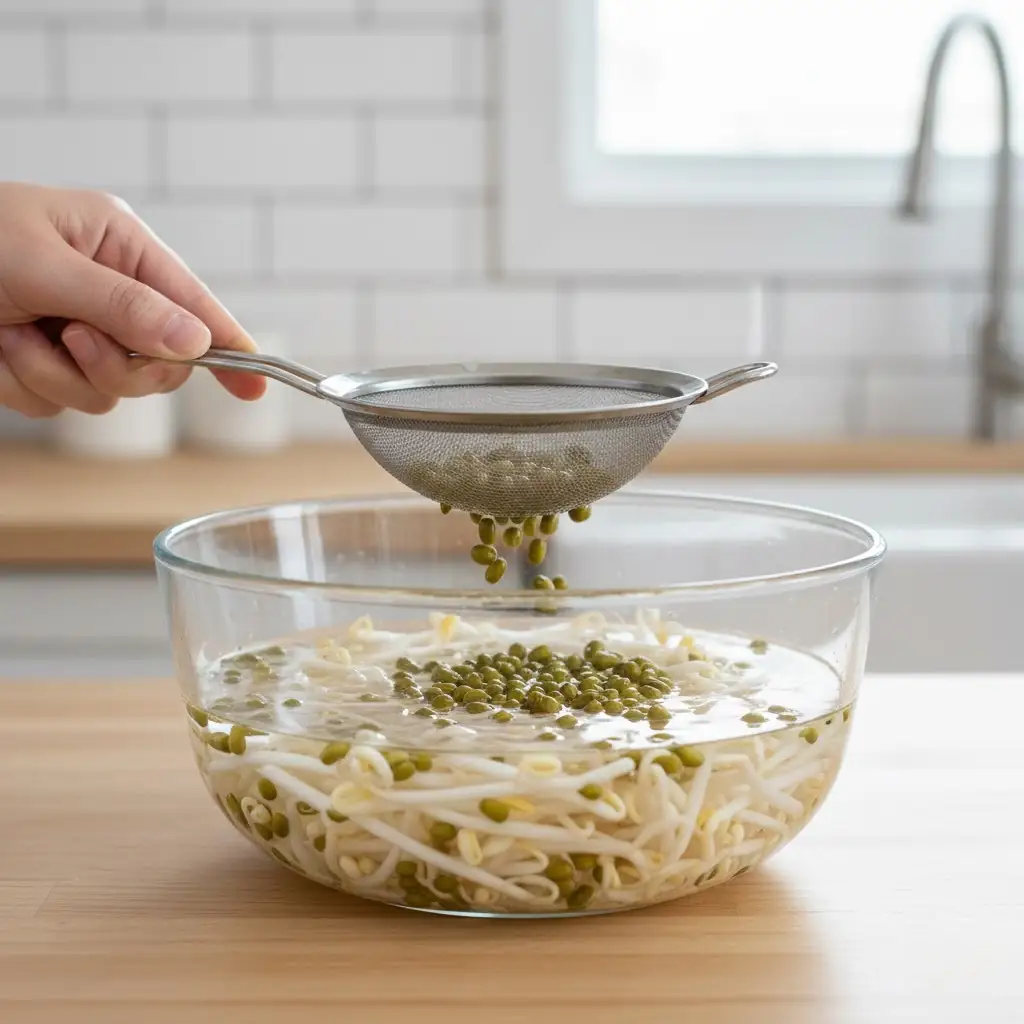
Rinse thoroughly one last time, drain well, and store sprouts in a sealed container in the refrigerator.
Use within 3–4 days for best freshness and crunch.
Growth Timeline: Mung Bean Sprouts
| Day | What Happens |
|---|---|
| Day 0 | Dry mung beans |
| Day 1 | Soaking and initial swelling |
| Day 2 | Germination begins |
| Day 3 | Rapid elongation |
| Day 4 | Ideal harvest size (2–4 cm) |
Nutritional Comparison: Mung Beans vs. Mung Bean Sprouts
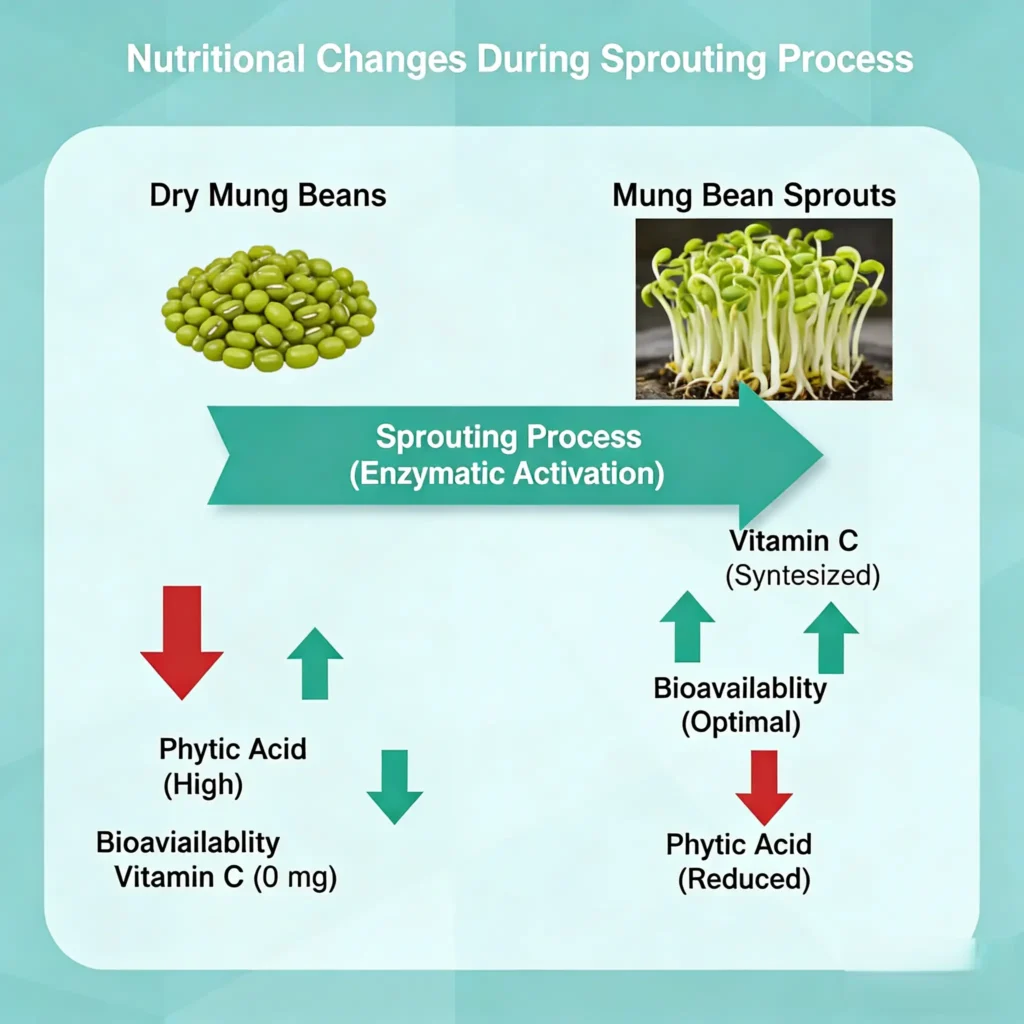
Sprouting causes dramatic biochemical changes in mung beans.
Key mechanisms include:
- Enzymatic degradation of phytic acid
- Mineral release
- De novo synthesis of vitamin C
If you want to compare mung beans with other seeds or sprouts side by side, you can explore the interactive Sprout Nutrition Comparison Tool for deeper nutrient-level comparisons.
Key Nutritional Changes During Sprouting
| Nutrient | Dry Mung Beans | Mung Bean Sprouts | What Changes |
|---|---|---|---|
| Phytic Acid | High | Significantly reduced | Enzymatic degradation improves mineral absorption |
| Iron & Zinc | Bound | More bioavailable | Mineral release |
| Vitamin C | 0 mg | Present | De novo synthesis during germination |
| Fiber | Moderate | Slightly reduced | Structural breakdown |
| Calories | High | Much lower | Water content increases |
👉 To compare mung bean sprouts with other sprouts or seeds, use the Sprout Nutrition Comparison Tool to see how sprouting affects nutrients across different species.
Mung Bean Sprouts vs. Other Sprouts
Compared to alfalfa, broccoli, or lentil sprouts, mung bean sprouts are:
- Thicker and juicier
- Lower in bitterness
- Better suited for stir-frying and cooking
You can compare these differences visually and nutritionally using the Sprout Nutrition Comparison Tool, especially if you're deciding which sprout to grow next.
Food Safety Tips for Home Sprouting
- Always rinse with clean water
- Drain thoroughly after each rinse
- Discard sprouts with sour or unpleasant smells
- Refrigerate immediately after harvest
Sprouts are safe when grown and handled properly.
Frequently Asked Questions (FAQ)
Why must mung bean sprouts be grown in darkness?
Light exposure triggers polyphenol production, which hardens stems and creates bitterness. Darkness keeps sprouts tender and sweet.
Why are my sprouts thin and weak?
Lack of pressure is the most common cause. Gentle pressure encourages thicker, crunchier sprouts.
Are mung bean sprouts healthier than mung beans?
They are lower in calories and easier to digest, with improved mineral absorption and newly synthesized vitamin C. For exact numbers, compare them using the Sprout Nutrition Comparison Tool.
Final Thoughts
Mung bean sprouts are a clear example of how controlled darkness, pressure, and enzymatic transformation turn a dry legume into a fresh, highly digestible food.
Once you understand why commercial growers do what they do, it becomes surprisingly easy to replicate professional-quality bean sprouts at home.
Data Sources & Methodology
- USDA FoodData Central – Mung Beans (Dry, Raw)
https://fdc.nal.usda.gov/food/174257/nutrients - USDA FoodData Central – Mung Bean Sprouts (Raw)
https://fdc.nal.usda.gov/food/170414/nutrients - SproutsDaily – Sprout Nutrition Comparison Tool
/sprout-nutrition-comparison-tool/ - Research on germination, enzymatic degradation, and nutrient bioavailability
https://www.ncbi.nlm.nih.gov/pmc/articles/PMC5452227/
https://www.ncbi.nlm.nih.gov/pmc/articles/PMC4103721/ - Food safety guidance for sprouts
https://www.foodsafety.gov/food-safety-charts/sprouts