How to Grow Sunflower Sprouts (Step-by-Step)
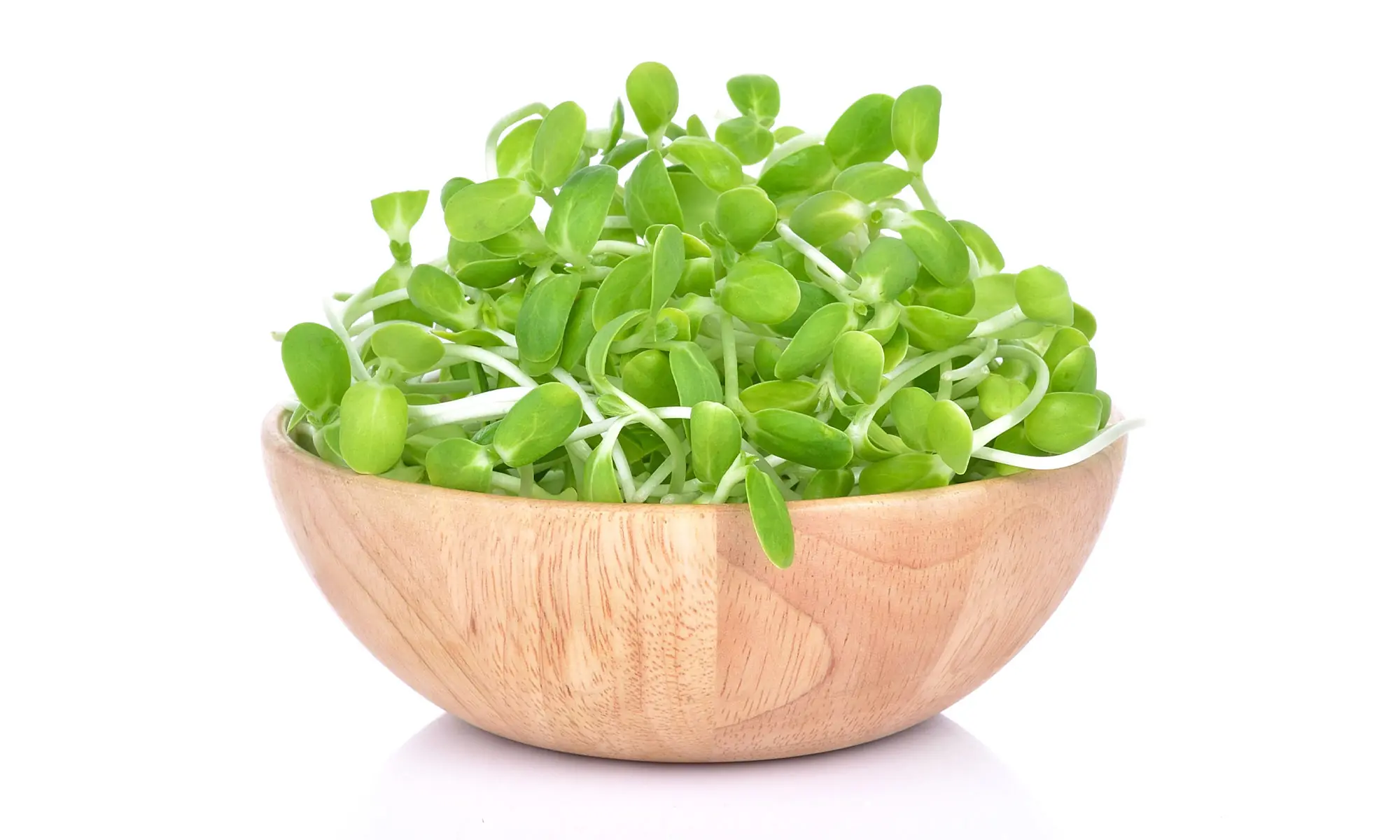
Sunflower sprouts are young germinated sunflower seeds harvested at an early stage, before full leaf development.
When grown correctly, they are thick, juicy, mildly nutty, and far more tender than sunflower microgreens.
Because sunflower seeds are large, oil-rich, and hull-heavy, growing sunflower sprouts requires very specific control over darkness, pressure, drainage, and airflow.
This guide follows methods used by professional sprout growers, adapted safely for home use.
What You Need to Grow Sunflower Sprouts
Recommended equipment (tray-based, not jar-based):
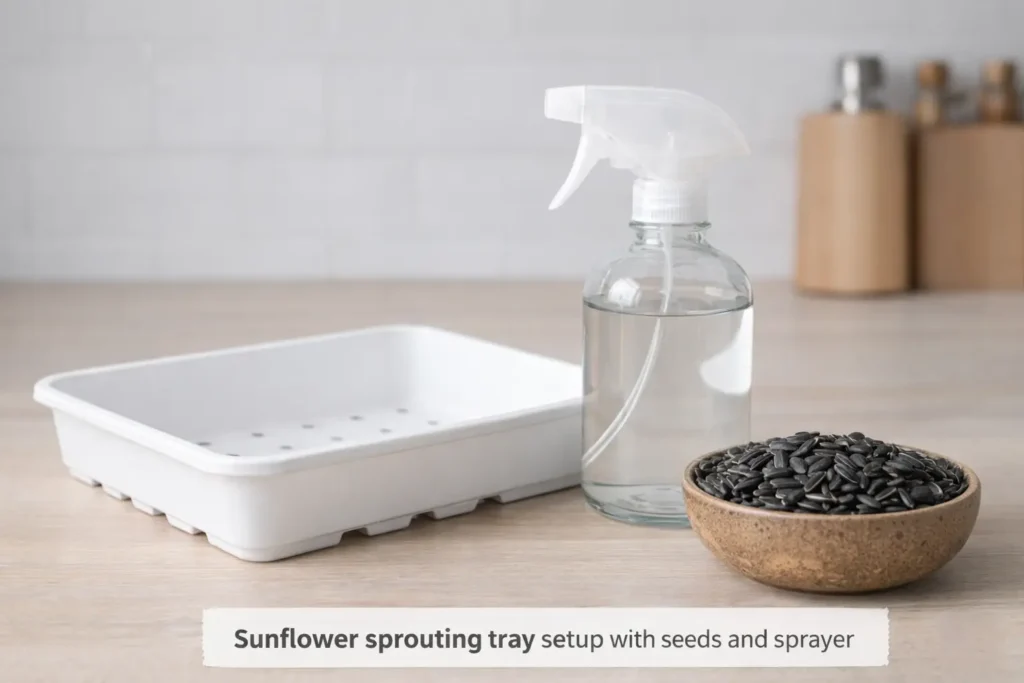
- Sprouting-grade sunflower seeds (black oil type preferred)
- Shallow tray with drainage holes
- Second tray or flat plate (for weighting)
- Clean water spray bottle
- Dark, well-ventilated area
- Optional: thin cloth or blackout cover
⚠️ Important
While sunflower sprouts can technically be grown in jars, jar methods have a very high mold risk due to oil content and trapped hulls.
High-quality growers use trays almost exclusively.
Step-by-Step: How to Grow Sunflower Sprouts
Step 1: Soak the Seeds
- Measure ½ cup sunflower seeds
- Soak in plenty of water for 8–12 hours
- Drain completely
Soaking hydrates the seed and activates enzymes that begin breaking down phytic acid, improving later mineral availability.
Step 2: Prepare the Tray (Drainage Is Critical)
- Spread soaked seeds evenly in a single dense layer
- Do not stack seeds
- Ensure tray holes are fully open for drainage
Sunflower seeds contain high levels of oil, which means:
Poor drainage + moisture = mold
Step 3: Apply Pressure (Weighting — Core Step)
This step is essential, not optional.
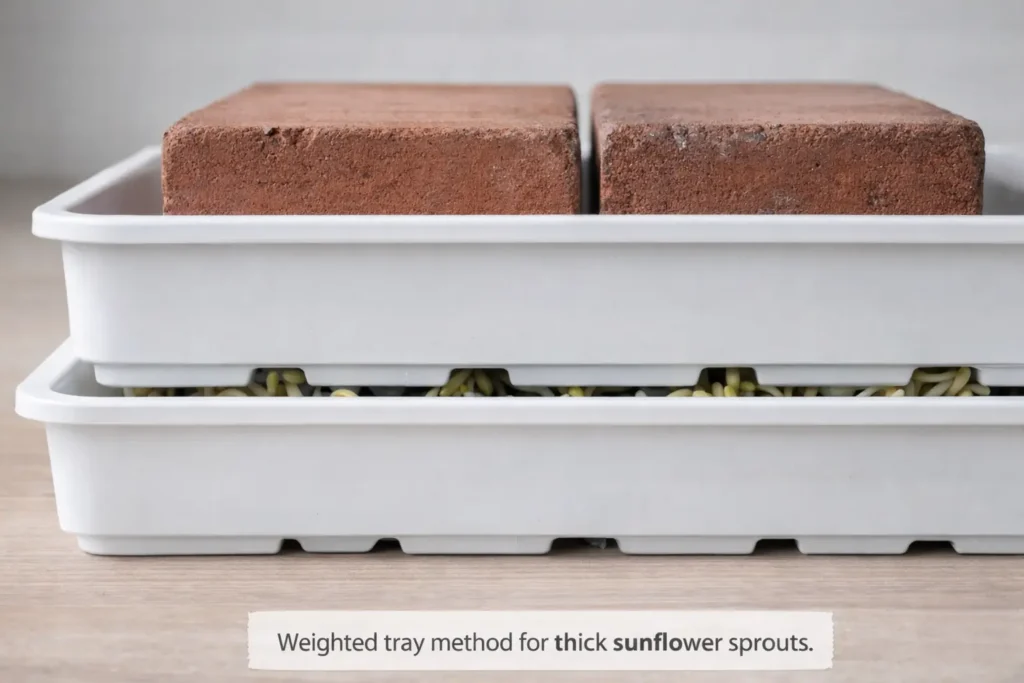
- Place a second tray or flat plate directly on top of the seeds
- Add 1–2 kg (2–4 lbs) of weight (brick, water container, books)
- Keep seeds fully covered and in darkness
- Maintain pressure for 2–3 days
Why pressure matters:
- Forces roots downward
- Encourages thick, juicy stems
- Helps hulls detach naturally
- Mimics commercial sprouting conditions
💡 Practical tip
Check once a day to ensure the weight hasn’t shifted.
Uneven pressure can cause sprouts to grow crooked or uneven in thickness.
Without pressure, sunflower sprouts become:
- Thin
- Fibrous
- Uneven
- Hull-heavy
Step 4: Darkness & Moisture Control (Critical Correction)
During the pressure phase:
- Keep sprouts in total darkness
- Mist lightly 1–2 times per day
- Never flood the tray
- Excess water must drain immediately
⚠️ Important correction & explanation
If sunflower sprouts are exposed to light too early:
- Chlorophyll and polyphenol production increases
- Stems harden and bitterness develops
- Texture shifts from juicy to fibrous
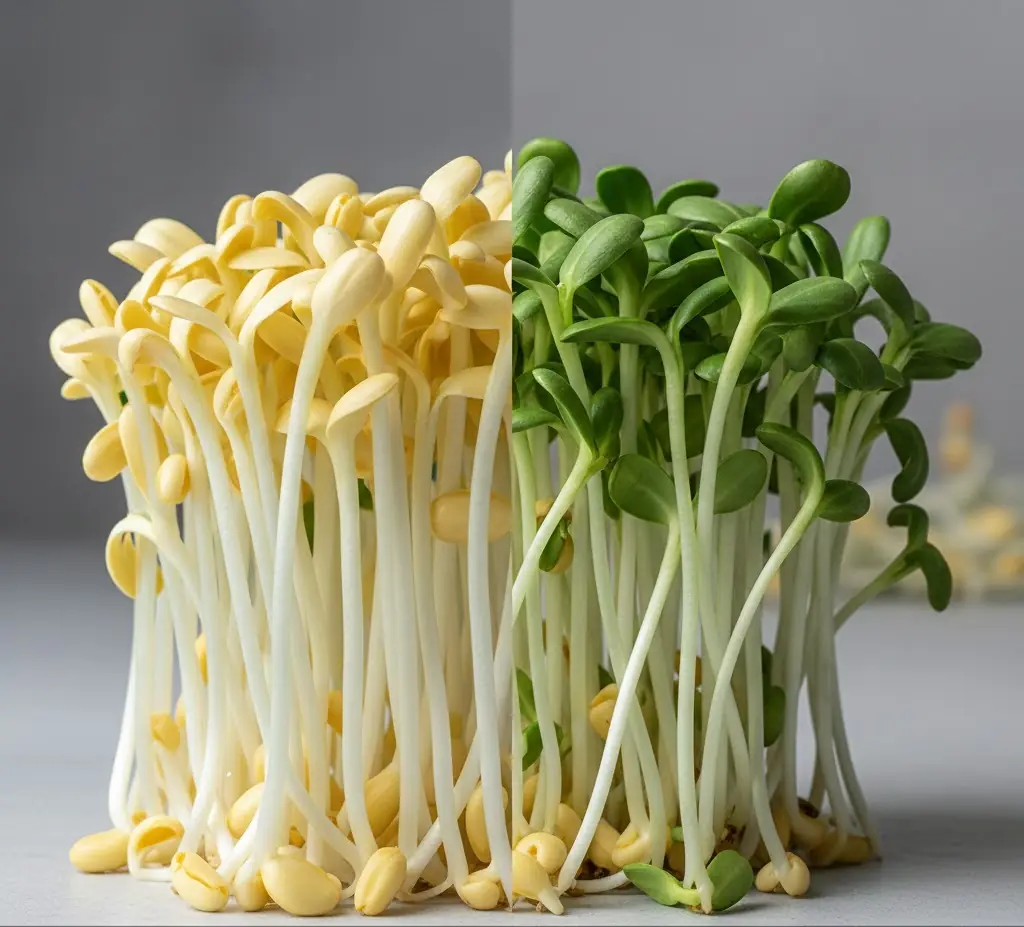
This is why commercial sunflower sprouts are always started in darkness under pressure.
Step 5: Remove Weight, Maintain Darkness Briefly
After 2–3 days:
- Roots will be established
- Stems will be pushing upward
- Hulls will loosen naturally
At this stage:
- Remove the weight
- Keep sprouts dark for another 12–24 hours
- Continue light misting
Step 6: Short Light Exposure (Optional, Controlled)
If desired:
- Introduce indirect light only
- Duration: 6–12 hours maximum
- Purpose: mild color development, not leaf expansion
Full light is not required for sunflower sprouts and often reduces tenderness.
Step 7: Harvest Timing (Texture First)
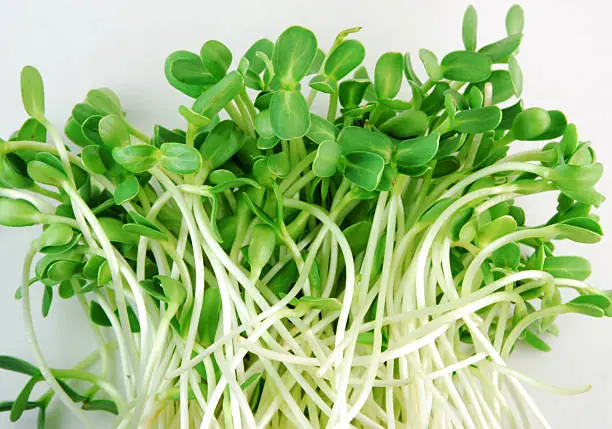
Harvest sunflower sprouts when they reach:
- 5–7 cm (2–3 inches) tall
- Stems feel crisp, thick, and juicy
- Cotyledons are just opening or barely visible
Harvesting beyond this window causes:
- Rapid fiber development
- Increased bitterness
- A transition toward microgreens rather than sprouts
If you prefer visible leaves over juicy stems, you are no longer growing sprouts —
you are growing sunflower microgreens, which require light and a growing medium (soil or substrate).
Growth Timeline (At a Glance)
| Day | Stage |
|---|---|
| Day 0 | Soaking |
| Day 1 | Tray setup + pressure |
| Day 2–3 | Thick stem formation (dark + pressure) |
| Day 4 | Weight removed |
| Day 4–5 | Harvest window |
Nutritional Changes: Sunflower Seeds vs. Sunflower Sprouts
Sprouting causes qualitative and functional nutritional changes, not just minor shifts:
- Phytic acid decreases significantly through enzymatic degradation
→ leading to improved mineral release - Vitamin C increases dramatically during sprouting
(often 10–20× higher compared to dry seeds) - Proteins become easier to digest
- Antioxidant availability increases
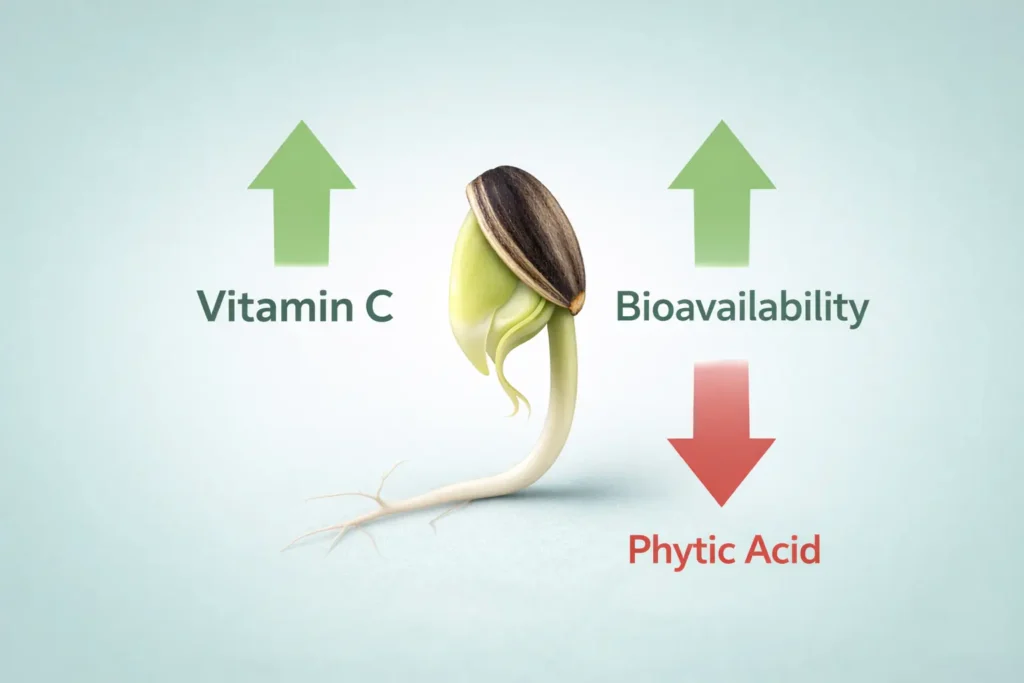
For exact numeric comparisons — including sunflower sprouts vs mung bean, lentil, and chickpea sprouts — see the
👉 Sprout Nutrition Comparison Tool
Mold Prevention: What Actually Works
Because sunflower seeds are oil-rich, mold prevention requires restraint, not excess washing.
Do this:
- Use trays, not jars
- Ensure immediate drainage
- Mist lightly (1–2× daily)
- Maintain airflow
Avoid this:
- Standing water
- Overcrowding
- Frequent soaking or flooding
- Warm, stagnant humidity
A fresh, nutty smell is normal.
Any sour or musty odor = discard immediately.
Storage
- Harvest, rinse gently, and dry
- Store in a breathable container
- Refrigerate up to 3–4 days
- Best texture within 48 hours
Frequently Asked Questions (FAQ)
1. Are sunflower sprouts the same as sunflower microgreens?
No. Sunflower sprouts are harvested early for stems; microgreens are grown longer for leaves and require light and a growing medium.
2. Why do sunflower sprouts taste bitter sometimes?
Bitterness increases rapidly once sprouts exceed 5–7 cm, especially past 8 cm or after the second true leaf appears. Fiber and polyphenol levels rise sharply at that stage.
3. Is pressure really necessary?
Yes. Pressure is the key factor behind thick, juicy, restaurant-quality sunflower sprouts.
4. Can I grow sunflower sprouts in a jar?
It’s possible but not recommended. High oil content + limited drainage makes jars prone to mold.
5. Why are my sprouts thin and floppy?
Usually caused by insufficient pressure, early light exposure, or overcrowding.
6. Should I remove the hulls?
Most hulls fall off naturally under pressure. Loose hulls can be gently brushed away after harvest.
Data Sources
- USDA FoodData Central – Sunflower Seeds
https://fdc.nal.usda.gov/ - Healthline – Sunflower Sprouts Nutrition
https://www.healthline.com/nutrition/sunflower-sprouts - SproutsDaily – Sprout Nutrition Comparison Tool
/sprout-nutrition-comparison-tool/
Final Notes
Sunflower sprouts reward discipline over shortcuts.
Darkness, pressure, drainage, and restraint with water are not optional techniques — they are the system.
Once you master sunflower sprouts, other large-seed sprouts (pea, chickpea, fenugreek) become much easier to understand.