
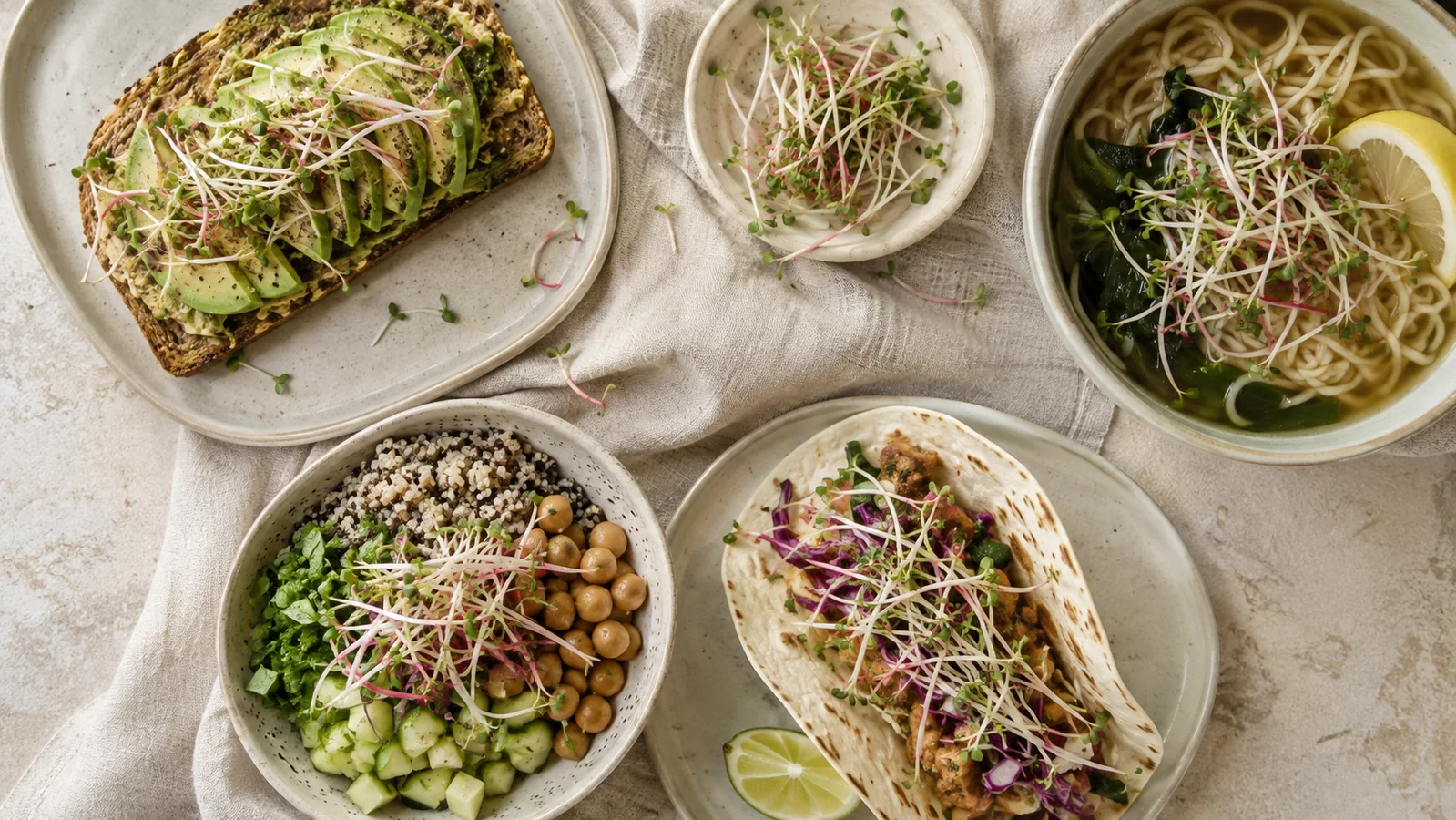
Wondering how to eat radish sprouts? They can be eaten raw, but raw does not mean risk-free. These crisp, peppery seedlings work well as a small finishing ingredient on toast, tacos, salads and bowls. However, the warm, humid conditions used to grow sprouts can also allow harmful bacteria to multiply. The CDC identifies any raw or undercooked sprouts as the riskier choice and sprouts cooked until steaming hot as the safer choice.
If you choose to eat radish sprouts raw and you are not in a higher-risk group, keep them cold, prevent cross-contamination, rinse them under plain running water unless the package says ready-to-eat, and use clean hands and utensils. Washing can reduce surface bacteria; it cannot make contaminated sprouts sterile. Pregnant people, children under 5, adults 65 or older and people with weakened immune systems should avoid raw or lightly cooked sprouts of every kind.
The Quick Answer: Raw, Wilted or Cooked?
| Method | What happens | Food-safety meaning |
|---|---|---|
| Raw garnish | Maximum crunch and peppery flavor | Still a raw-sprout choice; rinsing does not eliminate the risk |
| Briefly wilted | Softer texture and slightly gentler bite | Warm is not the same as thoroughly cooked |
| Cooked until steaming hot | Softest texture and mildest flavor | The safer choice identified by CDC guidance |
There is no official culinary serving size for radish sprouts. For flavor, begin with a loose pinch or a thin layer, taste the complete bite, and add more only if the pepperiness is welcome. That is a taste adjustment, not a nutrition dose.
Choose the finish deliberately
One sprout, three very different outcomes
Raw finish
- Texture
- Crispest
- Flavor
- Pepperiest
Raw-sprout risk remains
Briefly wilted
- Texture
- Tender-crisp
- Flavor
- Softer
Warm is not a kill step
Steaming hot
- Texture
- Softest
- Flavor
- Mildest
CDC safer choice
Warm broth or a hot potato can wilt a raw garnish without cooking it thoroughly. For the safer route, heat the sprouts themselves until steaming hot.
The peppery pantry
10 fast ways to use a small handful
Each card names the intended finish. Raw and cooked versions are not interchangeable for food safety.
Avocado toast
RawAvocado · lemon
Use a thin, peppery layer
Eggs
CookedOmelet · breakfast taco
Fold in before eggs finish
Tacos
RawBeans · fish · vegetables
Balance with yogurt or avocado
Grain bowl
RawRice · quinoa · tahini
Mix through a larger base
Noodle soup
CookedBroth · miso · noodles
Return the soup to steaming
Cucumber salad
RawCarrot · mild dressing
Dress immediately before eating
Hummus pita
RawChickpea · cucumber
Earthy and creamy balance
Stir-fried noodles
CookedMushroom · sesame
Toss until sprouts steam
Baked potato
RawYogurt · tahini
Hot potato does not cook the garnish
Quesadilla
CookedCheese · beans
Heat the center until steaming
Qualitative kitchen map
Build a gentler bite
Creamy
Avocado · yogurt · tahini
Rounds the sharp impression
Starchy
Rice · potato · bread
Spreads the sprouts through each bite
Mild sweet
Carrot · apple · squash
Balances bitterness and heat
Acidic
Lemon · vinegar
Brightens; may feel sharper
Bar length expresses editorial pairing strength, not a measured reduction in pungency. Acid brightens flavor and is not a pathogen-control method.
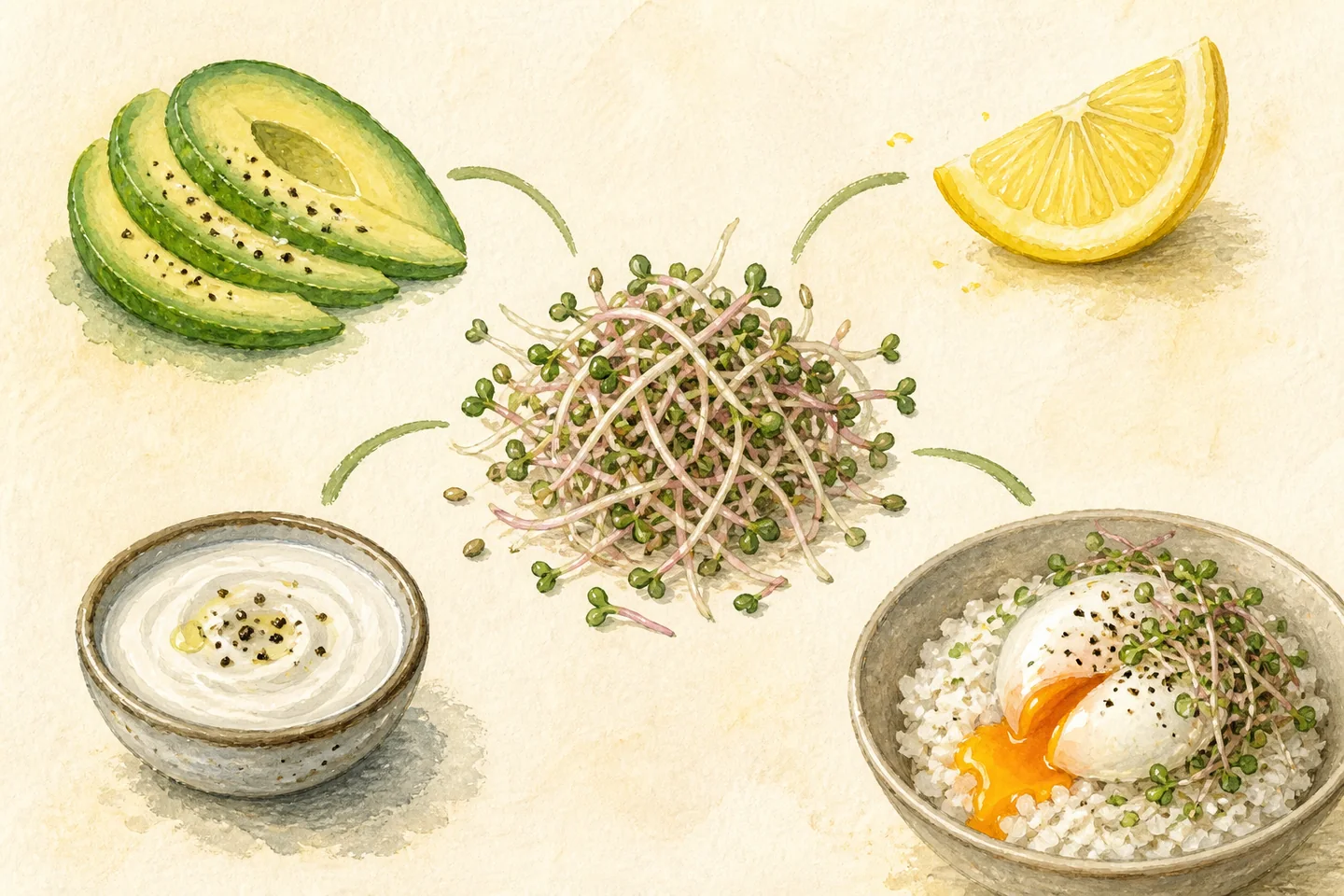
Pepper needs a supporting cast
Press play for a five-second illustrated pairing study. It is a flavor-planning visual, not real cooking footage or a food-safety demonstration.
Creamy or acidic ingredients change taste, not microbial risk.
Keep cold
Refrigerate at 40°F / 4°C or below.
Plain water
No soap, bleach or produce wash.
Cook for safety
Heat the sprouts until steaming hot.
What Do Radish Sprouts Taste Like?
Radish sprouts taste recognizably radish-like: green, peppery and sometimes faintly sulfurous, but without the watery crunch of a mature radish root. The heat is closer to mustard, arugula or a mild wasabi sensation than to chile pepper. It rises quickly in the nose and fades rather than lingering like capsaicin.
The flavor comes from the Brassicaceae family’s glucosinolates and their breakdown products, including isothiocyanates. A sensory review links these compounds with bitterness, sulfurous aroma and pungency, while also warning that individual compounds and varieties do not all taste alike. Newer radish-sprout research likewise finds meaningful color- and cultivar-related differences. In practical terms, one package can taste mild and another surprisingly sharp.
How to Make Radish Sprouts Taste Less Spicy
- Spread them through a larger base. Rice, noodles, potatoes and bread reduce the number of sprouts in each bite.
- Pair them with creamy foods. Avocado, plain yogurt, tahini, hummus, soft cheese or egg round out the sharp impression. They balance flavor; they do not sanitize raw sprouts.
- Add a mild sweet note. Carrot, apple, roasted squash or a small amount of honey in a dressing can counter bitterness without turning the dish into dessert.
- Use acid for brightness, not as a safety treatment. Lemon and vinegar can make a dish taste fresher and sometimes sharper. Acid does not reliably kill bacteria inside or on sprouts.
- Apply heat. Cooking softens both texture and pungency. If safety is the reason for heating, cook the sprouts until they are steaming hot rather than merely warm.
10 Easy Ways to Eat Radish Sprouts
These are flexible assembly ideas rather than fixed recipes. The raw options preserve the brightest flavor but remain raw-sprout choices. Each one can be adapted by cooking the sprouts separately until steaming hot, then adding them to the meal.
1. Avocado Toast with Lemon
Mash avocado onto whole-grain toast, season it, then add a thin layer of radish sprouts and a squeeze of lemon. The avocado supplies a creamy base while the sprouts replace the need for a heavy shake of pepper. If serving cooked sprouts, sauté them first and spoon them over the toast while hot.
2. Eggs, Omelets or Breakfast Tacos
Radish sprouts fit naturally with eggs because the rich, mild egg softens their bite. For a raw finish, scatter a small pinch over a cooked omelet immediately before eating. For the safer cooked version, fold the sprouts into scrambled eggs before they finish cooking and continue until the mixture and sprouts are steaming hot.
3. Tacos with Beans, Fish or Roasted Vegetables
Use radish sprouts where you might otherwise add sliced radish: over black beans, roasted sweet potato, cooked fish or grilled vegetables. Avocado, yogurt sauce and warm tortillas create a useful counterweight. A compact tuft is enough; an overflowing handful can dominate every other flavor.
4. Rice, Quinoa or Grain Bowls
Place the sprouts beside warm grain, cucumber, chickpeas and a cooked protein so diners can mix the pepperiness through the bowl. A sesame-tahini dressing works especially well. Remember that contact with warm rice may wilt the sprouts, but it does not automatically count as thorough cooking.
5. Noodle Soup, Miso or Broth
Add radish sprouts while the soup is actively simmering and allow the soup to return to a steaming state. They will lose some snap and become milder. If you add them only after the bowl reaches the table, treat them as a raw garnish, even if the broth feels hot.
6. Cucumber, Carrot and Radish-Sprout Salad
Combine mostly mild vegetables with a smaller proportion of radish sprouts. Cucumber brings water and crunch; grated carrot adds sweetness. Dress just before serving so the stems stay crisp. This remains a raw preparation, and lemon or vinegar in the dressing is not a substitute for cooking.
7. Hummus Toast, Pita or Snack Plates
Layer hummus, sliced cucumber and radish sprouts on toast or tuck them into pita. The earthy chickpea base makes the sprouts taste intentional rather than simply hot. Keep the assembled food refrigerated if it will not be eaten promptly and avoid letting raw sprouts contact utensils used for raw meat, seafood or eggs.
8. Stir-Fried Noodles or Vegetables
Add the sprouts near the end so they keep some shape, then continue tossing until they are steaming hot. Soy sauce, sesame and mushrooms support the brassica flavor. This is a better route for anyone who wants less pepper and a cooked-sprout preparation.
9. Baked Potato with Yogurt or Tahini
Split a hot potato and add plain yogurt, tahini or cottage cheese before a small amount of sprouts. For a raw version, the sprouts stay crisp against the soft potato. For a cooked version, wilt them in a small pan until steaming and add them as the final hot topping.
10. Quesadillas or Grilled Sandwiches
Put a modest layer of sprouts inside a cheese-and-bean quesadilla or grilled sandwich, then cook until the filling and sprouts are steaming hot. The enclosed heat softens the stems and the creamy filling balances the radish bite. Do not rely only on browning the outside; the center must become hot too.
How to Prepare Raw Radish Sprouts More Carefully
- Buy them cold. Choose refrigerated packages, follow the date and storage directions, and avoid containers with obvious slime, mold, leaking liquid or damaged packaging.
- Keep the refrigerator at 40°F (4°C) or below. Return the sprouts to the refrigerator promptly rather than leaving them on the counter while the rest of the meal is prepared.
- Start with clean hands and tools. Wash hands with soap and warm water for at least 20 seconds. Use a clean bowl, colander and cutting board.
- Follow the package label. FDA says produce marked pre-washed or ready-to-eat can be used without washing again. Otherwise, rinse the sprouts thoroughly under plain running water.
- Do not use soap, bleach or produce wash. FDA does not recommend these products for washing produce. They are not a validated way to sterilize sprouts.
- Dry and serve with clean utensils. Drying removes excess water and helps texture, but it does not eliminate pathogens. Prevent contact with raw meat, poultry, seafood and their utensils.
A normal appearance is not a safety test. Pathogens may be present without visible spoilage. Slime, mold, discoloration or a sour/off smell are clear reasons to discard sprouts, but a fresh smell cannot prove that a raw batch is pathogen-free.
Who Should Avoid Raw Radish Sprouts?
The CDC identifies four groups more likely to become seriously ill from foodborne germs: adults 65 or older, children under 5, pregnant people and people with weakened immune systems. FDA guidance specifically includes radish sprouts among the raw or lightly cooked sprouts these groups should avoid. For them, choose a thoroughly cooked preparation and make sure the sprouts reach a steaming-hot state.
Home-grown radish sprouts are not automatically safer. Contamination can originate in or on the seed, and bacteria can multiply during germination even when the kitchen and equipment look clean. Rinsing, lemon juice, vinegar and freezing should not be described as kill steps.
Radish Sprouts Are Not the Same as a Radish Root That Has Sprouted
This guide is about seedlings grown from radish seed and eaten with their tiny stems and cotyledons. A mature radish root that begins growing leaves in storage is a different situation. Searchers often use “sprouted radish” for both foods, but the handling and quality questions are not interchangeable. Discard any mature root with rot, mold, slime or an off odor; do not apply the meal ideas on this page as storage-safety advice for an aging root.
Radish microgreens are different again: they are usually grown longer, develop larger leaves and are cut above the growing medium. Read our sprouts vs. microgreens guide for the stage distinction.
Frequently Asked Questions
Can you eat radish sprouts raw?
They are commonly eaten raw, but all raw sprouts carry a microbial food-safety risk. Washing reduces surface contamination but does not eliminate the risk. CDC guidance treats cooked sprouts that are steaming hot as the safer choice, and higher-risk groups should avoid raw or lightly cooked sprouts.
Are radish sprouts spicy?
Usually, yes. They tend to taste peppery, mustard-like and slightly green. The intensity varies by cultivar, age and growing conditions, so start with a small amount before covering a dish.
Do you have to wash radish sprouts?
Follow the package. FDA says produce labeled pre-washed or ready-to-eat can be used without another wash. Otherwise, rinse under plain running water. Do not use soap, detergent, bleach or commercial produce wash, and remember that rinsing cannot sterilize sprouts.
Can you cook radish sprouts?
Yes. Stir-fry them, simmer them in soup, or cook them inside eggs or a quesadilla. They become softer and milder. If the goal is the safer preparation, continue heating until the sprouts themselves are steaming hot.
How much radish sprouts should you eat?
There is no official daily serving recommendation specific to radish sprouts. Use them as a flavor ingredient, begin with a loose pinch or thin layer, and adjust to taste. For nutrient values, serving context and the USDA record, use our complete radish sprouts guide.
Sources and Methodology
- CDC: Safer Food Choices
- CDC: Food Safety Basics
- FDA: Selecting and Serving Produce Safely
- FDA: Fruits, Veggies and Juices — Food Safety for Moms-to-Be
- Bell et al.: Taste and Flavor Perceptions of Glucosinolates and Isothiocyanates
- Transcriptomic and Metabolomic Analyses of Radish-Sprout Color and Taste
How this guide was made: SproutsDaily editors separated three questions that searchers often mix together: culinary use, perceived pepperiness and microbial safety. The ten meal ideas are original editorial assembly suggestions, not tested pathogen-reduction methods. Safety statements were checked against CDC and FDA pages on September 3, 2026. The food photograph, pairing illustration and lightweight motion study were created specifically for this page. Use this as general food guidance rather than personalized medical advice.