Alfalfa sprouts are not nutritionally inferior to other sprouts. They are simply a different tool: delicate, mild and very low in calories, with useful vitamin K and small amounts of vitamin C, folate, iron and fiber. Soybean and lentil sprouts supply much more protein per 100 grams; radish sprouts supply more vitamin C; mung bean sprouts are crunchier and more substantial. The best choice depends on what you want the sprouts to do in the meal.
Current safety alert (checked August 28, 2026): The FDA is investigating an outbreak linked to specific Calco and Everything Sprouts alfalfa products and advises consumers not to eat, serve or sell the affected products. Check the FDA investigation page for product names, lot details and updates. This notice does not mean every alfalfa sprout is recalled.
Why we wrote this guide: A SproutsDaily reader asked whether alfalfa sprouts were missing from comparison content because they have less nutritional value. That is a sensible question—and one that a simple “superfood” label cannot answer. Below, we compare exact raw-sprout entries from USDA FoodData Central, explain the trade-offs and finish with practical steps for buying, eating and growing them.
What Are Alfalfa Sprouts?
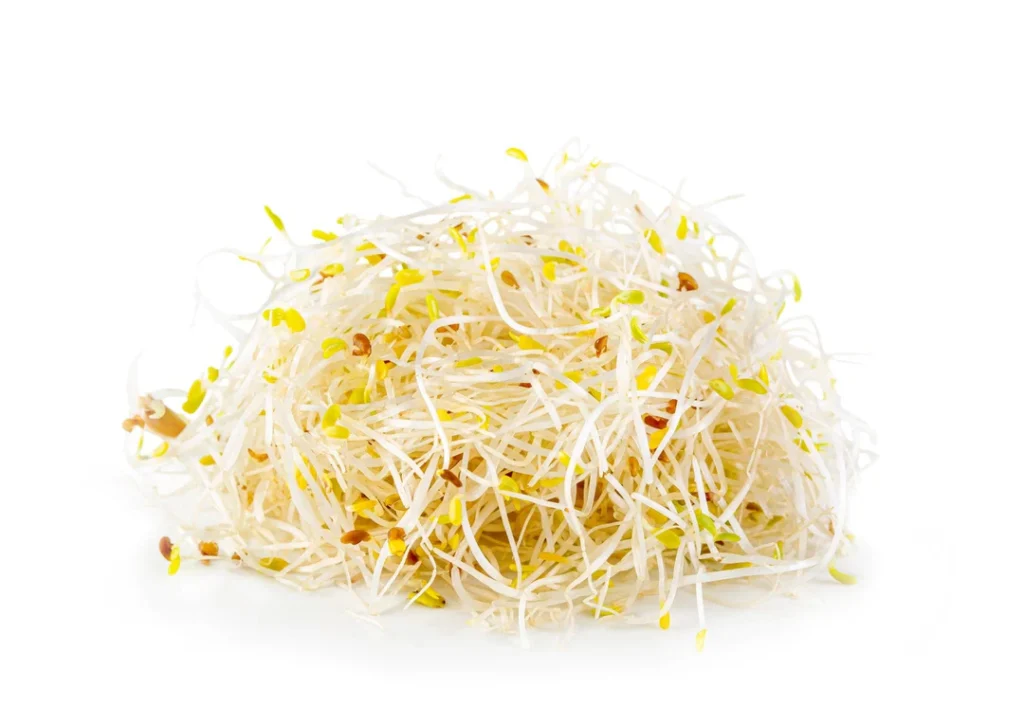
Alfalfa sprouts are the young shoots of Medicago sativa, a plant in the legume family. They are usually harvested about five or six days after germination, while the stems are thin, the roots are white and the first tiny leaves are green. Unlike microgreens, sprouts are grown without soil and the seed, root and shoot are eaten together.
Their culinary role is closer to a tender leafy garnish than to a bean. A typical cup weighs only about 33 grams. Using the USDA values, that cup provides roughly 8 calories, 1.3 grams of protein and 0.6 gram of fiber. In other words, alfalfa adds freshness and some micronutrients, but it does not turn a sandwich into a high-protein meal.
For a broader profile of the plant and its evidence, see our alfalfa sprouts benefits review. This article stays focused on the question readers actually asked: how alfalfa compares with other sprouts.
How the Comparison Works
Food comparisons become misleading when one row uses a cup, another uses a serving and a third uses dry seed. We used the same basis for every row: 100 grams of the raw, sprouted food in USDA FoodData Central. This is a laboratory comparison unit, not a suggested portion.
- Same state: raw sprouts, not cooked beans, mature leaves, powders or supplements.
- Same weight: 100 grams for every variety.
- Exact records: each row links to its USDA record so you can inspect the source.
- Missing means not reported: an em dash does not mean the food contains zero of that nutrient.
- Rounded values: figures are rounded to two decimal places at most; natural foods vary by cultivar and growing conditions.
Broccoli sprouts are discussed later, but they are not in the numeric table because the USDA legacy database does not provide an equivalent basic-nutrient entry for raw broccoli sprouts. Substituting mature broccoli or broccoli seed data would create a false comparison.
| Raw sprout (100 g) | Calories | Protein (g) | Fiber (g) | Vitamin C (mg) | Folate (µg) | Iron (mg) |
|---|---|---|---|---|---|---|
| Alfalfa | 23 | 3.99 | 1.9 | 8.2 | 36 | 0.96 |
| Mung Bean | 30 | 3.04 | 1.8 | 13.2 | 61 | 0.91 |
| Soybean | 122 | 13.09 | 1.1 | 15.3 | 172 | 2.10 |
| Lentil | 106 | 8.96 | 3.2 | 16.5 | 100 | 3.21 |
| Radish | 43 | 3.81 | 2.3 | 28.9 | 95 | 0.86 |
What the Numbers Actually Mean
Alfalfa is the lowest-calorie option in this set. It also supplies slightly more protein per 100 grams than mung bean or radish sprouts, although the difference is small. Its strong protein-to-calorie ratio can look impressive on paper, but the normal serving is light: you would need a large volume to get the protein found in a modest serving of soybean or lentil sprouts.
Soybean and lentil sprouts are better when protein is the goal. They contain about three times and two times as much protein as alfalfa, respectively, per equal weight. Their calories are also higher because the germinated bean remains a substantial part of the food.
Radish leads this table for vitamin C, while soybean leads for folate. Alfalfa contributes both, but it is not the leader. “Less of one nutrient” is not the same as “lower nutritional value”; it simply changes the best use case.
Want to compare potassium, calcium and more varieties? Open the Sprout Nutrition Comparison Tool, which uses the same USDA records and explains where a value is unavailable.
Why Choose Alfalfa Sprouts? The Pros
1. Very Low-Calorie Volume
Alfalfa gives a sandwich, wrap or bowl a generous-looking layer of fresh plant food for very few calories. That is useful when the rest of the meal already supplies protein and energy. It is not evidence that alfalfa causes weight loss; it is simply a practical way to add volume and texture.
2. A Mild Flavor That Fits Many Meals
Radish and broccoli sprouts can taste distinctly peppery. Alfalfa is milder and more delicate, so it works where a stronger sprout could dominate. Use it in sandwiches, tacos, cold noodle bowls or as a finishing layer on cooked food.
3. Useful Micronutrients in a Small Package
USDA reports 30.5 micrograms of vitamin K per 100 grams, plus vitamin C, folate, copper, iron and other minerals. A cup is not a multivitamin, but it contributes variety. Vitamin K supports normal blood clotting and bone-related proteins; the NIH Office of Dietary Supplements explains its functions and intake guidance.
4. A Quick, Compact Crop
Alfalfa seeds germinate in a jar without soil and are normally ready in less than a week. This makes them accessible for small kitchens. However, homegrown does not mean pathogen-free; the safety section below matters just as much as the growing steps.
The Big Trade-Offs: The Cons
1. They Are Not a Protein Main
Alfalfa sprouts contain protein, but a one-cup portion supplies only about 1.3 grams. Choose soybean sprouts or lentil sprouts when you want the sprout itself to make a meaningful protein contribution, and still build the meal around a balanced protein source.
2. Raw Sprouts Carry a Distinct Food-Safety Risk
Sprouts need warm, humid conditions to grow—the same conditions that help bacteria multiply. The FDA says that even a few harmful bacteria in or on the seed can grow to high levels during sprouting, including in a sanitary home setup. Rinsing removes dirt and some surface microbes, but it is not a reliable kill step.
Between 1996 and 2020, the FDA recorded 52 U.S. outbreaks associated with sprouts, causing at least 2,700 illnesses, 200 hospitalizations and three deaths. The agency often identified seed as the likely contamination source. See the FDA’s 2023 sprout guidance for the underlying risk and controls.
3. Vitamin K Requires Consistency With Warfarin
If you take warfarin or a similar vitamin K antagonist, do not make a large, sudden change in alfalfa intake without speaking with the clinician who manages the medication. NIH guidance emphasizes consistent vitamin K intake, not a universal ban on vitamin K foods.
4. They Are Delicate
Alfalfa wilts and becomes slimy faster than sturdier mung bean sprouts. Buy them cold, keep them refrigerated and discard them if they smell sour, feel slimy or show mold. When crunch and heat tolerance matter, mung bean sprouts are usually the better choice.
Who Should—and Shouldn’t—Use Them?
| If you want… | Best fit | Why |
|---|---|---|
| A mild, feathery sandwich topping | Alfalfa | Soft texture and neutral flavor |
| More protein per serving | Soybean or lentil | Substantially more protein per 100 g |
| Crunch for stir-fries | Mung bean | Thicker stems tolerate heat better |
| A peppery accent and more vitamin C in this table | Radish | Stronger flavor; 28.9 mg vitamin C per 100 g in USDA data |
| A sulforaphane-focused choice | Broccoli | Chosen for glucoraphanin/sulforaphane, not because it “wins” every basic nutrient |
Alfalfa Can Be a Good Fit For
- healthy adults who understand and accept the residual risk of eating raw sprouts;
- people seeking a mild garnish rather than a major source of calories or protein;
- home growers who want a fast crop and are willing to follow careful hygiene;
- cooks who will thoroughly heat sprouts when serving someone who should avoid them raw.
Who Should Avoid Raw or Lightly Cooked Sprouts
FDA and CDC advice identifies children, older adults, pregnant people and people with weakened immune systems as groups at higher risk from foodborne illness. For these groups, the practical choice is to avoid raw and lightly cooked sprouts and use only sprouts that have been cooked thoroughly. Individual medical circumstances differ, so use a clinician’s advice when it is more specific.
People taking warfarin should keep vitamin K intake consistent and discuss major dietary changes with their care team. This is a medication-management issue, separate from the bacterial risk.
How to Buy, Store and Eat Alfalfa Sprouts: Step by Step
- Check active recalls first. Search the FDA recall and outbreak pages, especially if a local notice names a brand, lot or state.
- Buy them refrigerated. Choose a sealed package that is within date. Skip packages with pooled liquid, darkened stems, slime or a sour odor.
- Keep them cold. Refrigerate promptly and follow the package’s use-by and storage directions. Do not leave sprouts at room temperature while preparing the rest of a meal.
- Prevent cross-contamination. Wash hands, use clean utensils and keep sprouts away from raw meat, poultry, seafood and their juices.
- Rinse under running water. This is good produce handling, but do not describe rinsing as sterilization.
- Choose raw or cooked based on risk. A healthy adult may choose raw sprouts with informed caution. For higher-risk people, cook sprouts thoroughly; a brief warm garnish is not the same as thorough cooking.
- Discard questionable leftovers. When in doubt about time, temperature, odor or texture, throw them away.
FDA’s produce safety guidance explains why clean-looking sprouts can still contain pathogens and provides general buying and handling steps.
How to Grow Alfalfa Sprouts: A Beginner’s Step-by-Step Guide
Safety before method: No home method can guarantee pathogen-free raw sprouts. Start with seed specifically sold for human sprouting, use clean equipment, check recalls and understand that washing and rinsing are not kill steps. Higher-risk people should not eat the finished sprouts raw.
- Choose the right seed. Buy traceable alfalfa seed labeled for sprouting or human consumption. Garden seed may be treated with chemicals and is not an acceptable substitute.
- Clean the setup. Wash your hands and clean and sanitize the jar, mesh lid and work surface according to the equipment maker’s food-contact directions.
- Measure and soak. Put about 1–2 tablespoons of seed in a roomy quart-size jar, cover generously with cool potable water and soak for 8–12 hours.
- Drain completely. Fit the mesh lid, drain the soak water and leave the jar tilted so excess water can escape and air can circulate.
- Rinse on schedule. Every 8–12 hours, fill with cool potable water, swirl gently and drain very thoroughly. Keep the jar out of direct sun.
- Green the shoots. Around day four, move the jar to bright indirect light while continuing the rinse-and-drain cycle.
- Harvest around day five or six. When the leaves open and the sprouts smell fresh, remove loose hulls if desired, drain well and refrigerate promptly in a clean container.
- Inspect before every use. Discard the entire batch if you see mold or notice slime or an off odor. Do not taste a questionable batch to test it.
For a more detailed day-by-day walkthrough and troubleshooting, use our complete alfalfa growing guide. Remember that the FDA considers seed a recurring source of sprout contamination; supplier controls and sanitation reduce risk but do not make raw sprouts risk-free.
Three Easy Ways to Use Alfalfa Sprouts
1. The Balanced Sandwich Layer
Pair a loose handful with a clear protein source such as egg, tofu, chicken, tuna or hummus, plus tomato and whole-grain bread. The alfalfa contributes freshness; the main filling supplies the protein and energy.
2. The Last-Minute Grain Bowl
Build a bowl with a grain, beans or another protein, cooked vegetables and dressing. Add alfalfa at the end for a cool textural contrast. If cooking for a higher-risk person, substitute thoroughly cooked mung, soybean or lentil sprouts.
3. The Cooked Option
Add alfalfa to a soup, omelet or stir-fry early enough to cook it thoroughly rather than merely warm it. It will lose its feathery texture, but thorough cooking is the safer route for people advised to avoid raw sprouts.
Frequently Asked Questions
Are alfalfa sprouts less nutritious than other sprouts?
No single ranking captures “nutritious.” Alfalfa is lower in calories and in absolute protein than soybean or lentil sprouts, and lower in vitamin C than radish sprouts in the USDA records compared here. It still provides protein, fiber, vitamin K and several micronutrients. Choose according to the meal and the nutrient you care about.
Are alfalfa sprouts better than broccoli sprouts?
They serve different goals. Alfalfa is mild and has a documented basic nutrient profile. Broccoli sprouts are usually selected for glucoraphanin and sulforaphane research and have a more pungent taste. Do not use mature broccoli nutrition data as if it were broccoli sprout data. Read our broccoli sprouts guide for that evidence.
Can healthy adults eat raw alfalfa sprouts?
Healthy adults can choose to eat raw sprouts, but the risk is not zero. Follow recalls, buy refrigerated products, prevent cross-contamination and discard spoiled sprouts. People in higher-risk groups should avoid raw or lightly cooked sprouts.
Does rinsing make raw sprouts safe?
No. Rinsing is recommended produce handling, but bacteria may be present in or on the seed and multiply during germination. Rinsing cannot be relied on as a kill step.
Are homegrown alfalfa sprouts safer than store-bought?
Not automatically. Home growing gives you control over cleanliness and storage, but contaminated seed can introduce pathogens before the seed reaches your kitchen. Use sprouting seed from a traceable supplier and treat the finished raw sprouts as a higher-risk food.
How much protein is in alfalfa sprouts?
USDA reports 3.99 grams per 100 grams. A one-cup, 33-gram portion therefore provides about 1.3 grams. Alfalfa should not be the main protein source in a meal.
Can I eat alfalfa sprouts every day?
There is no official daily serving requirement. Variety is more useful than treating one sprout as a cure-all. Regular raw-sprout consumption also means repeated exposure to the same food-safety hazard, and people taking warfarin need to keep vitamin K intake consistent.
The Bottom Line
Alfalfa sprouts are not a lesser sprout. They are a low-calorie, mild-textured option that works best as one component of a balanced meal. Pick soybean or lentil for more protein, mung bean for crunch, radish for peppery flavor and higher vitamin C in this comparison, and broccoli when sulforaphane is the specific interest.
The biggest deciding factor is not a vitamin—it is safety. Check recalls, keep sprouts cold, prevent cross-contamination and remember that rinsing or home growing does not eliminate seed-borne pathogens. If you or the person you are feeding is in a higher-risk group, avoid raw and lightly cooked sprouts.
Sources and Methodology
- USDA FoodData Central: Alfalfa seeds, sprouted, raw
- USDA FoodData Central data documentation
- FDA: Standards for growing, harvesting, packing and holding sprouts
- FDA: Selecting and serving produce safely
- NIH Office of Dietary Supplements: Vitamin K fact sheet
Editorial review: Nutrition figures were checked against the linked USDA SR Legacy records on August 28, 2026. Safety guidance and the current alert were checked against FDA pages on the same date. This article is educational and does not replace individualized medical advice.